
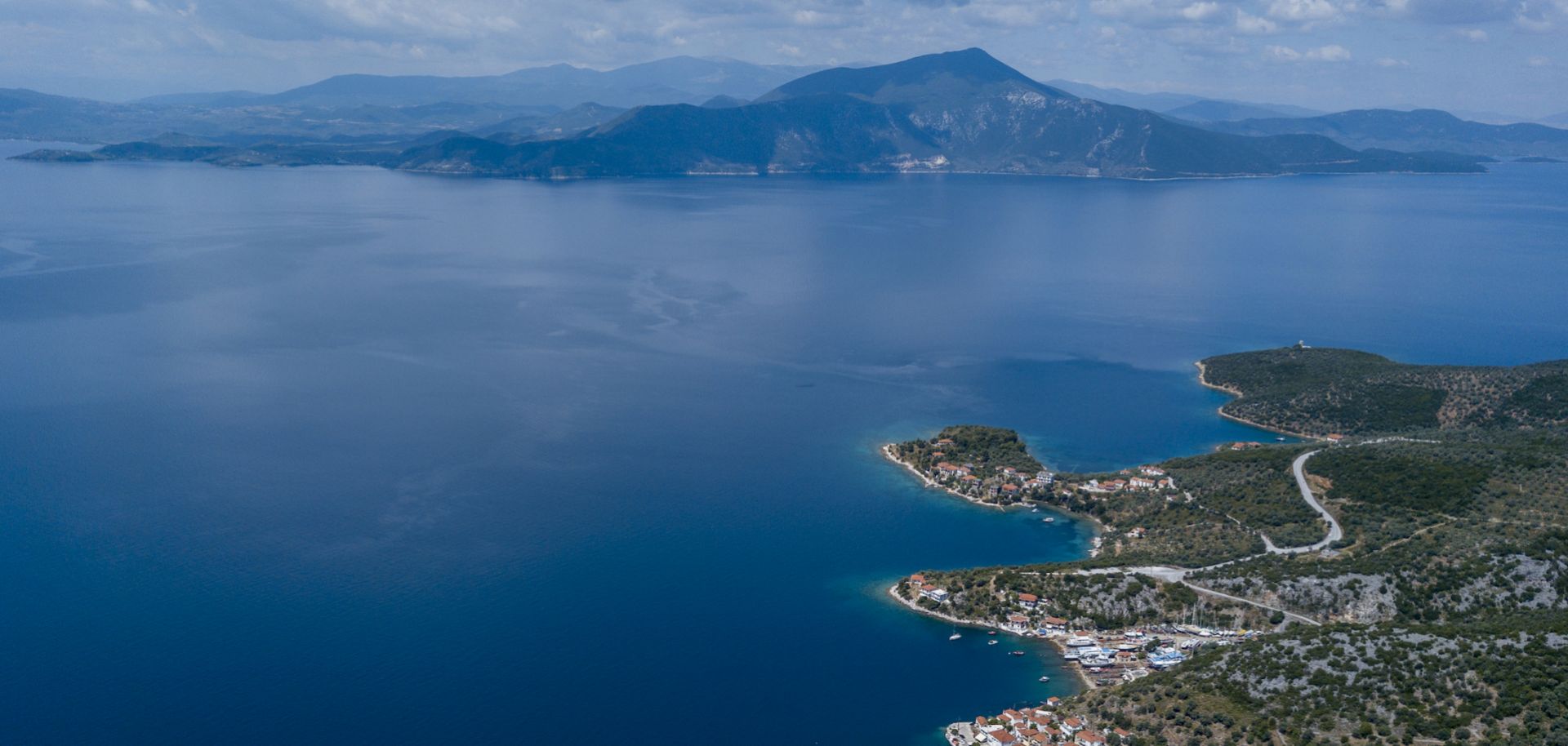
An aerial view of Agia Kyriaki village on June 1, 2020, in Pelion, Greece.
The reopening of bilateral talks between Turkey and Greece could yield a brief thaw in their maritime disputes in the Mediterranean, which would prove politically beneficial for both countries and defuse the immediate threat of a military conflict. A long-term solution to Athens and Ankara’s many points of friction, however, remains unlikely. After a tense five-year hiatus, Greek and Turkish diplomats met in Istanbul on Jan. 25 in the hopes of finding common ground regarding maritime claims in the Mediterranean Sea. The negotiations marked the 61st round of exploratory talks between Athens and Ankara since 2002. The fact that two longtime rivals participated in the talks at all bodes well for pragmatic conversations and military de-escalation in the near term — especially over the immediate issue of Aegean Sea demarcation, where military tensions have been rising. But despite Turkish presidential spokesman Ibrahim Kalin ambitiously stating that it was “possible to solve all problems” on the eve of the Istanbul meeting, Ankara and Athens are far from solving their deeper maritime, territorial and cultural disputes.
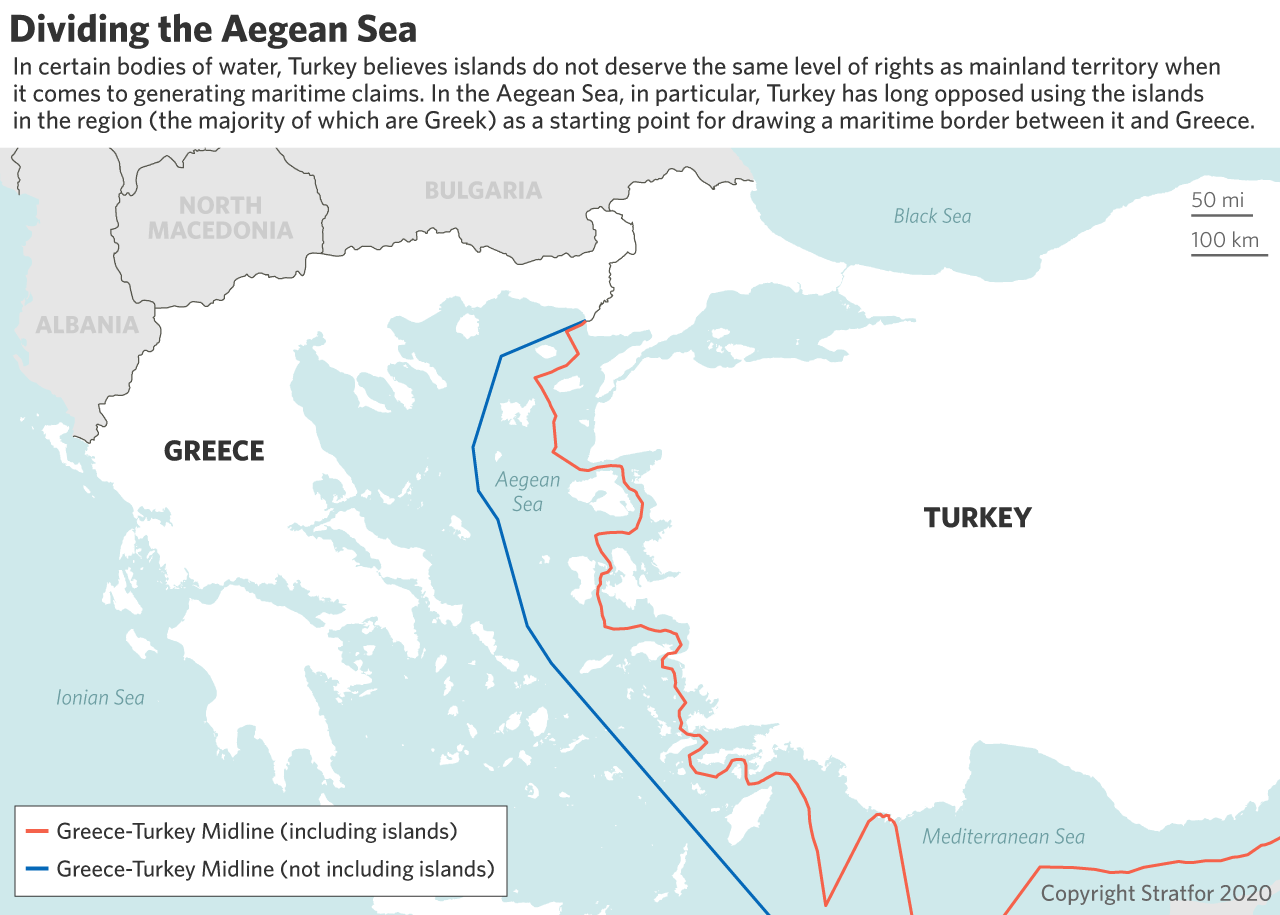
Turkey and Greece’s differing preferred scope for the Jan. 25 talks themselves underscore just how difficult it will be for the two countries to reach a consensus on issues they deem of different importance. Greece sought to keep the discussion solely focused on maritime demarcation and hashing out the issue of its overlapping exclusive economic zones (EEZs) with Turkey, particularly in the Aegean Sea. Greek diplomats and politicians also reiterated several times that the talks were pre-technical, non-binding and that no deeper negotiations would take place. Turkey, however, sought a broader scope for the Jan. 25 talks, hoping to touch on issues beyond maritime demarcation, including the treatment of the Muslim minority in Greece and the demilitarization of disputed islands in the Aegean Sea.
For Turkey, taking a conciliatory approach with Greece helps avoid further financial sanctions and political pressure from the European Union at a time of severe economic vulnerability. Ankara likely calculates that even a limited detente with Greece will engender goodwill with Brussels and powerful EU actors like France and Germany, who have urged Turkey to stand down from its aggressive oil and gas exploration activities in the eastern Mediterranean and have criticized Ankara’s military actions in Libya and Syria. Turkey hopes that continued cooperation with the European Union will help Ankara avoid financial sanctions and lay the groundwork for deeper future cooperation on longer-term issues Turkey wants to broach with the bloc.
- Turkey is actively trying to court foreign investors and ward off further sanctions after a tumultuous few years for its economy. Foreign currency reserves depleted at a record rate in 2020, and high inflation has worn down Turks’ purchasing power and confidence.
- The European Union is Ankara’s most important trade partner, accounting for 50% of total exports from Turkey. Turkey is also a critical bulwark for the European Union, providing logistical help to stem the flow of migrants and refugees to European shores in exchange for EU funding as part of its 2016 migration agreement with Brussels.
- For years, Turkey has been pushing to expand its 1995 customs union agreement with the European Union, which currently only covers industrial goods, to sectors such as services, agriculture and public procurement. Since 2013, Turkey and the European Union have been discussing introducing a visa waiver for Turkish citizens visiting the bloc. Brussels has repeatedly used ongoing negotiations on both of these issues as leverage in its relationship with Ankara.
Greece is hoping the temporary detente with Turkey will offer a starting place for potential future negotiations that Athens could then swing in its favor. Greece has determined that the European Union is unlikely to impose more painful economic sanctions on Turkey as a whole, and that more piecemeal, targeted sanctions are the most it can anticipate from Brussels, which have so far failed to dramatically change Turkish behavior in the Mediterranean. This has made Athens more willing to re-open bilateral talks with Turkey in order to at least have another option on hand when it feels multilateral pressure has run its course.
- Despite continued Greek calls for sweeping sanctions on Turkey, EU leaders have only imposed limited sanctions on Turkish individuals and companies involved in Ankara’s increasingly aggressive oil and gas exploration activities in the eastern Mediterranean. In response to these limited EU sanctions, Turkey said it would not alter its behavior, though Ankara did last year ultimately pull back the Oruc Reis and Barbados survey vessels from sensitive waters disputed by Greece.
- On Jan. 25, Greek government spokesman Christos Tarantilis said that talks with Turkey “are not negotiations and do not have a binding effect,” and were aimed at “pick[ing] up the thread from the point where contacts were interrupted in 2016 to see if there is a point of convergence in order to lead us to negotiations.”
Ultimately, resuming bilateral talks will help avert a dangerous military conflict between two NATO members, even if the deep disputes between them are bound to persist. Turkey is adamant about asserting its sovereignty via aggressive maritime claims and energy exploration activities. Greece, meanwhile, is unlikely to cede its concerns about Turkey’s continued encroachment into its EEZs. But while freshly reopened bilateral talks won’t ease such disputes, they can prevent a dangerous military conflict by providing a space for diplomatic de-escalation, which will no doubt come as a relief to neighboring countries.
- 2020 saw several instances of naval harassment and threats between Turkey and Greece, including in August 2020 when Turkish warships accompanied a Turkish survey vessel, prompting the Greek deployment of warships and a collision.
- Greece was the partner who cut off exploratory talks in 2016 after 60 rounds, unhappy with the direction they were taking and out of frustration with Turkey. But since then, Ankara has only expanded its aggressive oil and gas exploration activities.
