
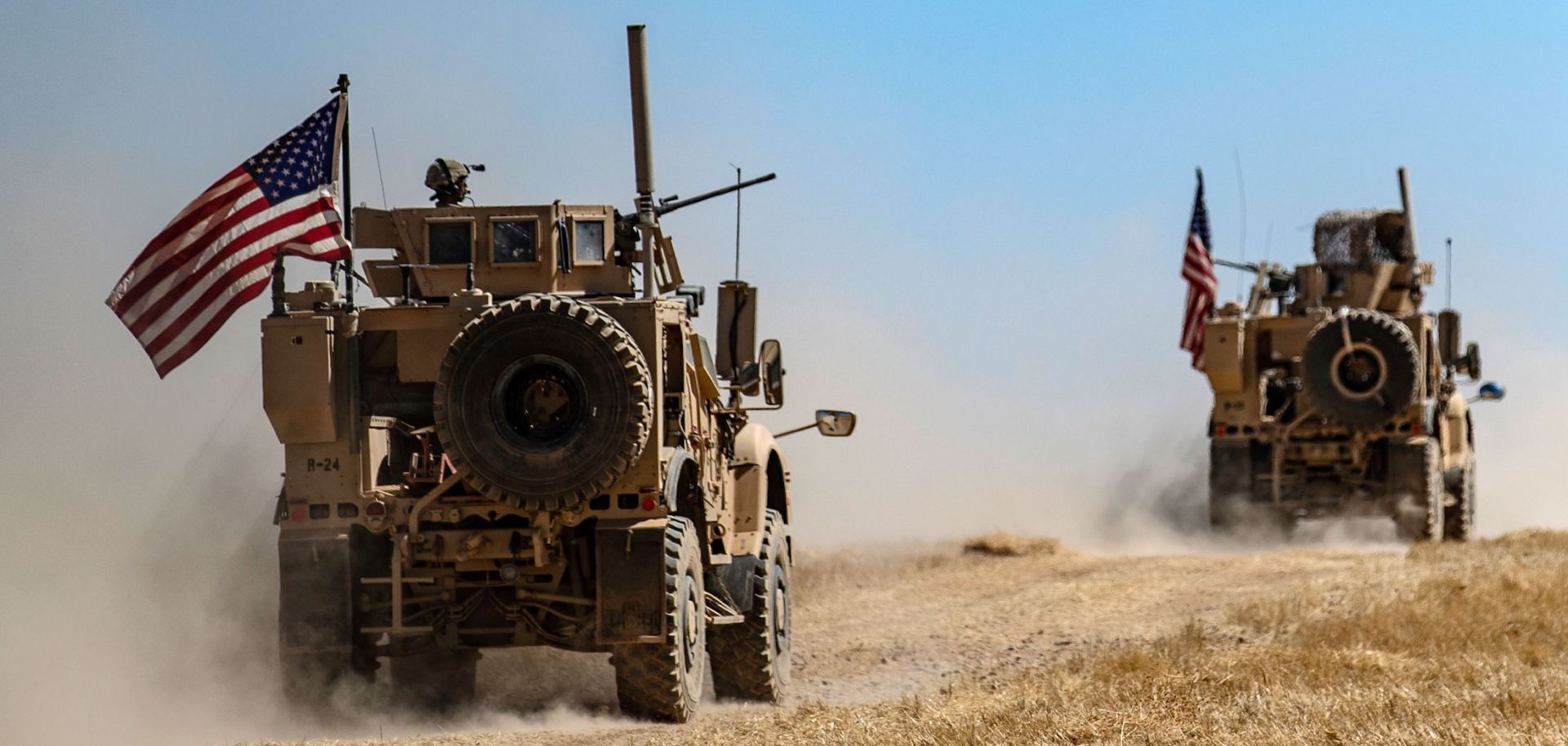
A U.S. military convoy patrols a Syrian village along the Turkish border on Sept. 8, 2019.
In Syria, the United States appears to be shifting away from its maximum isolation strategy toward limited engagement with Damascus in order to secure the gains it’s made in the country toward preventing an Islamic State resurgence. On Oct. 18, The Wall Street Journal reported that the top White House counterterrorism official, Kash Patel, had traveled to Syria earlier this year to participate in direct negotiations regarding the release of American journalist Austin Tice and other U.S. citizens who are being held hostage by the Syrian government. The report also said Patel delivered a personal letter from U.S. President Donald Trump to Syrian President Bashar al Assad in March, breaking nearly a decade of diplomatic isolation between the two governments.
These actions come as the United States increasingly faces the prospect that to achieve its objectives in Syria, it will need to have limited engagement with its government. The U.S. counterterrorism mission in Syria has not yet included a major military component for handling al Assad’s regime. Instead, Washington has encouraged Damascus’ economic isolation. This, however, has failed to deter the Syrian government from trying to take control of the country’s northeast and sideline the United States’ primary partner in its efforts to contain the Islamic State in the country, the Syrian Democratic Forces (SDF).
- The U.S. mission in Syria has been extensively focused on dismantling the Islamic State since Washington first deployed to the country in 2014.
- Islamic State forces are still able to operate underground throughout regime-controlled territory, in part because Syria lacks the effective security apparatus needed to suppress the group after almost a decade of civil war.
- Since Trump took office in 2016, the United States has been less engaged in diplomatic efforts to negotiate an end to Syria’s ongoing civil war.
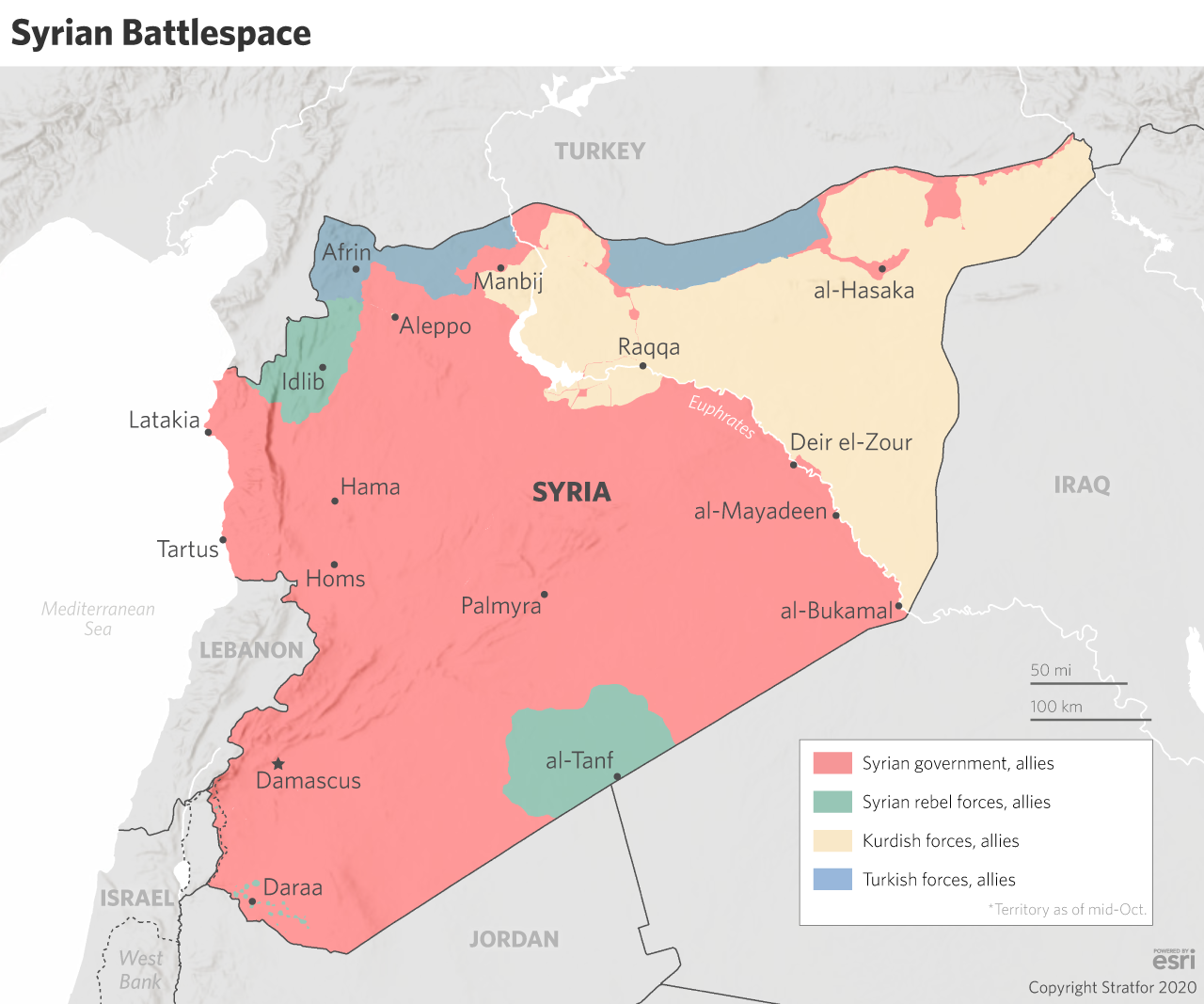
By engaging with the Syrian government, Washington is seeking to maximize the SDF’s autonomy, prevent further clashes between U.S. and Syrian forces, and potentially expand to wider peace negotiations between Damascus and other rebel forces. Limited engagement with Damascus may reduce tension in the northeast and build trust toward wider negotiations that would aim to secure the SDF and potentially expand the United States’ role in the larger, U.N.-led diplomatic process designed to end the civil war.
- A long-term mission in Syria is politically risky for the White House. 42 percent of Americans saying they favored the sudden withdrawal of U.S. troops from the country in an October 2019 poll conducted by CNN.
- Russian and Syrian forces are increasingly harassing U.S. patrols in the country. These harassments have injured U.S. soldiers and killed Syrian troops, raising the risk of potential clashes that would draw Washington deeper into the country’s conflict.
As the risk of U.S. diplomatic pressure to isolate Syria eases, nearby Arab Gulf states will likely mull improving their own ties with Damascus. U.S. engagement will signal to the United Arab Emirates and Bahrain that they can explore further ties with Syria in the hopes of helping offset Iranian influence in the country. Without fear of immediate U.S. sanctions. Oman will also be encouraged to expand its relationship with Syria in search of more transactional economic benefits.
- In December 2018, the United Arab Emirates and Bahrain both reopened their embassies in Damascus, but U.S. pressure and sanctions prevented the two countries from further expanding their relationship with Syria.
