
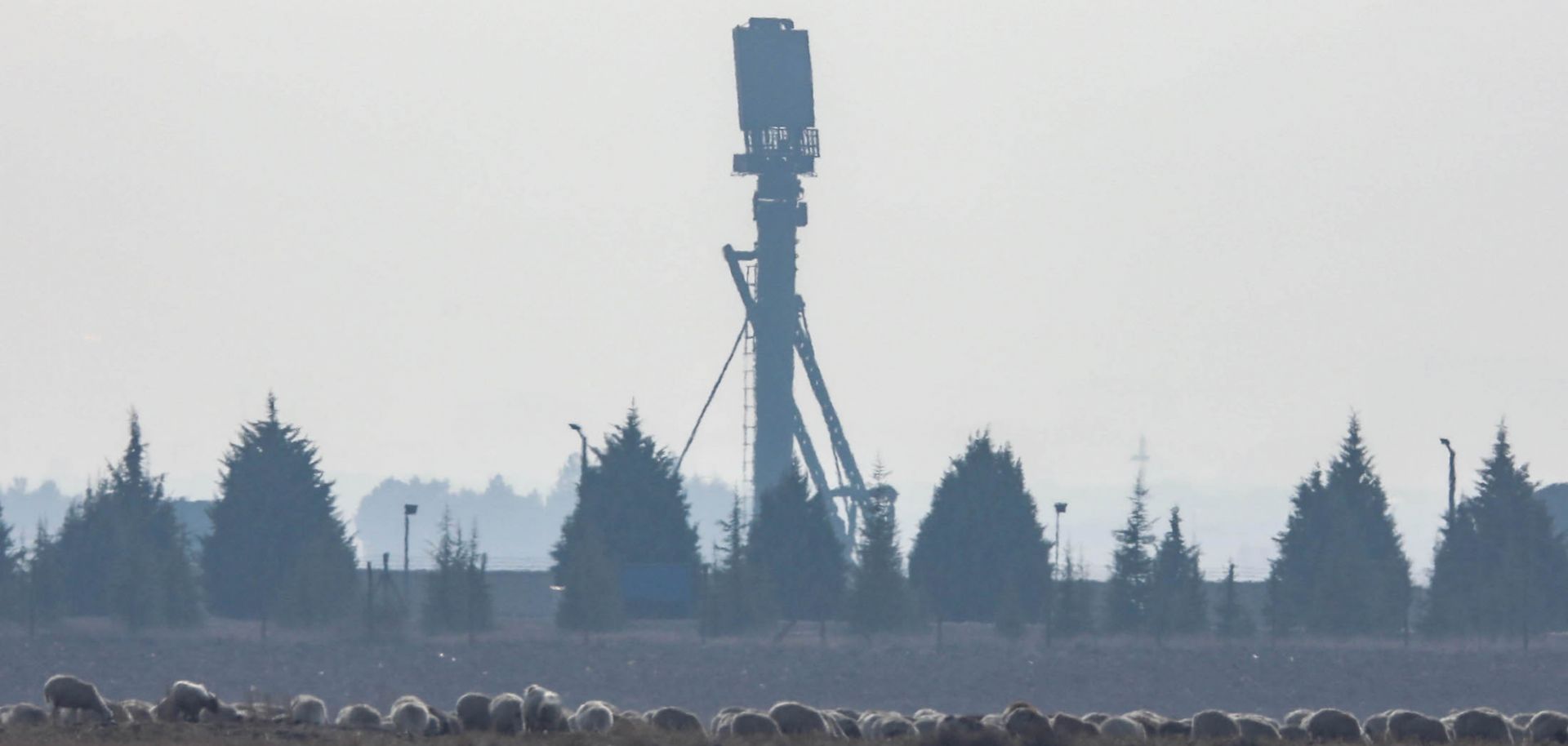
The Turkish military activates the S-400 missile system from Russia at an airbase in Ankara on Nov. 25, 2019.
Turkey is poised to soon test its new Russian S-400 missile system, betting that the immediate U.S. pushback will remain symbolic and not include sanctions. Turkey has signaled it will test the S-400 missile system near the Black Sea province of Sinop from Oct. 13-16, according to a “notice to airmen” from the Turkish government that warned of unspecific missile testing. Washington already ended Turkey’s participation in the F-35 program as punishment for purchasing the S-400 system, which it fears will provide Moscow with a backdoor to gain information on advanced NATO weapon systems, such as the F-35, in addition to fostering overall greater security cooperation between Turkey and Russia. U.S. President Donald Trump, however, has yet to signal any plans of enacting new sanctions on Turkey, which — while popular in Congress — would have to overcome a presidential veto.
- Trump has shielded Turkey from lawmakers’ growing calls for sanctions related to the S-400 delivery, as well as Turkey’s invasion of Syria in October 2019. A pro-sanctions supermajority in Congress strong enough to force through legislation without the White House’s approval also has yet to emerge.
- In November 2019, Turkey tested the S-400 system against American-made F-16s without generating significant U.S. backlash. The test, however, did reinforce U.S. concerns that the system would provide Russia new information about its usefulness.
The test, as well as Ankara’s overall aggressive regional behavior, will exacerbate Turkey’s currency crisis by further undermining investor confidence in the country. Concerns about Turkey’s S-400 test, along with its involvement in the ongoing conflict between Azerbaijan and Armenia, already caused the lira’s value against the U.S. dollar to hit a new all-time low in early October. Specifically, investors are worried such actions could prompt Europe and the United States to impose sanctions by further inflaming anti-Turkish sentiment in the West.
- Turkey’s lira has been particularly vulnerable to geopolitically-driven investor sentiment changes since 2018, when the United States briefly threatened sanctions on the country for the detention of the American pastor Andrew Brunson and spurred a currency crisis.
- The unsustainable currency defense strategies of Turkey’s central bank have seen the country’s fiscal reserves dip into negative territory. The lira has also been deeply affected by the COVID-19 pandemic’s impact on tourism rates, which helps bring hard currency to Turkey.
- To address the lira’s depreciation, Turkey announced a rare interest rate hike in mid-September.
- Turkish banks have also found a variety of informal means to raise interest rates and ease pressure on the lira, though the currency’s value has continued to slide.
In response to these pressures, Turkey’s ruling Justice and Development Party (AKP) is more likely to continue adjusting its economic policies, rather than stand down from its confrontation with the United States over the Russian missile system. The S-400 system is a badge of pride for the increasingly nationalist-leaning AKP, and testing it will help boost the party’s legitimacy as it tries to find its footing within the new context of Turkey’s weakening economic situation.
- Amid the country’s growing currency crisis, the AKP will rely even more on nationalist rhetoric and foreign policies to shore up support ahead of 2023 national elections.
- Sanctions threats from the United States over the system would only play into the AKP’s narrative by provoking nationalist feelings among Turks who prize the country’s independent foreign policy.
