
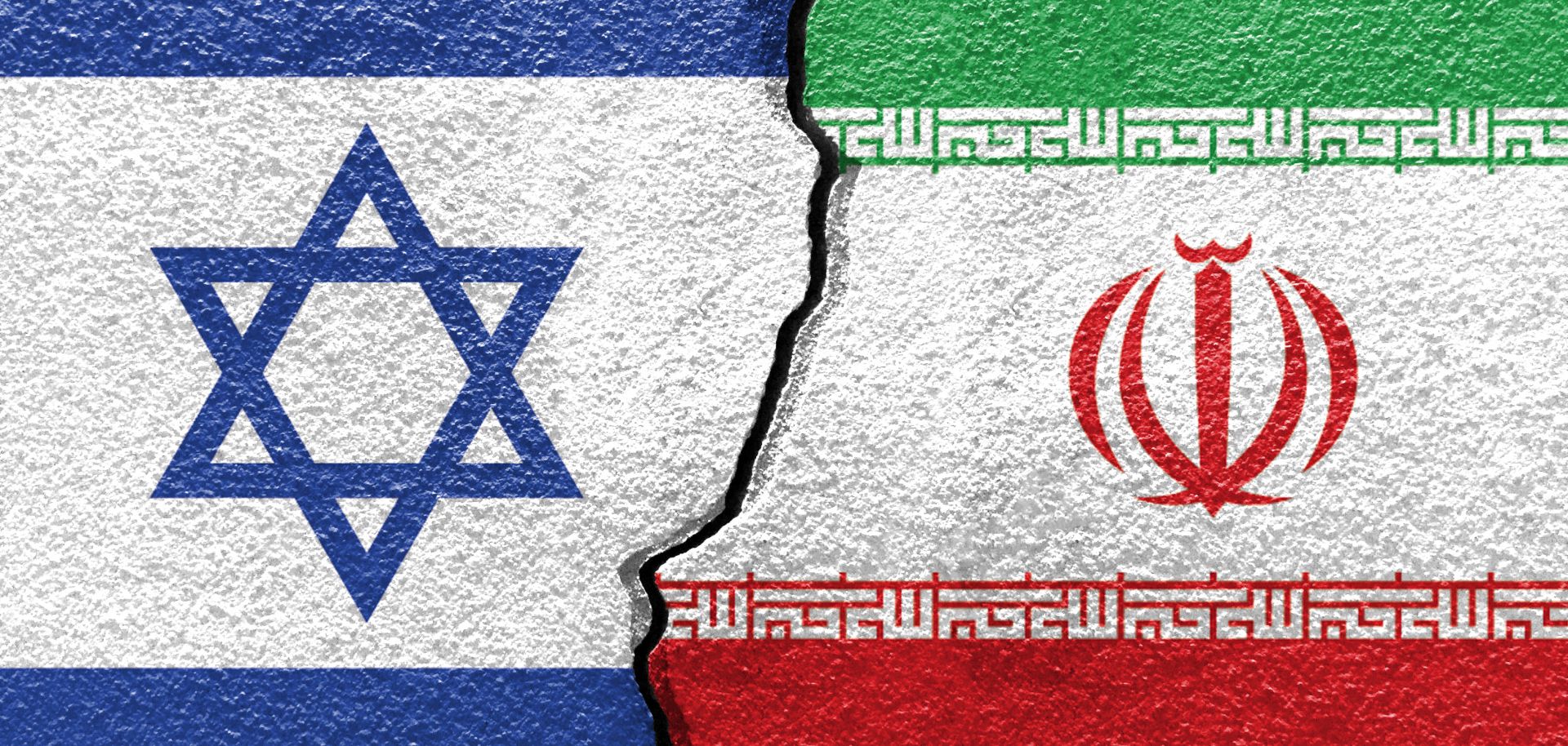
An illustration shows the flags of Israel and Iran painted on a cracked wall.
A victory by U.S. presidential candidate Joe Biden in November could prompt Israel to escalate its attacks against Iran in both current and new theaters across the Middle East in order to derail a potential U.S. return to diplomacy with Israel’s regional archnemesis. Before the U.S. election, Israel is unlikely to significantly alter its current strategy of recurrent, opportunistic strikes against Iranian forces in Syria, Iraq and Lebanon, since Tehran’s nuclear program is not yet showing signs of the imminent development of a nuclear weapon. Increased attacks against Iran in the coming weeks would also risk jeopardizing the electoral prospects of Israel’s close U.S. ally, President Donald Trump, who is trying to use his reputation as a regional peace broker to bolster his chances of reelection in November. Moreover, Israel’s current “shadow war” with Iran, fought through proxy theaters and covertly within Iran itself, can continue to allow Israel to degrade Iranian regional capabilities without increasing the risk of regional conflict. The potential for a Biden win in November, however, could change this calculus by opening the door for a less hawkish U.S. posture toward Iran.
- Iran’s nuclear program is progressing, but not quickly enough to alarm Israel. The International Atomic Energy Agency’s inspectors have said that Iran is enriching uranium only to 4.5 percent. While the level of these stocks has increased, the enrichment level is lower than the 20 percent enrichment level that triggered Israel to seriously consider a direct strike on Iran in 2012. It is unclear how fast Iran could develop a nuclear weapon, but it would likely require sustained enrichment at 90 percent, which international inspectors (and potentially Western and Israeli intelligence agencies) would detect.
- Israel does not want to undercut Trump’s campaign strategy of using normalization deals, such as Israel’s new U.S.-brokered agreements with the United Arab Emirates and Bahrain, to promote himself as a regional peacemaker to war-weary American voters. Trump has also been drawing down forces in Iraq and Afghanistan as part of this political strategy.
- Under its current anti-Iran campaign, Israel has continued to carry out strikes, both covert and overt, on Iranian targets regionally. On Sept. 10, Israeli warplanes struck an alleged Iranian missile facility outside of the Syrian city of Aleppo. Israeli agents were also widely believed to be behind the July 2 sabotage attack against Iran’s Natanz enrichment site, which potentially set back Iran’s nuclear program by damaging a centrifuge assembly workshop.
Biden’s statements on Iran suggest his administration would scale back Trump’s aggressive anti-Iran strategy, raising the potential for reduced sanctions, resumed humanitarian aid and, most importantly for Israel, the beginning of negotiations for a new nuclear deal. As president, Biden could readily reverse the tough sanctions Trump has imposed, including the most recent ones passed on Sept. 21, in an attempt to restart negotiations with Tehran. A Biden administration would also be less likely to tolerate regionwide Israeli strikes that could jeopardize such negotiations, particularly in sensitive countries such as Iraq where the United States is directly competing for influence with Iran.
- In a CNN op-ed published on September 13, Biden wrote that as president, he would use the 2015 Joint Comprehensive Plan of Action (JCPOA) as a starting point to renew negotiations with Iran, as well as would loosen sanctions on humanitarian aid to Iran during the COVID-19 pandemic.
- On Sept. 21, the Trump administration signaled its intent to continue to unilaterally enforce the U.N. arms embargo by sanctioning over two dozen people and entities associated with Iran’s arms industry. Biden’s campaign, by contrast, has stated they would move away from this unilateral method to pressure Iran’s regional behavior, and would instead begin to reengage international partners that have opposed Trump’s maximum pressure sanctions strategy.
- The Trump administration has not criticized Israeli military actions against Iran, including even the controversial Israeli strikes on Iraq in July 2019. Under Biden, the White House is not guaranteed to give such diplomatic and military leeway for Israeli strikes.
Past policy suggests that Israel would position itself to undermine any potential diplomatic progress between a future Biden administration and Iran. This could include a more hawkish airstrike strategy and intense lobbying in the United States, as well as an escalated covert campaign that could renew assassinations or attacks on vital infrastructure in Iran.
- Israel could increase the overall pace of attacks against Iranian forces, as well as go after targets previously avoided for fear of escalation (particularly in Syria and Lebanon). Israel could also potentially add new theaters, such as the Red Sea or Yemen, to its airstrike campaign, in addition to increasing activity in its current theaters of Lebanon, Syria and Iraq.
- Israel may escalate its covert campaign both inside Iran and in regional proxy theaters. This could include a repeat of its 2010-2012 assassination campaign against Iranian scientists, and/or an expansion of covert operations in other proxy theaters such as Yemen, where the Iran-aligned Houthis remain entrenched.
- Despite changing political and demographic conditions weakening its relationship with the U.S. Democratic Party, Israel still has notable bipartisan support in Congress, and its lobbying efforts could thus slow negotiations or create legislative obstacles to another new Iranian nuclear deal. In 2015, Israeli lobbying in Washington helped create a bipartisan U.S. coalition against the JCPOA brokered by former President Barack Obama’s administration. As a result, the Senate never ratified the nuclear deal as a formal treaty, which later allowed Trump to unilaterally withdraw from the agreement without Congressional oversight.
In addition to degrading Iranian forces across the region, this more hawkish Israeli strategy could help undercut a Washington-Tehran rapprochement by provoking Iranian retaliation. Israeli military action against Iran could spark an Iranian nationalist backlash, increasing support for hardliners in Iran’s presidential election coming in June 2021. These hardliners are less likely to renegotiate a new deal with the United States without a substantial change in America’s Iran policy, potentially creating greater diplomatic daylight between the two before negotiations could seriously begin.
Such actions, however, are not guaranteed to provoke Iran, and would risk undermining Israel’s relationship with a new Biden administration. Escalated military action against Tehran could be seen negatively by a potential Biden administration trying to negotiate a reduction in hostilities, risking backlash from Israel’s key American allies.
