
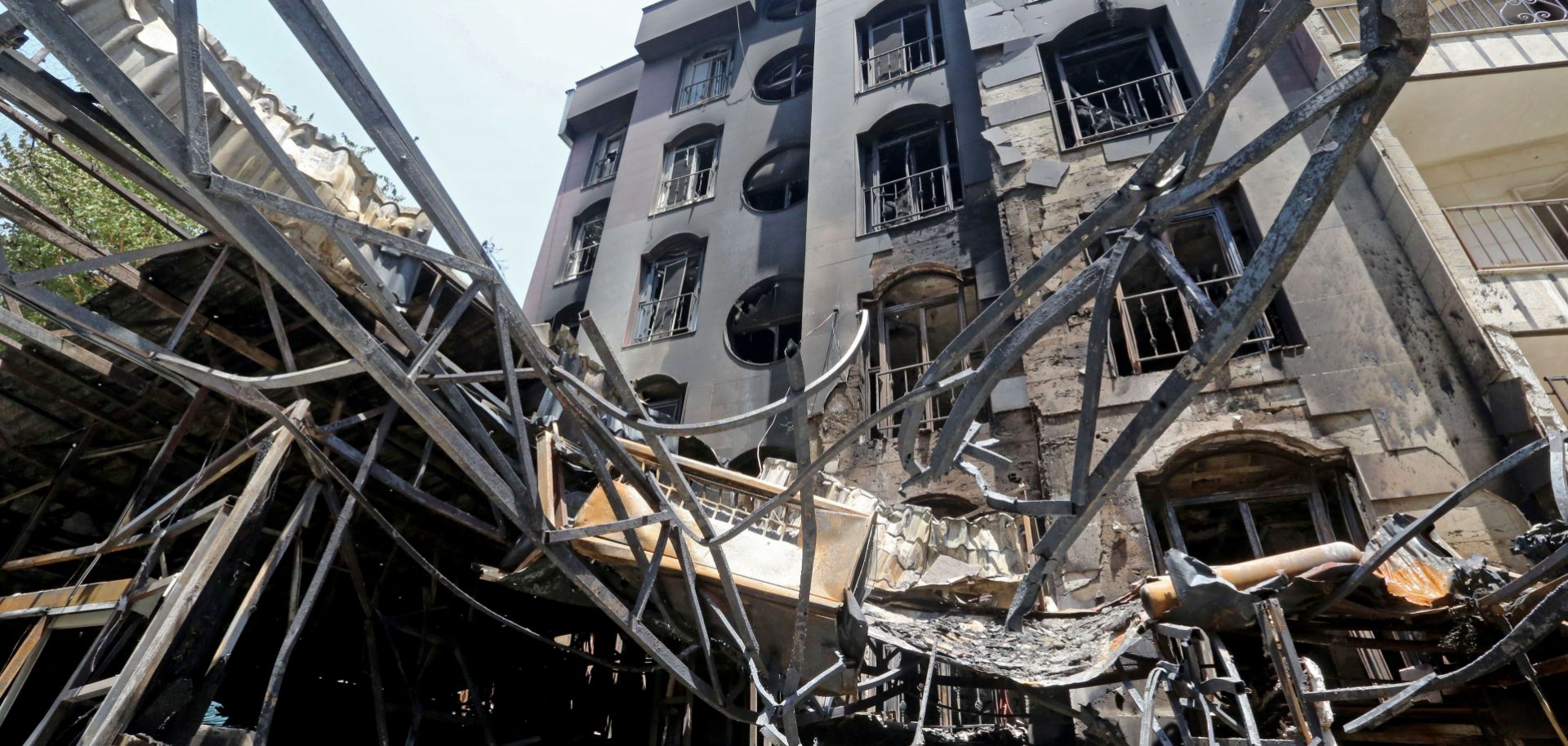
A photo shows the site of a recent gas explosion at the Sina Medical Center in Tehran, Iran, on July 1, 2020. 19 people were killed in the blast.
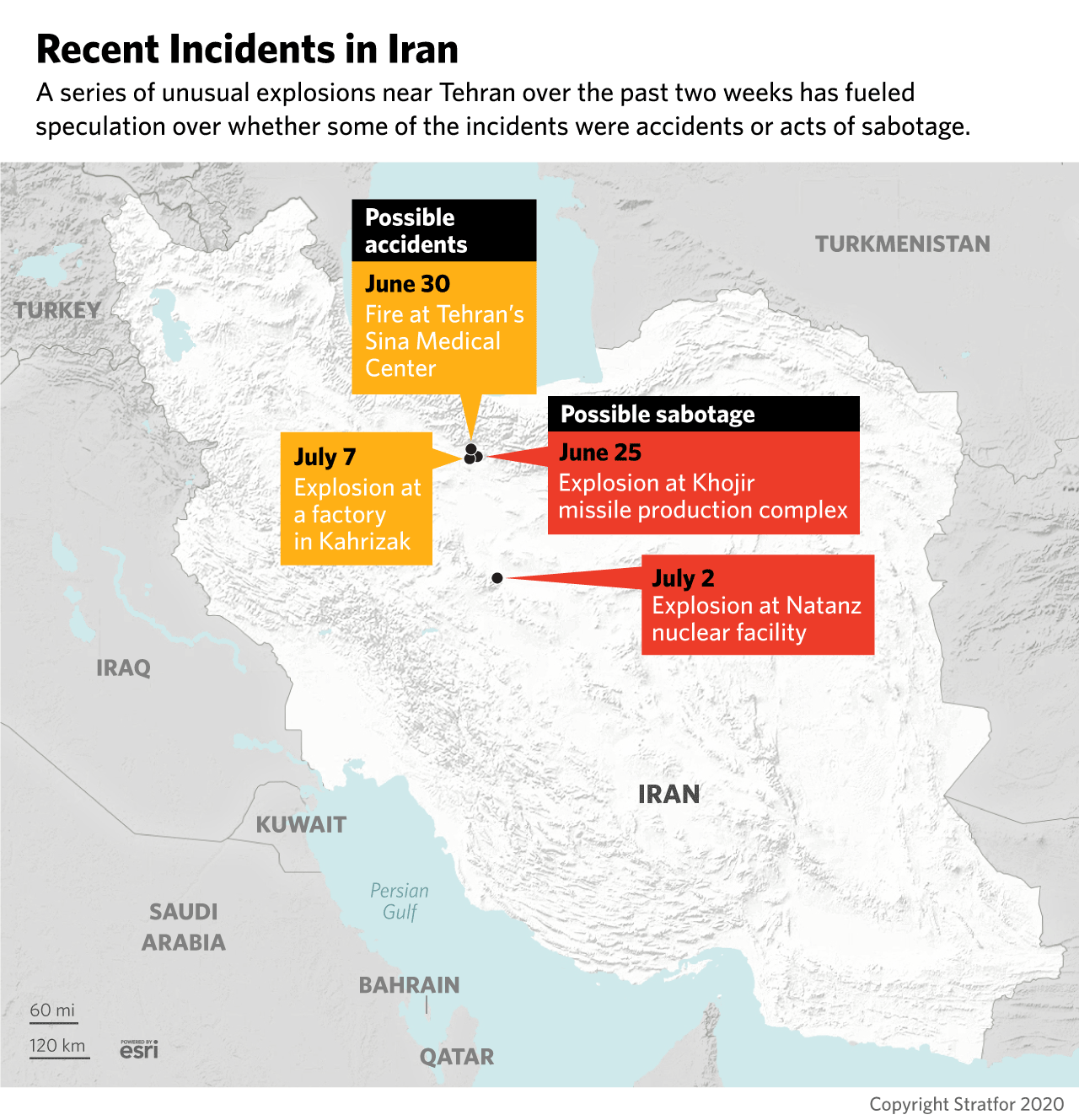
Israel was likely behind a July 2 explosion and fire at Iran's Natanz nuclear facility, and potentially some of the other similar incidents that have occurred near Tehran over the past two weeks, including a June 26 explosion at the Khojir missile complex. Although Tel Aviv doesn't typically claim its covert actions against Iran, motive and past history make Israel the most likely actor to conduct such sabotage operations against Iranian infrastructure and assets.
- On July 5, an unnamed intelligence official told The New York Times that Israel was responsible for placing the "powerful bomb" that was detonated in a new centrifuge assembly facility at Natanz. The Washington Post and other media outlets have also pointed to a plausible Israeli operation behind the July 2 explosion.
- When asked about the Natanz incident on July 5, Israeli Defense Minister Benny Gantz said Israel wasn't necessarily behind every attack on Iran, but he also did not explicitly deny the country's involvement.
An uptick in such acts of sabotage would suggest Israel may be reverting to a policy of unilateral action against Iran's nuclear and missile programs. Israel is frustrated by the failure of Western and regional countries to fully rein in Iran's military and nuclear capabilities, which it views as direct threats to its domestic and regional security. With the potential for a less friendly U.S. administration to take office in January, Israel may also be calculating that it has an optimal but limited window to act more aggressively against Iran's nuclear program.
- Before the United States began working on the Iran nuclear deal in 2013, formally known as the Joint Comprehensive Plan of Action (JCPOA), Israel was engaged in a prolonged campaign to degrade and weaken Iranian nuclear capabilities, which primarily included covert operations, cyberattacks and targeted assassinations of Iranian scientists. During this time (between roughly 2006 and 2012), Israel also planned but canceled numerous other overt operations targeting Iranian nuclear facilities.
- Since Israel's previous sabotage campaign, however, Iran has continued to make incremental progress in advancing its nuclear and missile capabilities. This is despite U.S. and global efforts such as the JCPOA and U.S. President Donald Trump's more recent maximum pressure campaign.
Iran will likely use its favored asymmetric tactics, such as cyber and proxy warfare, in response to either acknowledged or perceived Israeli actions, while continuing to develop its nuclear and missile programs. Incremental development of its nuclear capabilities remains one of Tehran's primary means of retaliating and reacting to increased U.S. sanctions and Israeli attacks, both of which Iran views as unjust attempts at containment.
- On July 5, the spokesman for the Atomic Energy Organization of Iran said last week's fire in the Natanz facility caused "significant damage" and "could slow down the development and production of advanced centrifuges in the medium term," but wouldn't keep Tehran from continuing to develop its nuclear program.
- As evidenced by recent cyberattack attempts, Iran is a more capable cyber actor now than it was during the 2006-2012 Israeli sabotage campaign and can respond with attacks against Israeli and Israeli allies throughout the region.
- If it becomes obvious that Israel is indeed targeting Iran, Iran could target Israeli interests in ways perceived as a proportional response but still unlikely to trigger a regional war, such as cyberattacks against Israeli embassies outside of the Middle East.
Continued acts of Israeli sabotage and Iranian retaliation could deal the final blow to what remains of the JCPOA following the U.S. withdrawal in May 2018. Israel may be trying to further undermine remaining international support for the JCPOA by provoking an Iranian response that exposes Tehran's growing non-compliance and declining political commitment to the framework.
- In the near term, Iran needs to maintain its trade ties with Europe, Russia and China to help keep its sanctions-burdened economy afloat, while still depicting the United States as the villain that withdrew from the JCPOA. For this reason, Tehran seeks to only carefully violate the deal with actions that only blur the lines of what's allowed without blatantly breaching the accord.
- But if the recent series of explosions near Teran does, in fact, turn out to be the start of a more concerted Israeli campaign, Iran will have to decide how to secure its nuclear program from future attacks, which could mean moving its nuclear activities to military sites. This would risk violating the JCPOA by making it more difficult for the International Atomic Energy Agency to access nuclear sites.
- On July 3, EU officials said that Iran had triggered the JCPOA dispute mechanism out of concern over lack of implementation by other signatories. This action could be yet another precursor to the official end of the deal.
