
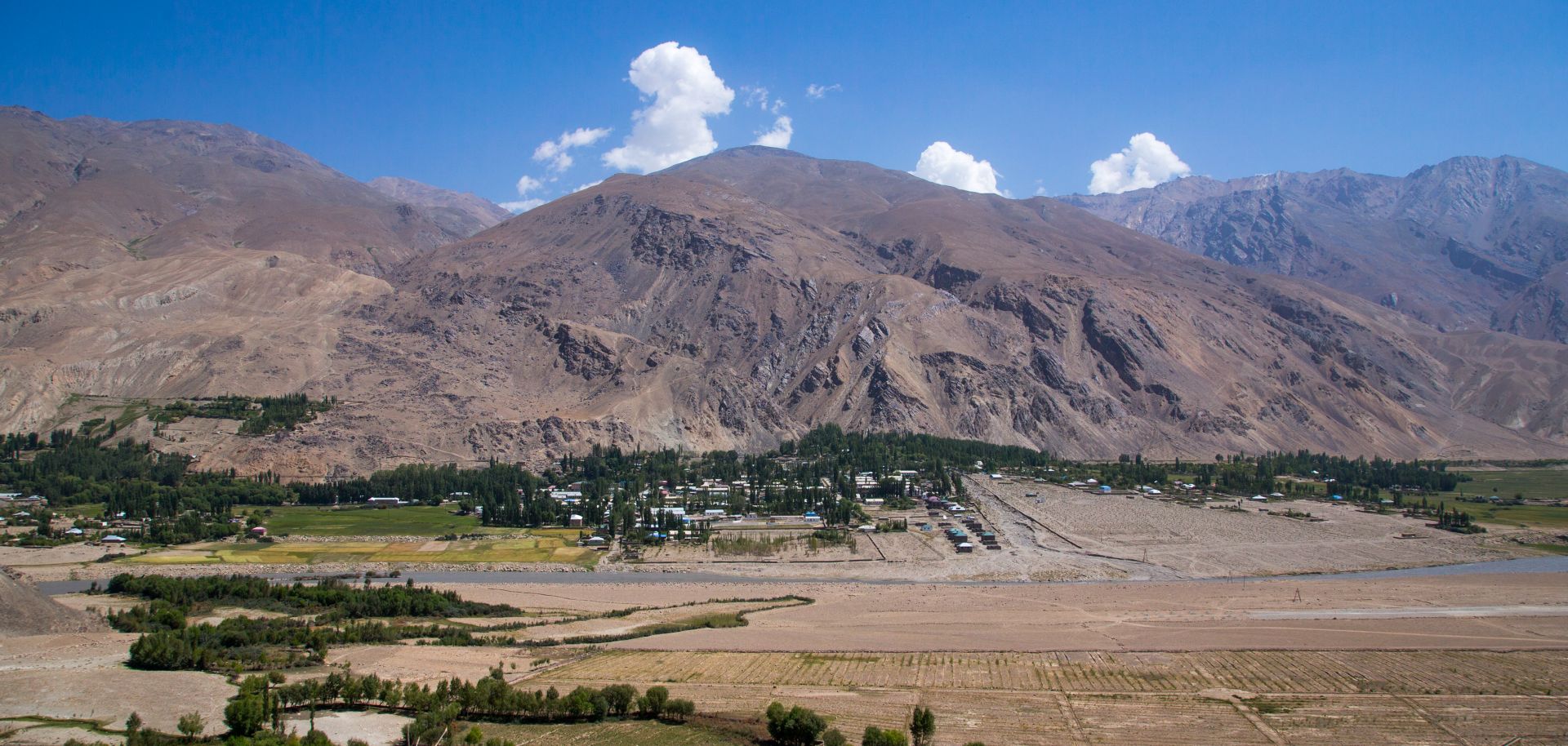
A view of southwestern Tajikistan from the Afghan border town of Qazi Deh.
Sustained protests and altercations with security forces in southwestern Tajikistan highlight the challenges the former Soviet state faces in ensuring the withdrawal of U.S. troops in nearby Afghanistan doesn't spur violence within its own borders. Hampered by limited domestic security capabilities, as well as longstanding cultural rifts with the local populations who inhabit large portions of the country's Afghan border, President Emomali Rahmon's government in Dushanbe will be forced to increasingly draw on Russia in order to protect its internal security and territorial integrity amid the heightened risk of unrest to the country’s south.
Tajikistan's Border Struggles
Tajikistan's struggle to quell localized resistance in the town of Rushan, which is situated on the Afghan border, underlines its security forces' limited ability to control the country's border regions. On May 25, the local inhabitants of Rushan initiated protests and successfully freed prisoners in response to a law enforcement operation aimed at arresting the leader of a local drug trafficking organization. While the country allegedly deployed additional special police forces to regain control over the situation, the limited and localized uprising is nonetheless symptomatic of the broader limitations of governance in the Pamir Mountains area.
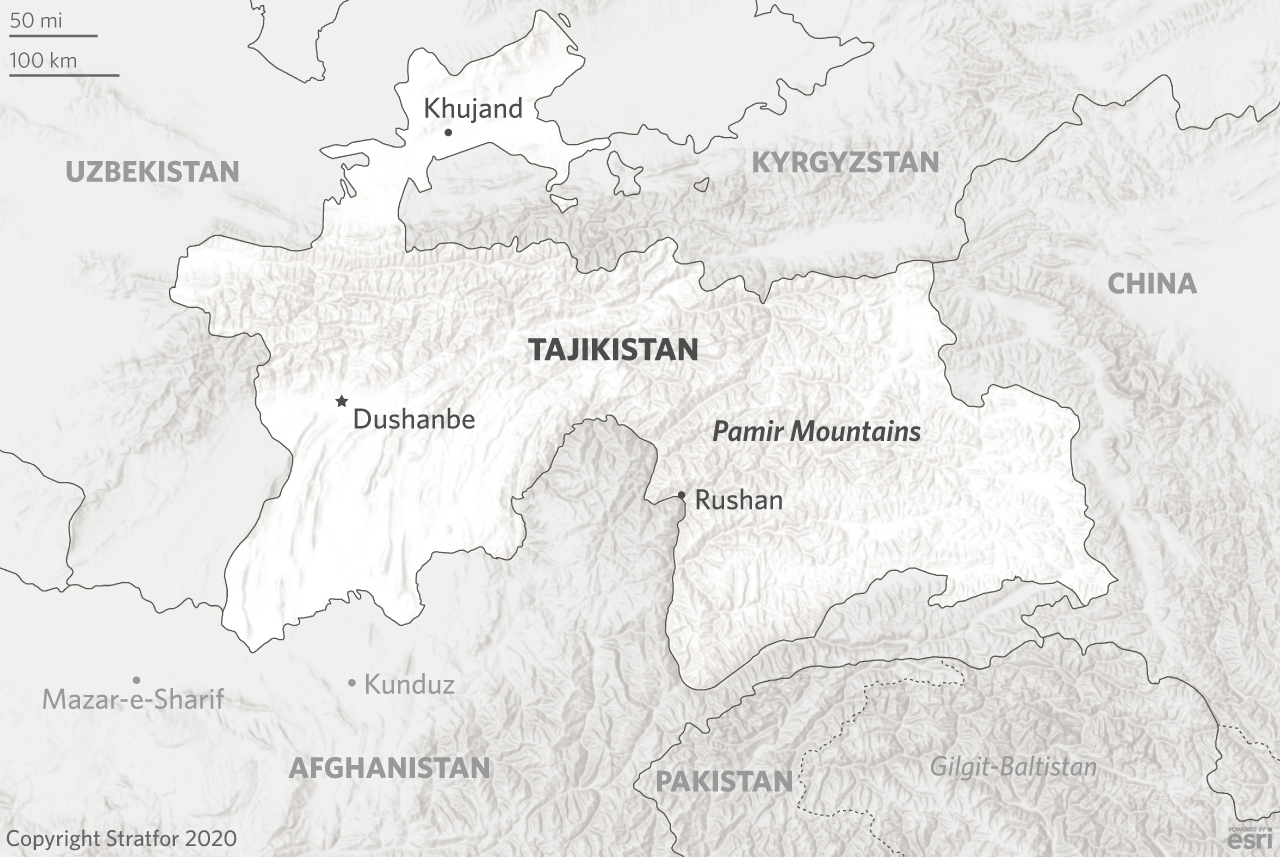
As evidenced by the recent unrest in Rushan, efforts to impose greater control over Tajikistan's southeastern border risk exposing simmering social divisions within the country that stem from its 1992-1997 civil war. President Rahmon's government has sought to establish greater control over the border for fear of spill-over from the continued conflict in Afghanistan, where U.S. and other Western security forces are now making their exit, and where peaceful collaboration between the Taliban and Kabul remains unlikely. But the Pamir populations that inhabit the eastern portion of this border region still have significant reservations toward the rule of Rahmon’s government, which originally derived its power from the militias of southwestern Tajikistan during the civil war and subsequent years of ethnic cleansing that occurred in the country. Local criminal organizations in Tajikistan — including the one at the center of the May 25 uprising in Rushan — are also the descendants of armed groups that opposed the government in the civil war. And today, these groups continue to thrive on illicit trade across the border with Afghanistan and tacit collaboration with the Taliban.
An Emerging Security Risk
Amid the U.S. withdrawal from Afghanistan, the potential for an escalation of conflict or an expanded position of power at the hand of the Taliban increases Dushanbe's imperative for effective control over its border. The United States has long planned its exit from Afghanistan, and recently signaled that it may even expedite its withdrawal despite Washington's failure to negotiate a cease-fire between the Afghan government and the Taliban. Without the presence of U.S. forces and their Western allies, there is a realistic fear of a security vacuum opening up in Afghanistan that allows militancy to extend into other areas of Central Asia, including Tajikistan.
Indeed, in November, Islamic State-affiliated militants attempted to attack a military outpost near Tajikistan's Uzbek border in an effort to obtain weapons to fuel further attacks. While Tajikistan has so far been able to contain such spillover, the demonstrated intent of jihadist groups to extend operations into Tajikistan, combined with the historical links between Pamir groups and the Taliban, has made the government's need to secure its Afghan border all the more urgent.
The Need for Russia's Help
Tajikistan's limited security capacity also generates an increasing role for Russia to provide support and further expand its direct military presence in the country. As a relatively weak security actor, the former Soviet state is inherently dependent on the external security providers, including its much larger northern neighbor. In the 1990s, Russia's involvement in Tajikistan's civil war was instrumental in protecting the Rahmon's government and forcing a cease-fire.
Russia sustained its military presence in Tajikistan following the dissolution of the Soviet Union in December 1991, and has since remained a close ally of the Tajik government. Over the past year, Moscow has deployed additional advanced military equipment to its forces in the country, and has also ramped up its efforts to train and equip Tajik forces in the hopes of stemming the potential spread of instability in its Central Asian sphere of influence.
