
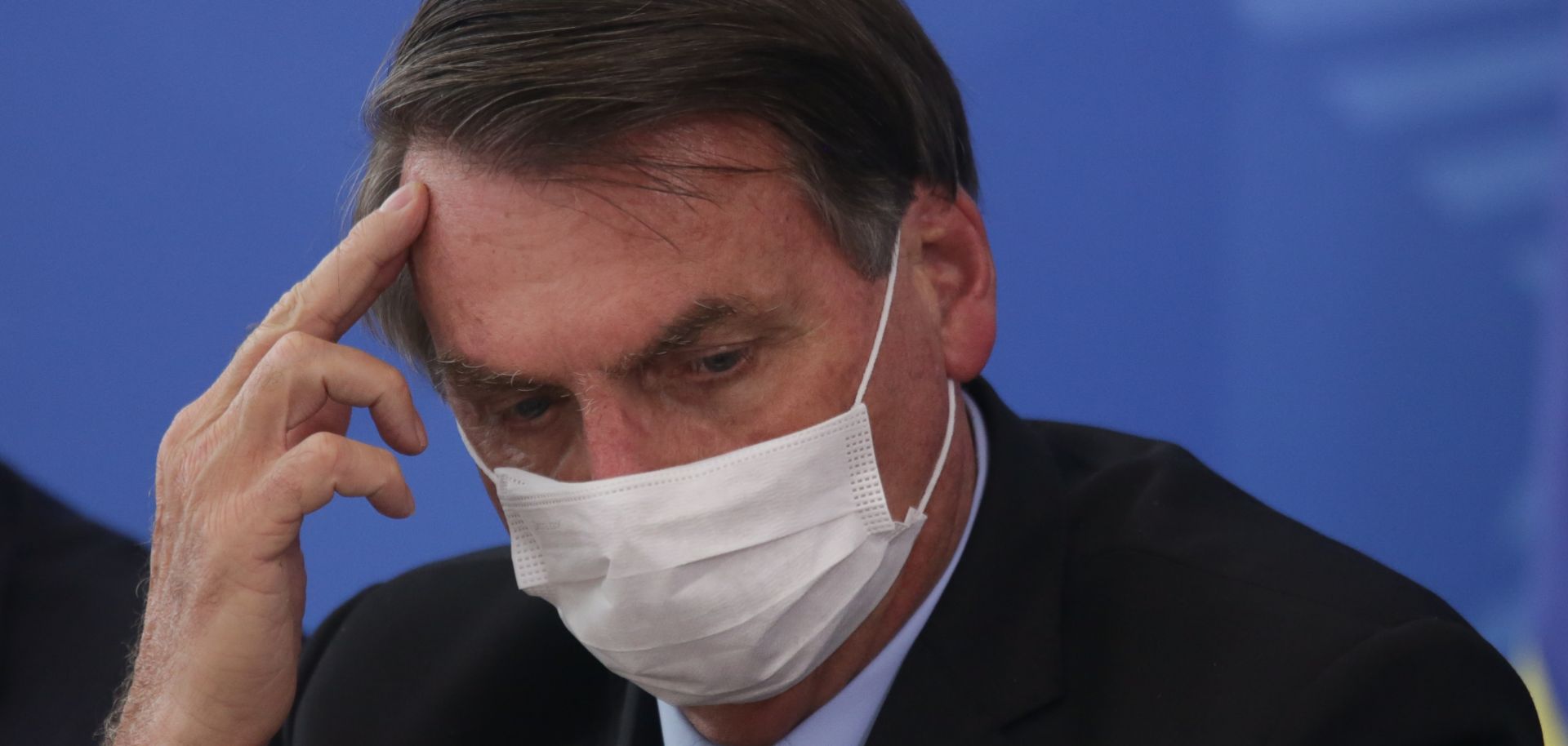
Brazilian President Jair Bolsonaro wears a protective mask during a March 18 press conference on the country's COVID-19 outbreak. As of March 27, Brazil had reported a total of 2,915 cases of the virus and 77 deaths.
Over the weekend of March 21-22, the governors of several Brazilian states, including Sao Paulo and Rio de Janeiro, imposed bans on non-essential commercial activities as well as mass events to help stem the spread of COVID-19. President Jair Bolsonaro condemned these moves in an interview with CNN Brazil the evening of March 22, emphasizing the damage being done to economic growth. This has then led to a heated exchange of comments between Bolsonaro and Sao Paulo Governor Joao Doria, a former ally of the far-right president, who has since chastised the Bolsonaro's lack of leadership and perceived flippant attitude over the country's escalating outbreak.
Bolsonaro’s position also has been condemned by many members of the country's Congress, as well as Brazilians. Unable to take to the streets due to the lockdown, people have taken their anger to apartment balconies over the past week by banging pots and pans, and shouting "Fora Bolsonaro!" ("Get out, Bolsonaro!"). These public demonstrations against the president have taken place in both Sao Paulo and Rio de Janeiro — cities where Bolsonaro commanded majorities in the 2018 presidential election.
Burning Bridges
The rift over COVID-19 policy has deepened the far-right president's ongoing alienation from Brazil's conservative political establishment, which increasingly argues that Bolsonaro lacks respect for the country’s established norms of democratic governance.
- Bolsonaro broke with his Social Liberal Party (PSL) in November 2019 over differences with its the party's chairman and other PSL legislators. He has since formed his own Alliance for Brazil party, which stresses populist social conservative themes around family values, opposition to gay marriage and the right to own guns, while remaining vague about financial and regulatory policy. The split has rattled the country's pro-business conservatives, who strongly believe in the democratic institutions established after Brazil's transition from military rule in 1985.
- Bolsonaro also recently endorsed a social media campaign calling for nationwide demonstrations on March 15 in support of him. The campaign quickly degenerated into calls for violence against legislators, authoritarian rule under Bolsonaro, and even nostalgia for pre-1985 military rule. The editorial pages of several conservative-leaning newspapers criticized the campaign, as have senior Brazilian politicians including former president and leader of the center-right Brazilian Social Democracy Party, Henrique Cardoso, and Governor Doria.
Implications for Tax Reforms
These mounting tensions are dimming Bolsonaro’s prospects to push through passage of his centerpiece tax reform before municipal elections in October. Bolsonaro’s finance minister, Paulo Guedes, expressed frustration on March 3, saying "we have only 15 weeks to save Brazil" in an apparent reference to the rest of the reform package that the Bolsonaro administration wants to enact. Bolsonaro has also indicated that he wouldn't sign the tax reform package unless legislators amended it, intensifying congressional perceptions that he is undermining the balance of power between himself and Congress.
The near term focus into this summer over Brazil’s response to the COVID-19 pandemic will probably preempt any agreement on other economic legislation not directly related to the crisis, with the exception of temporary waivers of mandatory spending and borrowing limits. When the Bolsonaro administration introduces its tax reform bill, which is likely to occur in April after delays, it will be subjected to amendments in line with the normal legislative process, but defying Bolsonaro’s veto threat if that is the case. While financial markets and foreign investors had previously expected a continuation of the economic reform progress seen during Bolsonaro’s first year in office, the outlook now is for legislative gridlock through the remainder of the year.
