
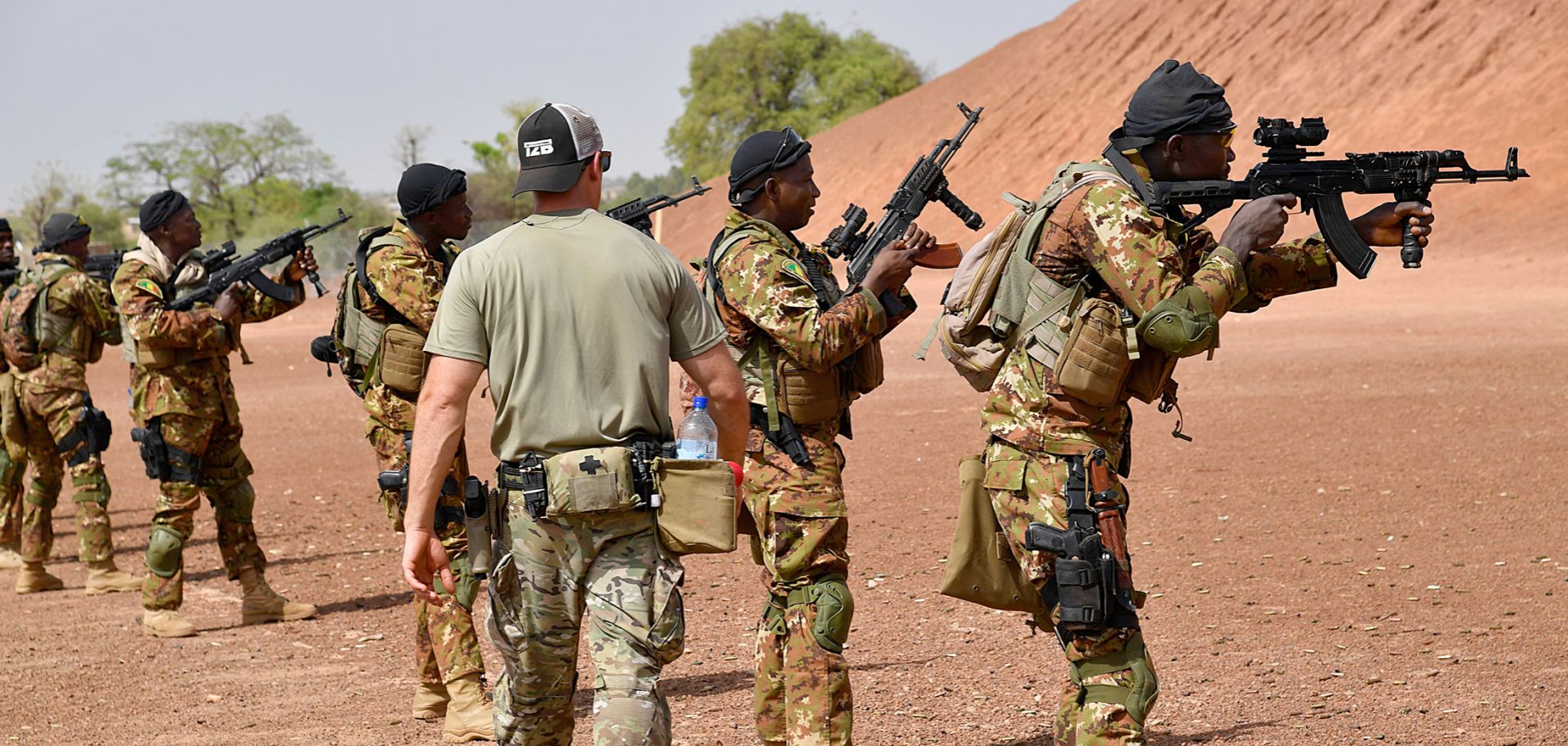
A U.S. Army trainer instructs Malian soldiers on April 12, 2018, during an anti-terrorism exercise near Ouagadougou, Burkina Faso. France is worried about helping manage regional militancy after the United States leaves the area.
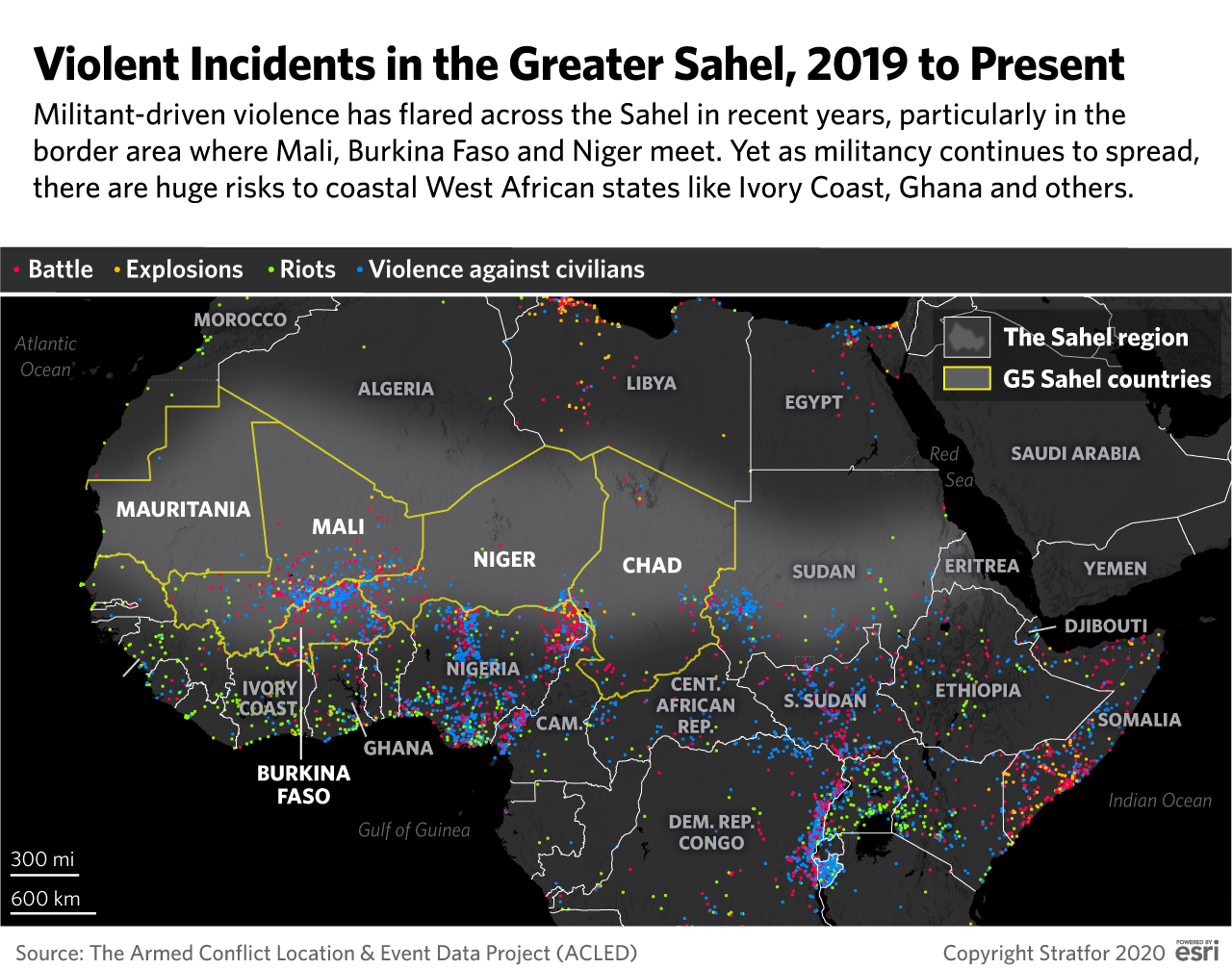
Formally, at least, no decision has been made, but the writing appears to be on the wall: The United States is considering pulling out security personnel and assets from West Africa. It's a decision that is ratcheting up anxiety in Paris as French defense planners ponder the consequences of a U.S. pullout, particularly from the security-plagued Sahel. Already, senior French security officials, including Armed Forces Minister Florence Parly (the counterpart to the U.S. defense secretary), have vowed to go to Washington to try to discourage the Americans from withdrawing by reminding them that France supports U.S. efforts in other regions, like the Horn of Africa and the Middle East. Yet while the French may have some allies in the U.S. Congress, Department of Defense and the Department of State, the Trump administration is likely to push forward with its plan to shift personnel and assets elsewhere to better counter Russian and Chinese influence. That, in turn, could leave France scrambling to stanch a militant advance before it reaches more important allies along the coast.
France on Its Own?
The U.S. pullout will have consequences for France and the Sahel. First, it will put more of the counterterrorism onus on Paris and its African allies, who already have struggled against the rising tide of militancy in recent years — even despite direct U.S. operations in the region and funding for France's operations to the tune of roughly $44 million a year. Washington, moreover, provides logistical support; crucial intelligence, surveillance and reconnaissance; and other critical assistance. Accordingly, a sudden U.S. withdrawal would result in an intelligence shortfall for France, which has relatively few resources in the region compared to the United States, thereby creating more room for militancy to fester. The pullout will also raise worries in coastal West African states, which present an enticing target to al Qaeda- and Islamic State-affiliated militant groups given their close ties with France and the United States and large populations of Western expatriates and tourists.
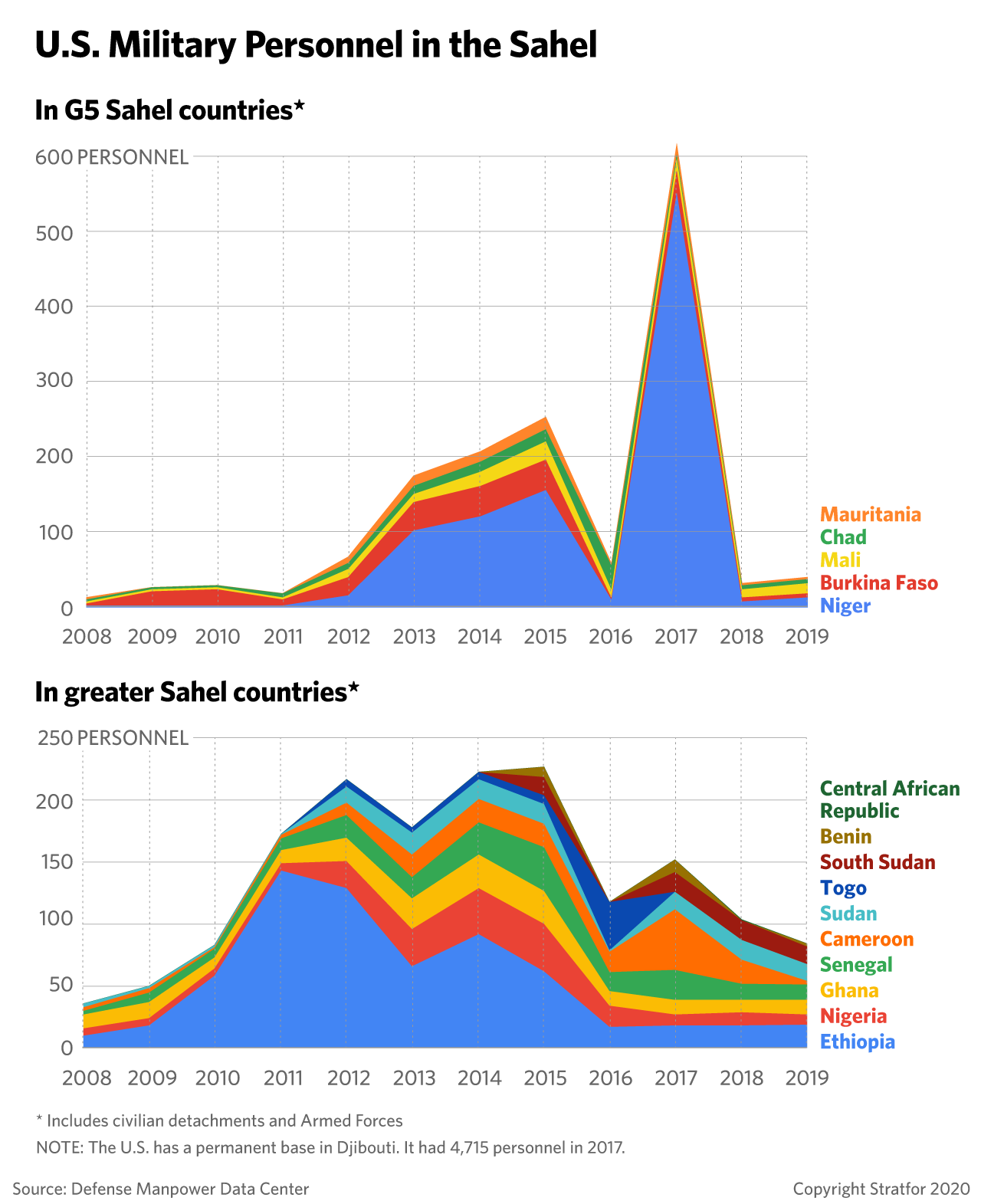
To complicate matters for Paris, its African allies are struggling with their own internal challenges. The most critical is Mali, which is struggling with deep governance, corruption and other problems that provide ever more fodder for militant groups to exploit. Neighboring Burkina Faso, however, has borne the biggest brunt of Mali's worsening security, as militants have greatly expanded their reach into the landlocked state, which borders four coastal West African countries. Indeed, Burkina Faso's security plight has become so desperate that lawmakers have approved a measure to arm citizens against the attacks. But even if implemented, the arming of poorly trained vigilantes would be far more likely to stoke up interethnic violence than halt the progress of jihadists.
France, meanwhile, is reportedly attempting to persuade fellow European Union members to allocate more troops and resources for the counterterrorism struggle, albeit without much success. Indeed, much-heralded proposals to proceed with Operation Tacouba, which would bring together French, European and African forces into a more unified front against the militants, have yet to find many takers in Europe.
With France increasingly devoid of powerful support in the Sahel, it will be important to monitor how Paris shifts its strategy in the region, especially as its much-hyped G5 Sahel Joint Force struggles to get off the ground amid training and financial constraints. According to reports, French President Emmanuel Macron was set to issue a final decision on Jan. 29 as to whether France would add more assets and troops to the counterterrorism struggle as drafted by Gen. Francois Lecointre, the army chief of staff. Regardless of what Macron decides, France might eventually direct more of its efforts and assets into multilateral efforts like the "Coalition for the Sahel," which reportedly will involve French and Sahel forces under a unified command structure. An increased emphasis on multilateral efforts could allow Paris to slowly reduce its more costly, unilateral efforts like Operation Barkhane, its roughly 4,500-troop counterterrorism operation that stretches across much of the vast Sahel region. At the very least, France wants to lessen its burden without increasing the likelihood that regional allies like Mali, Burkina Faso and Niger collapse or that coastal allies — and major regional economies — like Ivory Coast, Ghana and even Nigeria suffer any negative impacts.
Contemplating the Task at Hand
There are two possible twists to the U.S. drawdown in West Africa. First, it has arguably given France more leverage over its squabbling African allies, as they fear the consequences of an outright Western departure that would leave them to grapple with the specter of fighting militants alone. In fact, during a recent Sahel counterterrorism summit between Macron and his G5 Sahel counterparts, the French president reportedly said he was mulling a progressive, six-month disengagement of French forces from the theater if the allies fail to make any headway on security or political issues. Macron's threat may have been an attempt to compel reticent allies, particularly Mali, to undertake tougher political moves like cracking down on government-supported militias that have violated human rights in the country's center and far north or working toward implementing parts of the largely forgotten 2015 Algiers Agreement, which aimed to end the conflict between Bamako and its separatist far north.
The second possible twist is that the U.S. drawdown and increasing strain on the French military could entice competitors like Russia to move into the region. In its 2020 Annual Forecast, Stratfor noted that Russia would likely seek to make greater inroads in the region through its military diplomacy, which includes arms shipments and the use of private military contractors like the Wagner Group, which is already present in a number of African countries like the Central African Republic.
As the United States inches closer to a Sahel exit, France will be left contemplating the tasks ahead in its efforts to keep a lid on worsening security. But with Sahel states like Mali barely functioning amid the jump in militant activity, Paris will have to rethink its current strategy before more nightmarish scenarios occur — such as the spread of militancy to one of the region's economic engines, Ivory Coast.
