
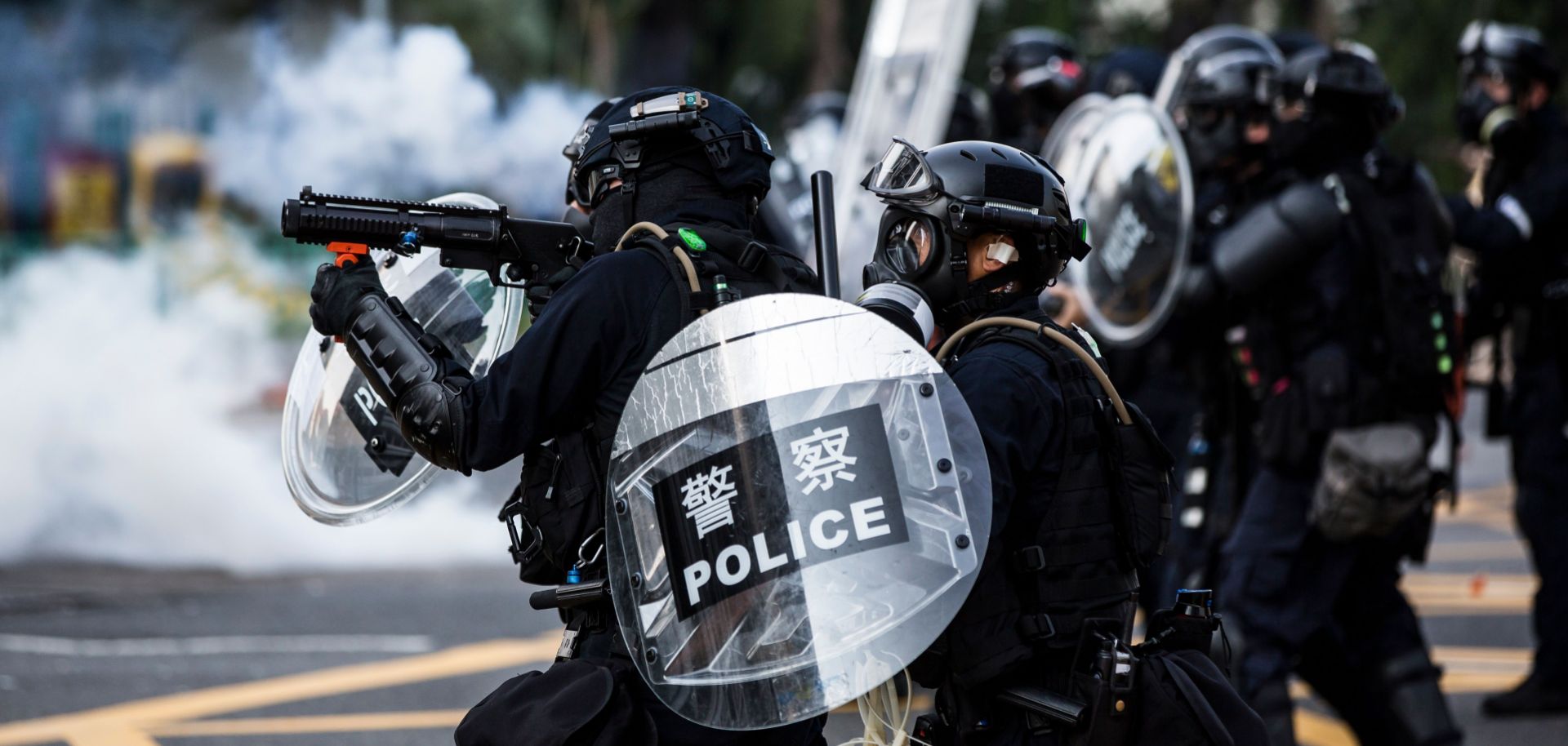
Police fire tear gas to disperse protesters in the Sha Tin district of Hong Kong on Oct. 1, 2019, as the city observes the National Day holiday marking the 70th anniversary of communist China's founding. Unrest has gripped Hong Kong since June.
Editor's Note: As with many protest movements, the trigger was comparatively innocuous: In early June, Hong Kong's government tried to push through the Extradition Law Amendment Bill, which stood to give local authorities the power to extradite city residents suspected of crimes to, among other places, mainland China. The bill prompted fury among a broad cross-section of Hong Kongers, who hit the streets to decry what they viewed as Beijing's erosion of the special territory's autonomy. More than six months on, protests continue apace — in spite of Chief Executive Carrie Lam's eventual revocation of the extradition bill — as the demonstrators' demands have grown to include guarantees that mainland China will respect their city's freedom. Despite the occasionally violent rallies that have pitted protesters against the city's police force, Beijing has denounced the demonstrations but so far chosen not to directly step in. There are no guarantees, however, that China will permanently remain on the sidelines — especially if the protests become more intense in 2020.
Hong Kong's electorate voted Nov. 24 overwhelmingly in favor of pro-democracy candidates in the city's district elections. But while the vote laid bare the support for candidates who espouse a Hong Kong freer from Beijing's control, the election won't alter the fundamental relations between the territory and the mainland government — or halt the city's protest movement. The huge victory for pro-democracy candidates significantly altered Hong Kong's political landscape and dealt the current government a blow, weakening the authority Beijing relies on to exercise control.
Take a look back at how Hong Kong's protests have developed over the second half of 2019.
A Protest Movement Snowballs
What to Watch for as the Hong Kong Protests Unfold (June 12, 2019)
On June 12, Hong Kong's legislature delayed debate on a controversial bill that would allow citizens to be extradited to mainland China for criminal trials. The delay comes shortly after hundreds of thousands of people in Hong Kong took to the streets to rally against the government's recent decision to bypass a standard committee review to accelerate the bill's passage, which would add mainland China, Macau and Taiwan to a 20-country extradition list.
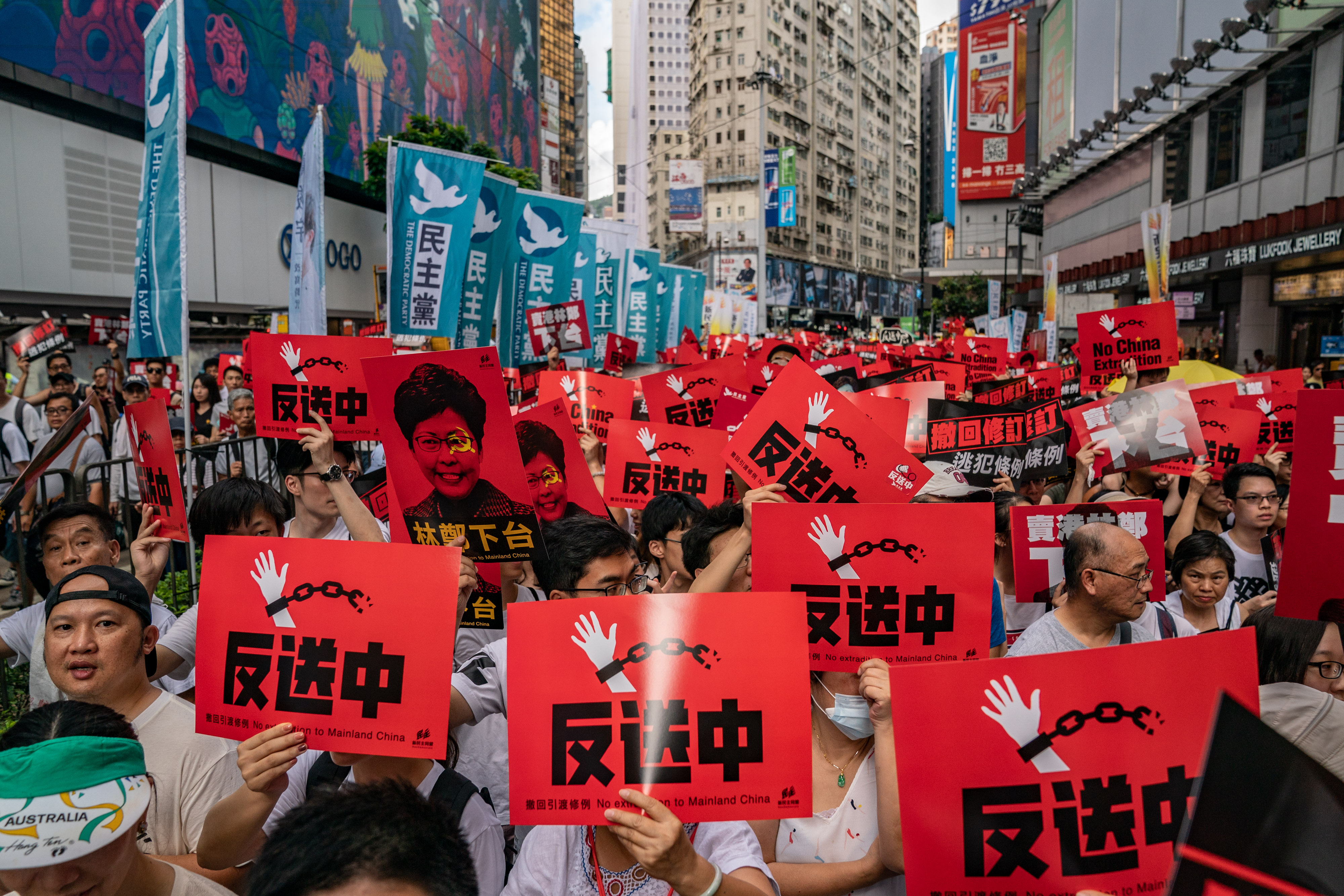
Despite the backlash, however, the government is still expected to resume the debate period and hold a vote on the bill in the coming weeks. In the meantime, demonstrations will likely continue and potentially escalate as the government keeps pushing forward with the law, fueled by fears that it could open up Hong Kong's judicial system to Beijing's political interference.
Hong Kong: Mass Protests Rage On Over Extradition Bill (June 17, 2019)
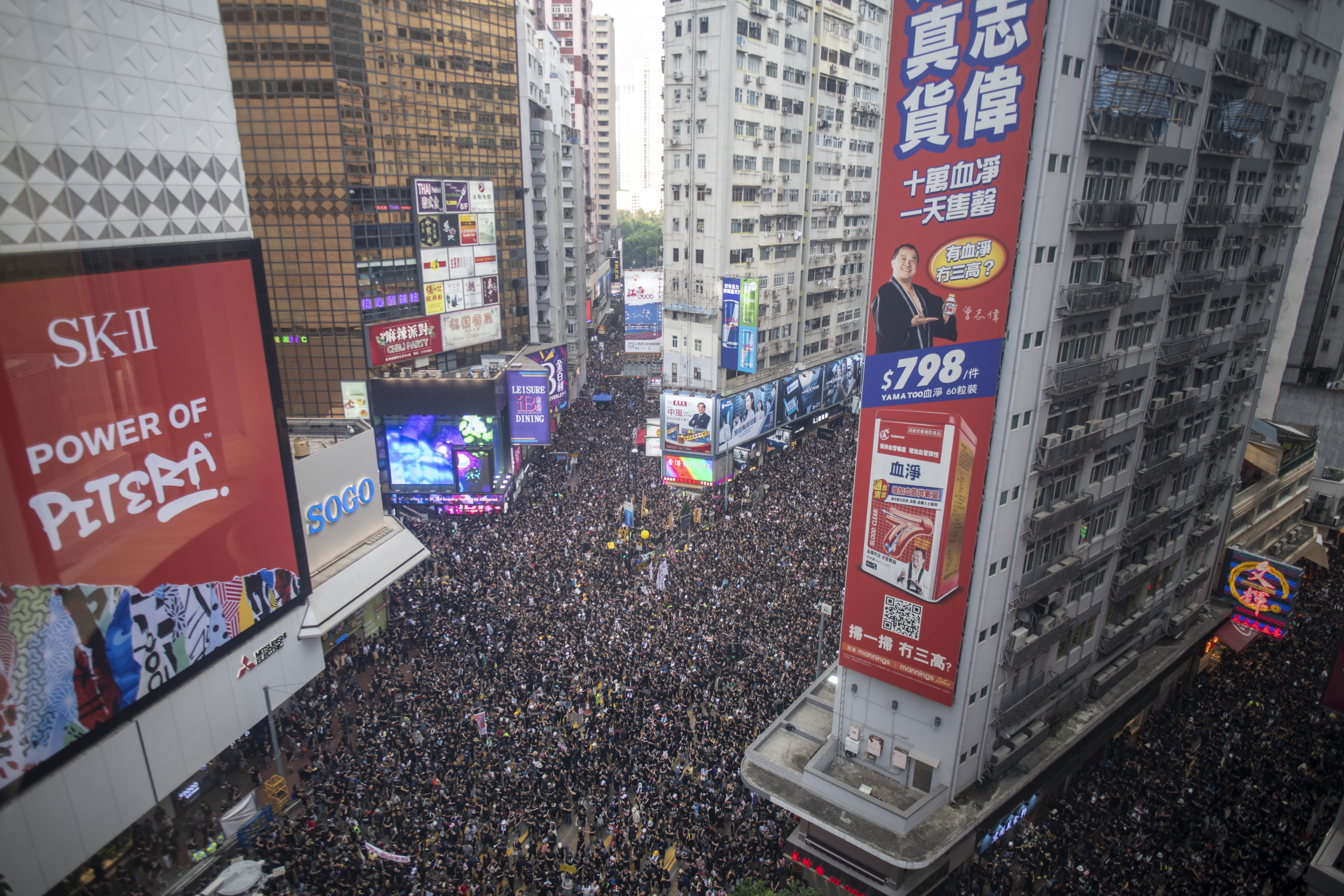
The city of Hong Kong again turned into a "sea of black" on June 16 as huge crowds took to the streets demanding the full withdrawal of a highly unpopular extradition bill and the resignation of Hong Kong Chief Executive Carrie Lam. In response to the ongoing protests, Lam announced the bill's suspension on June 15 and issued a public apology in an attempt to appease the protesters. But she fell short of saying the bill would be withdrawn fully, prompting the main protest organizer, the Civil Human Rights Front (CHRF), to call for more strikes unless their demands — including the release of arrested protesters and investigations into a police crackdown during June 9 protests — are met.
China: Taking Hong Kong's Temperature in the Aftermath of a Violent Protest (July 2, 2019)
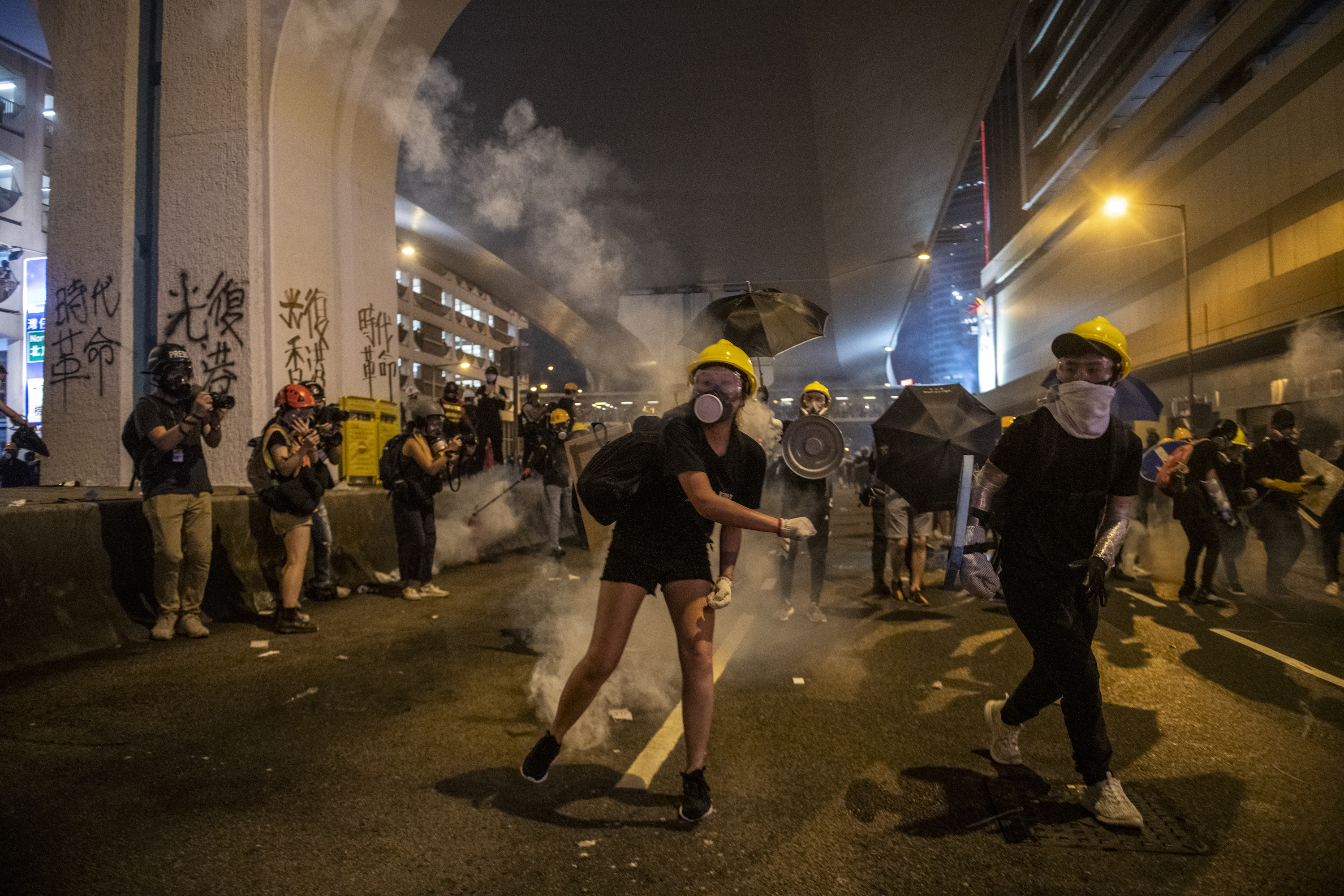
One day after protesters stormed Hong Kong's legislative council building, China's central government condemned the actions of those who led the takeover. At an early morning press conference on July 2, after the activists, mostly young people, had been cleared from the building, Hong Kong Chief Executive Carrie Lam vowed to pursue those who committed violent actions. While Beijing expressed support for the Hong Kong government and police, it also called on them to restore order as soon as possible.
In Hong Kong, Demonstrators and Officials Are on a Collision Course (July 22, 2019)
On July 19, police arrested a pro-independence group member and accused him of making the explosive TATP. While protests planned for July 20 and July 21 went off peacefully, after the CHRF rally the evening of July 21 a group of several hundred protesters continued on to the building housing the Beijing government's Liaison Office in western Hong Kong and vandalized the facade with spray paint and eggs. Shortly afterward a mob assaulted anti-government protesters returning home on the opposite side of Hong Kong from the earlier demonstration. Images from the scene shared on social media showed men attacking protesters with wooden rods as they arrived at the Yuen Long railway station. The assault injured dozens, leaving at least one in serious condition.
Chinese Intervention?
Why the Fate of Hong Kong's Protests Will Come Down to Beijing (July 30, 2019)
At present, the police, Legislative Council and Executive's Office are the only institutions in Hong Kong that unequivocally oppose the protesters. ... In the end, Beijing remains the ultimate backstop — one which will not tolerate a protest movement overwhelming the city and turning it completely against the People's Republic of China. That's why, even if all other pillars fall, Beijing retains the right the deploy the People's Liberation Army to instill order.
Will Beijing Intervene in the Hong Kong Unrest? (Aug. 13, 2019)
Unrest in Hong Kong intensified the weekend of Aug. 10-11, with violent clashes between protesters and local police and security forces, which continued their crackdown. On Aug. 12, protesters overwhelmed the territory's international airport, leading to the cancellation of hundreds of flights. With the Chinese and Hong Kong governments refusing to yield to protesters' demands and Hong Kong police thus far proving incapable of restoring calm, no resolution is on the horizon. And this raises questions about just what would induce the mainland government to intervene directly in the special administrative region. On Aug. 12, a Chinese official said growing violence in Hong Kong, especially against the police, had begun showing characteristics of terrorism.
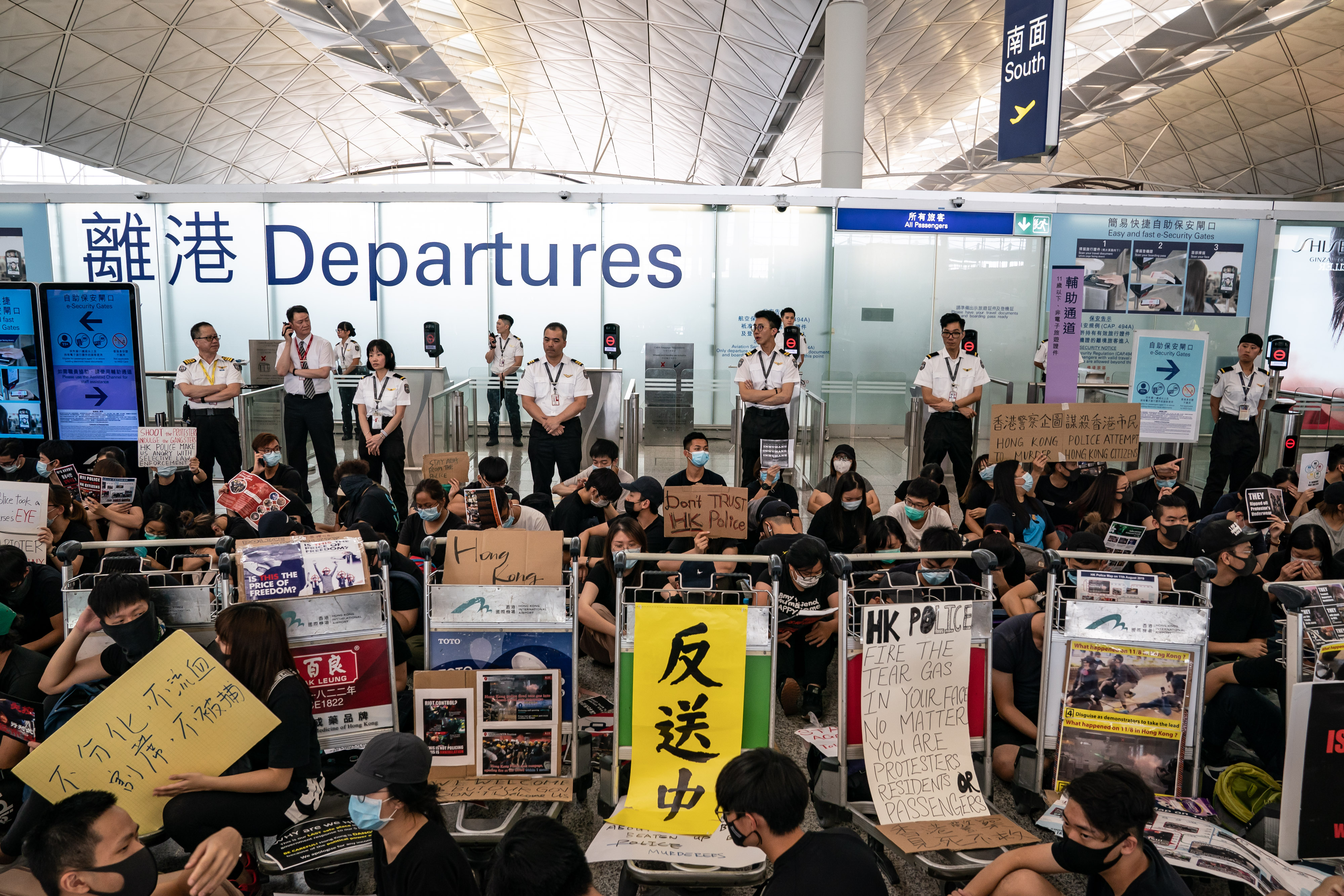
A Summer of Discontent
Hong Kong: Despite a Lull in Violence, the City Remains on a Knife-Edge (Aug. 19, 2019)
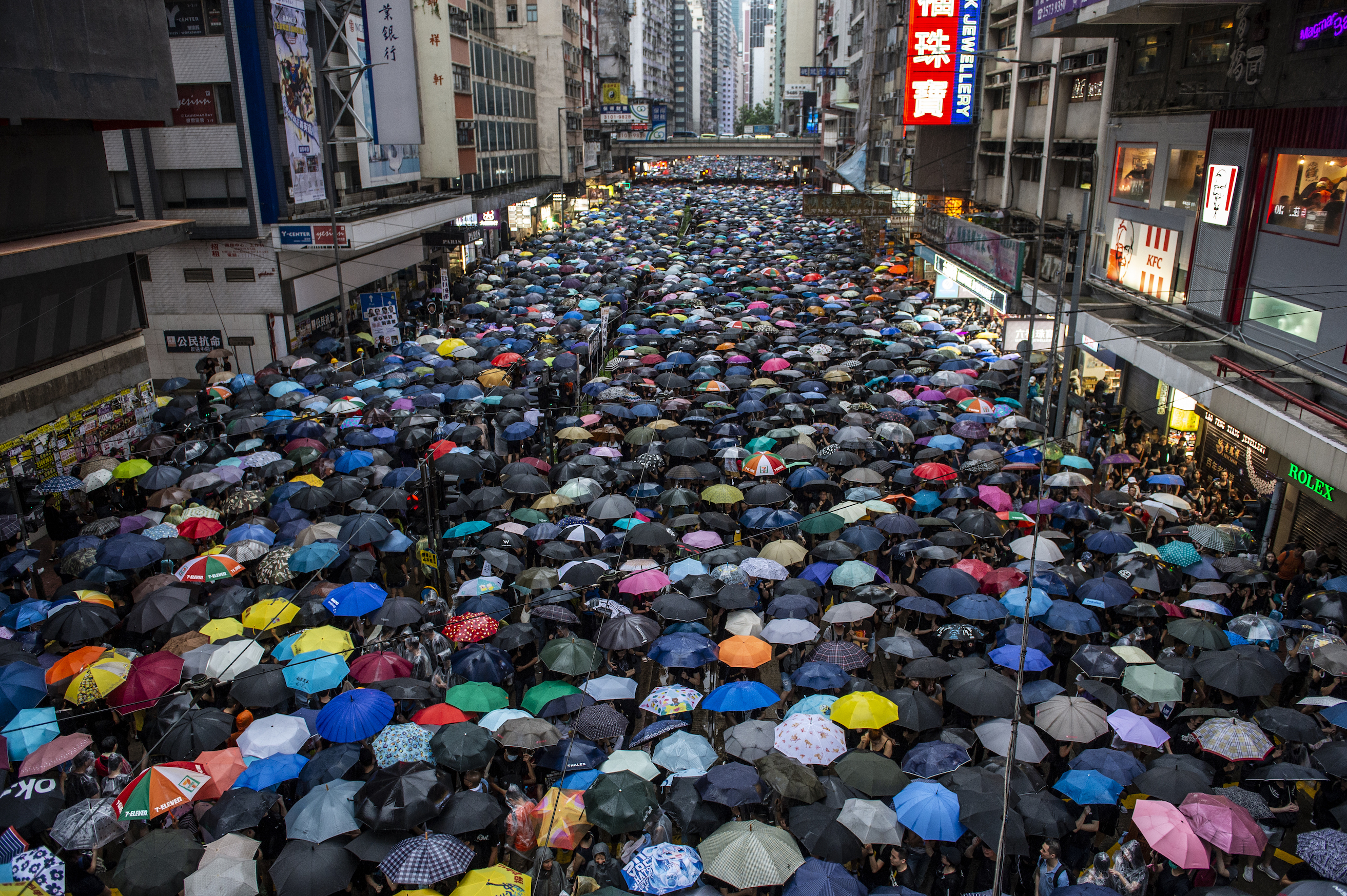
Hong Kong's standoff is no closer to resolution — this weekend's otherwise peaceful protests notwithstanding. On Aug. 17, teachers rallied against the government and the actions by the city's police before opponents gathered in support of the security forces. Another protest in the city's Mong Kok neighborhood nearly touched off clashes between police and protesters before cooler heads prevailed. Far larger protests followed the next day, as hundreds of thousands of people, many clutching umbrellas, rallied peacefully at an event organized by the CHRF, which previously staged several peaceful protests, including two large gatherings in June against the extradition bill that ignited the territory's unrest in the first place.
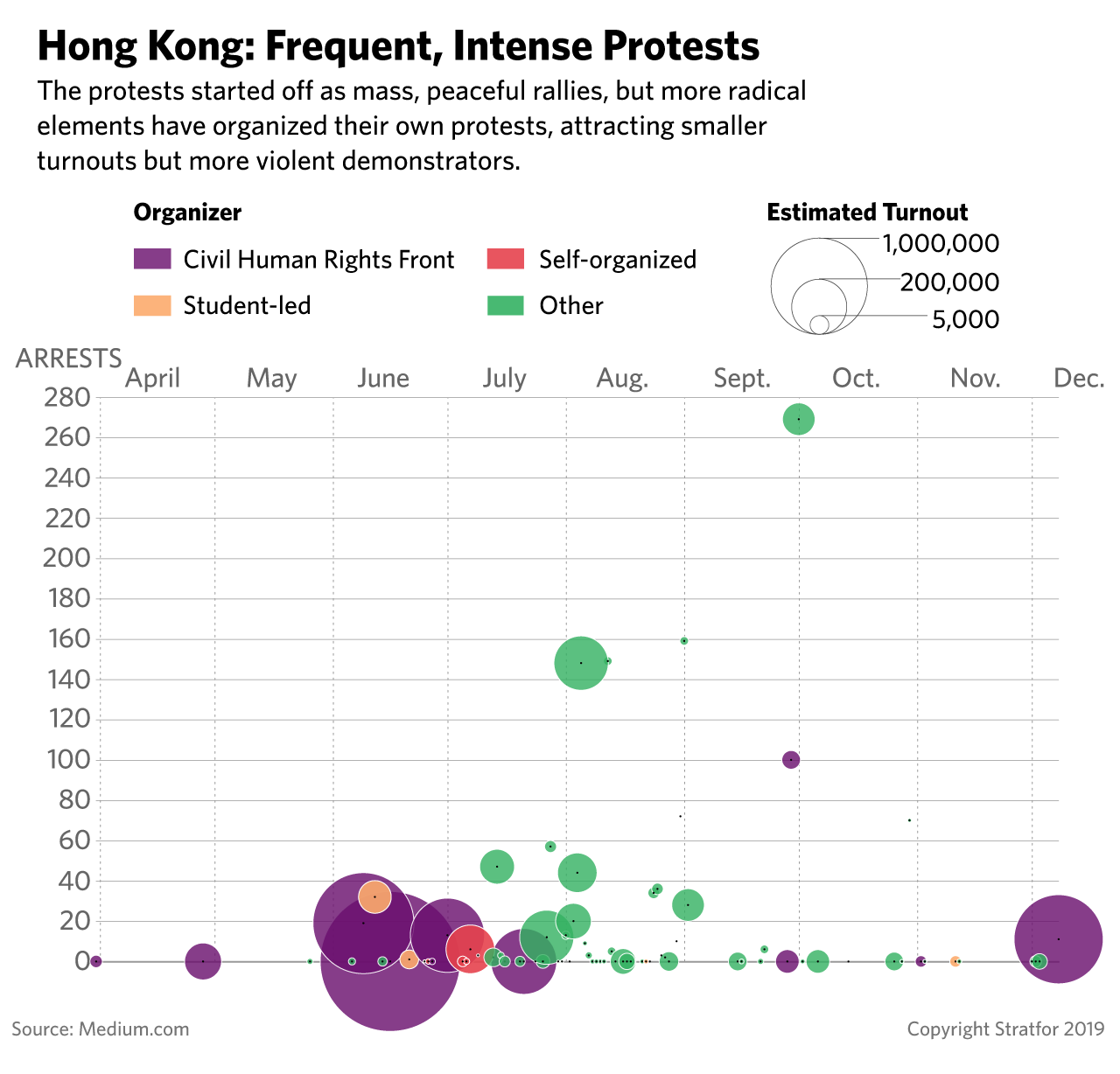
Charting the Growth and Turmoil of Hong Kong's Protest Movement (Aug. 28, 2019)
Hong Kong Chief Executive Carrie Lam said Aug. 27 that her government will work within "existing laws" to curb the protests amid speculation it might invoke the Emergency Regulations Ordinance, which would allow the city's leader and advisers to "make any regulations whatsoever" deemed "desirable in the public interests." If the government in fact took the enormously controversial step of invoking the colonial-era ordinance, Lam would obtain a wide range of powers including increased abilities to censor publications, make arrests or deportations, control key transport hubs and change legislation.
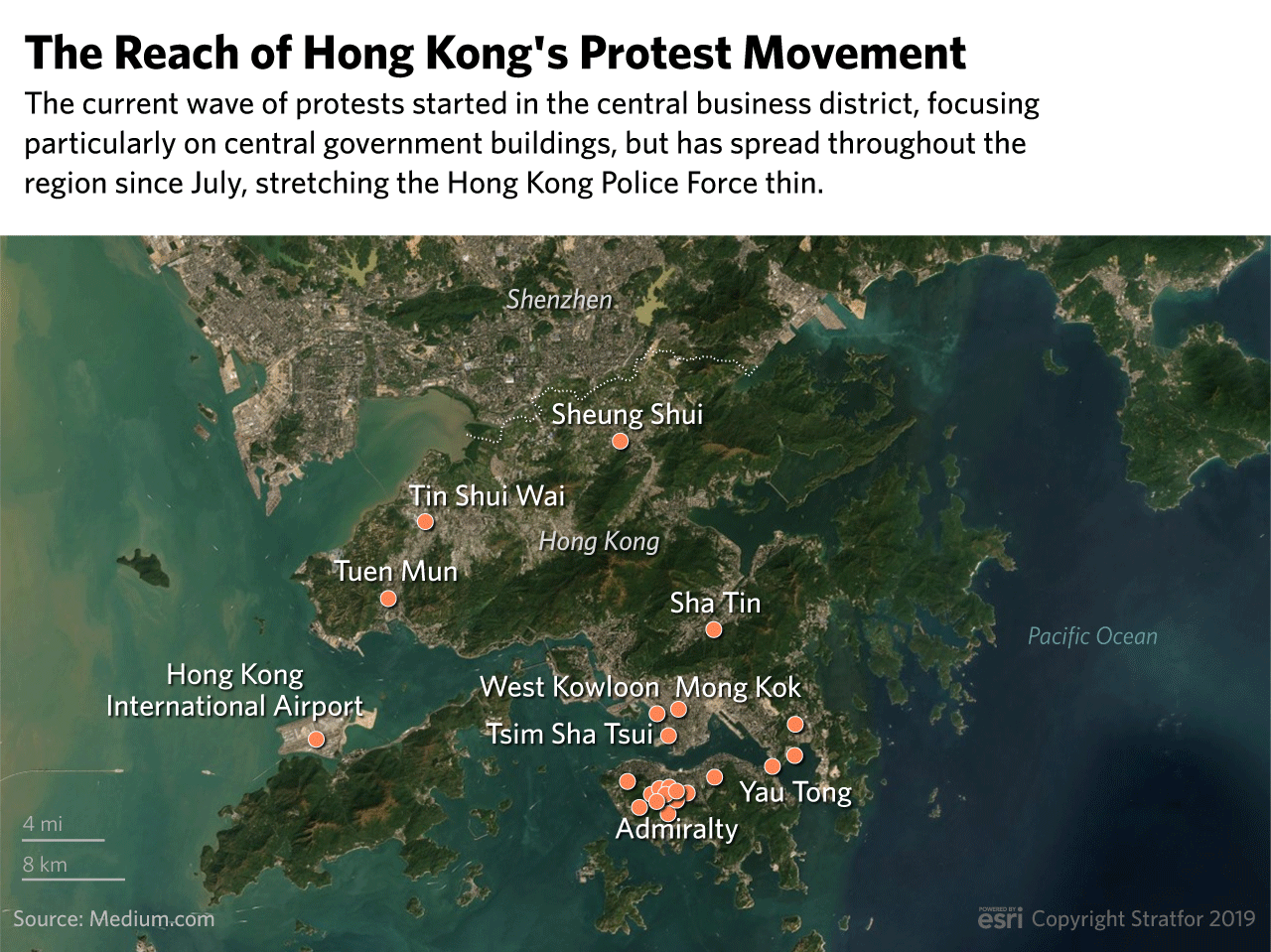
Where Do Hong Kong's Protests Go From Here? (Aug. 30, 2019)
With new protests and potential violence in Hong Kong a distinct possibility in the weeks ahead, the city's police force is striving to stay a step ahead of its competition. Authorities detained seven prominent activists, including Joshua Wong, Agnes Chow and Andy Chan, on Aug. 29 and Aug. 30 on charges that they were organizing protests. The arrests coincided with a ban on a major rally that the CHRF, a key organizer against the contentious extradition bill that first ignited Hong Kong's protests, had scheduled for Aug. 31. As a result of the prohibition, the CHRF called off the rally, during which it had planned to demand universal suffrage on the fifth anniversary of Beijing's controversial white paper that effectively rejected the request.
Hong Kong Reaches a Point of No Return (Sept. 5, 2019)
In an effort to quell the city's protests, Hong Kong Chief Executive Carrie Lam formally declared on Sept. 4 that she was fully withdrawing the controversial extradition bill that initially sparked the city's protests in early June, marking a sharp turn after she steadfastly refused to do anything but suspend the motion. Lam made the decision as part of a four-part action plan, which also includes an independent study on the "root cause" of the protests, as well as greater engagement with citizens. ... [But] even if the city manages to escape further escalations and a harsher crackdown, the long-running crisis has deepened scars in the city and widened gaps with China, making further flare-ups likely and jeopardizing Hong Kong's position as Asia's most prominent financial hub.
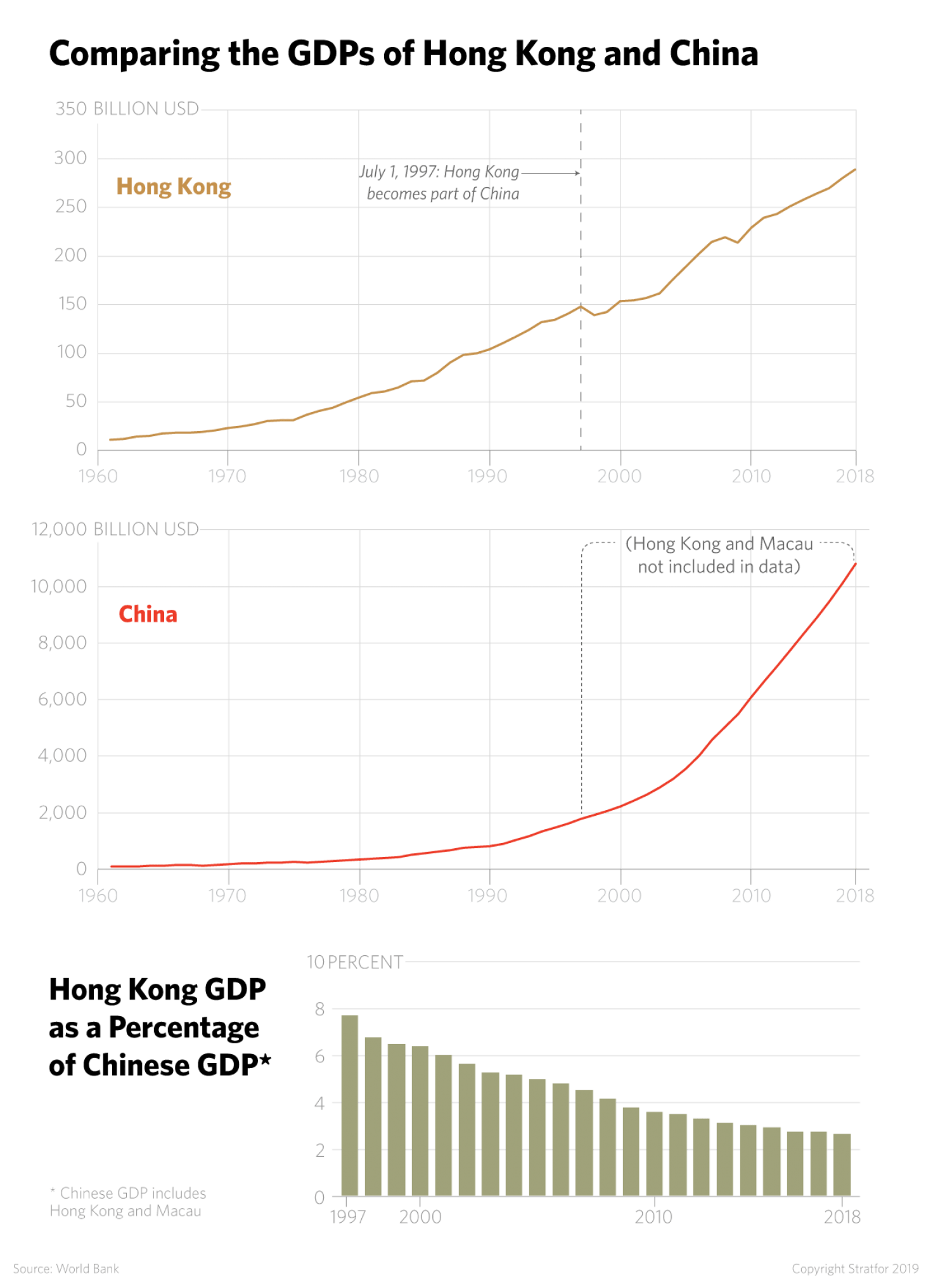
Deepening Divisions
The Hong Kong Protests Keep Escalating. Here's What We're Watching. (Oct. 2, 2019)
For the first time in almost four months of anti-government demonstrations in Hong Kong, a police officer shot a protester with live ammunition on Oct. 1. Riot police have fired tear gas, bean bags, rubber bullets and water cannons at protesters during street skirmishes, and they have even occasionally shot live ammunition into the air to try to disperse demonstrators. And protesters have thrown rocks and bricks, vandalized property and beaten police officers. But not until this week had a police officer shot a protester. Though the wounded 18-year-old protester was reported to be in stable condition on Oct. 2 and is expected to survive, the shooting represents an escalation in the violence that has become a regular feature of the protests.
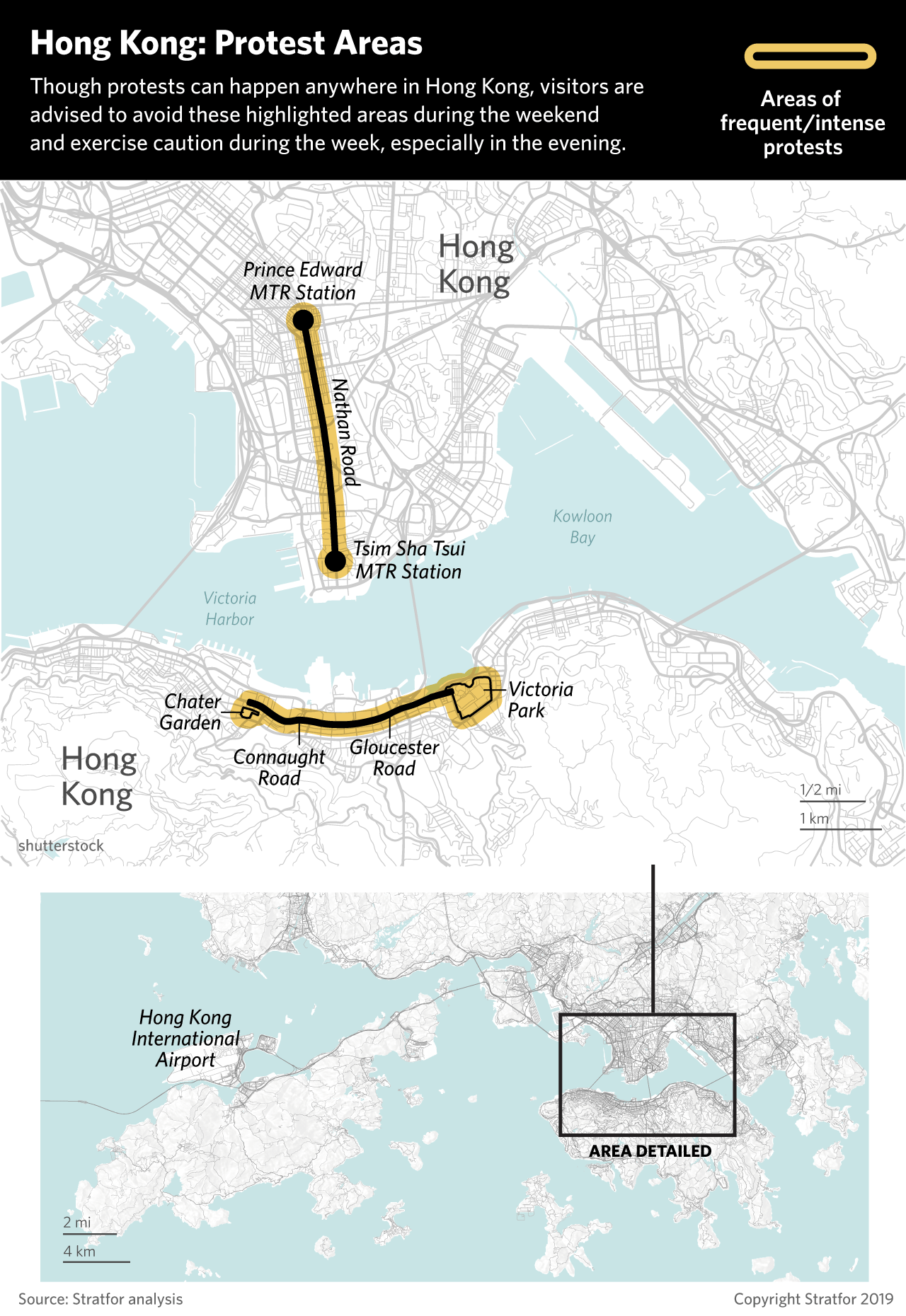
Hong Kong Is Set to Pull the Masks off Protesters (Oct. 3, 2019)
Hong Kong authorities are set to invoke a controversial colonial-era emergency ordinance and ban the wearing of masks. Chief Executive Carrie Lam is set to convene an Executive Council meeting on Oct. 4 to discuss the anti-mask law along with other measures that, if approved, would take effect immediately. Even a limited application of the emergency ordinance effectively means the Hong Kong government is nearing the limit of what it can do to pacify the protests. If implemented in full, the emergency ordinance would empower Lam to control the internet, seize key transport hubs, and arrest and deport protesters.
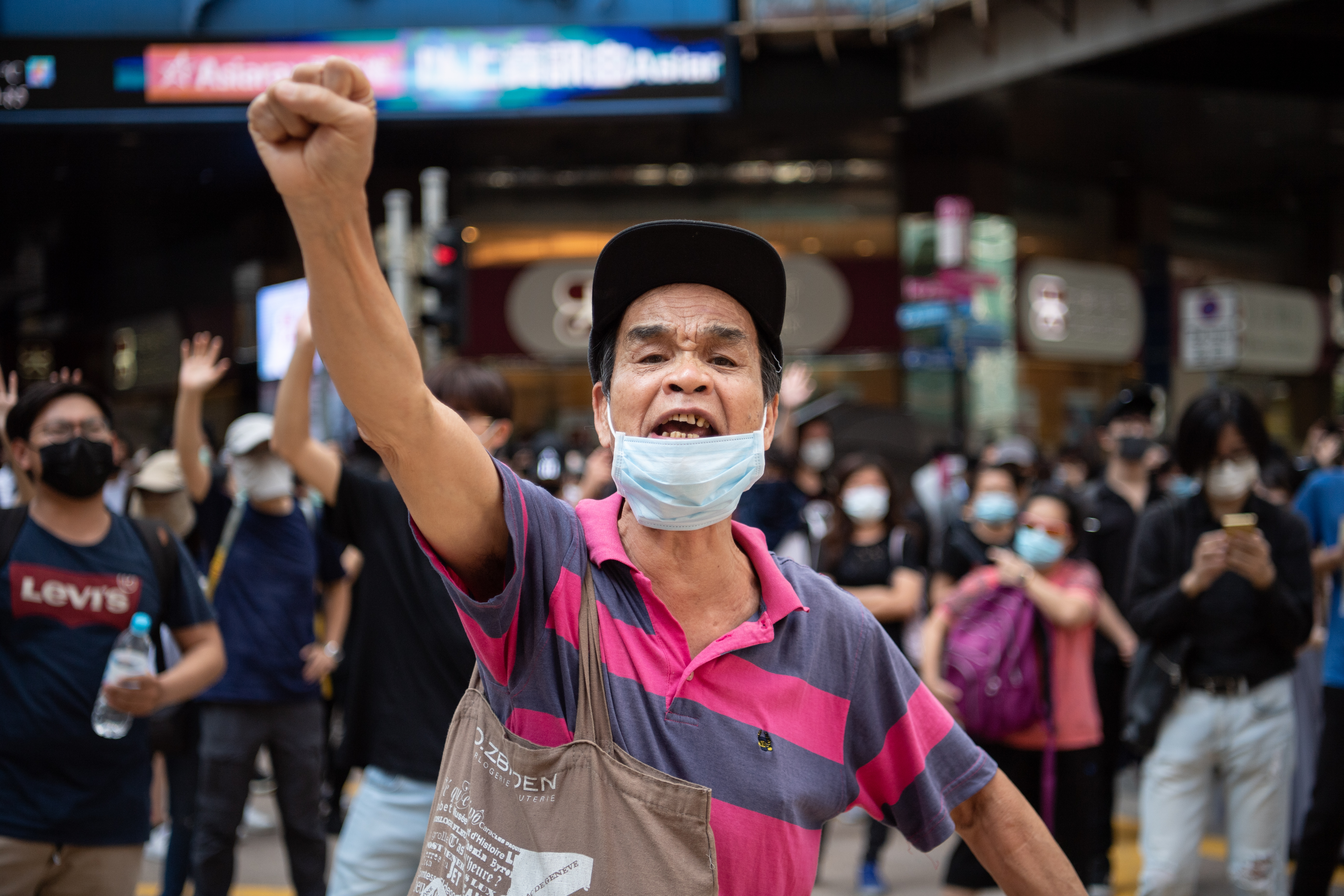
Hong Kong: Beneath the Mayhem Lie Deepening Societal Divisions (Nov. 12, 2019)
Hong Kong experienced one of its darkest days of protests Nov. 11 when a police officer shot a protester; a man was set on fire in an apparent dispute with a group of protesters; and transportation disruptions, classroom boycotts, vandalism and clashes between protesters and the police effectively paralyzed the city. The day's mayhem came after a period of less intense unrest overall despite a growing number of isolated incidents against politicians, police officers, protesters and individuals of differing political views. The death of a student protester on Nov. 8 — the first fatality since the protests began — sparked a furious reaction from students and protesters and struck a sympathetic chord with the public by and large. Protests rapidly descended into chaos over the weekend before culminating in the violence and widespread disruptions seen Nov. 11.
