
(RODRIGO BUENDIA/AFP/Getty Images)
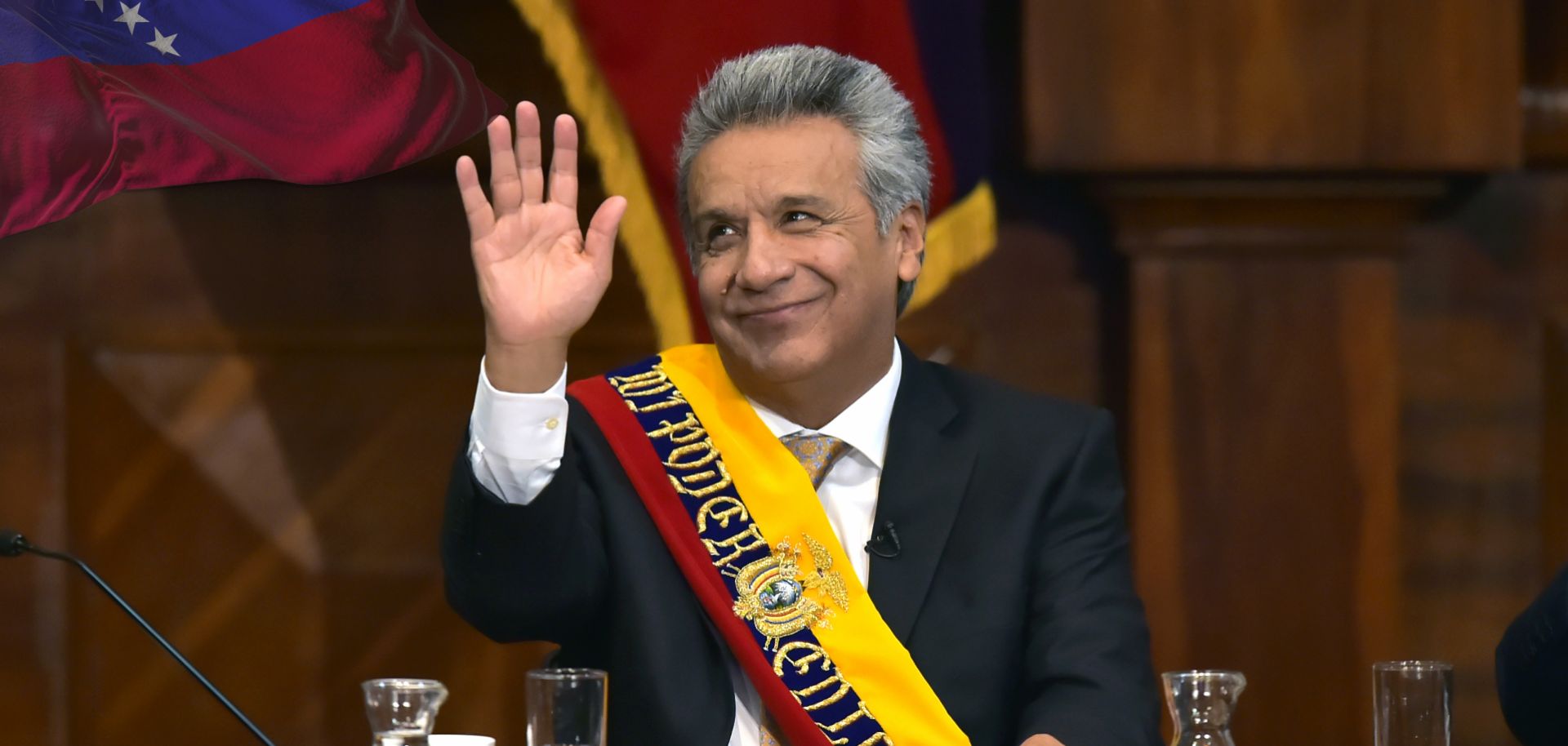
Ecuadorian President Lenin Moreno has reached out to the United States on trade and is planning to begin negotiations with Canada and Russia as well.
Venezuela is losing another political ally in South America. The election of left-wing Ecuadorian President Lenin Moreno in May led many to believe the country would continue the foreign and domestic policies of Rafael Correa, Moreno's predecessor and one of Venezuela's main allies in the region. In fact, Moreno, who was Correa's vice president from 2007-13, decided to chart his own course. This apparently means pulling away from Venezuela and, as a result, stoking the ire of the ruling left-wing coalition, Alianza Pais.
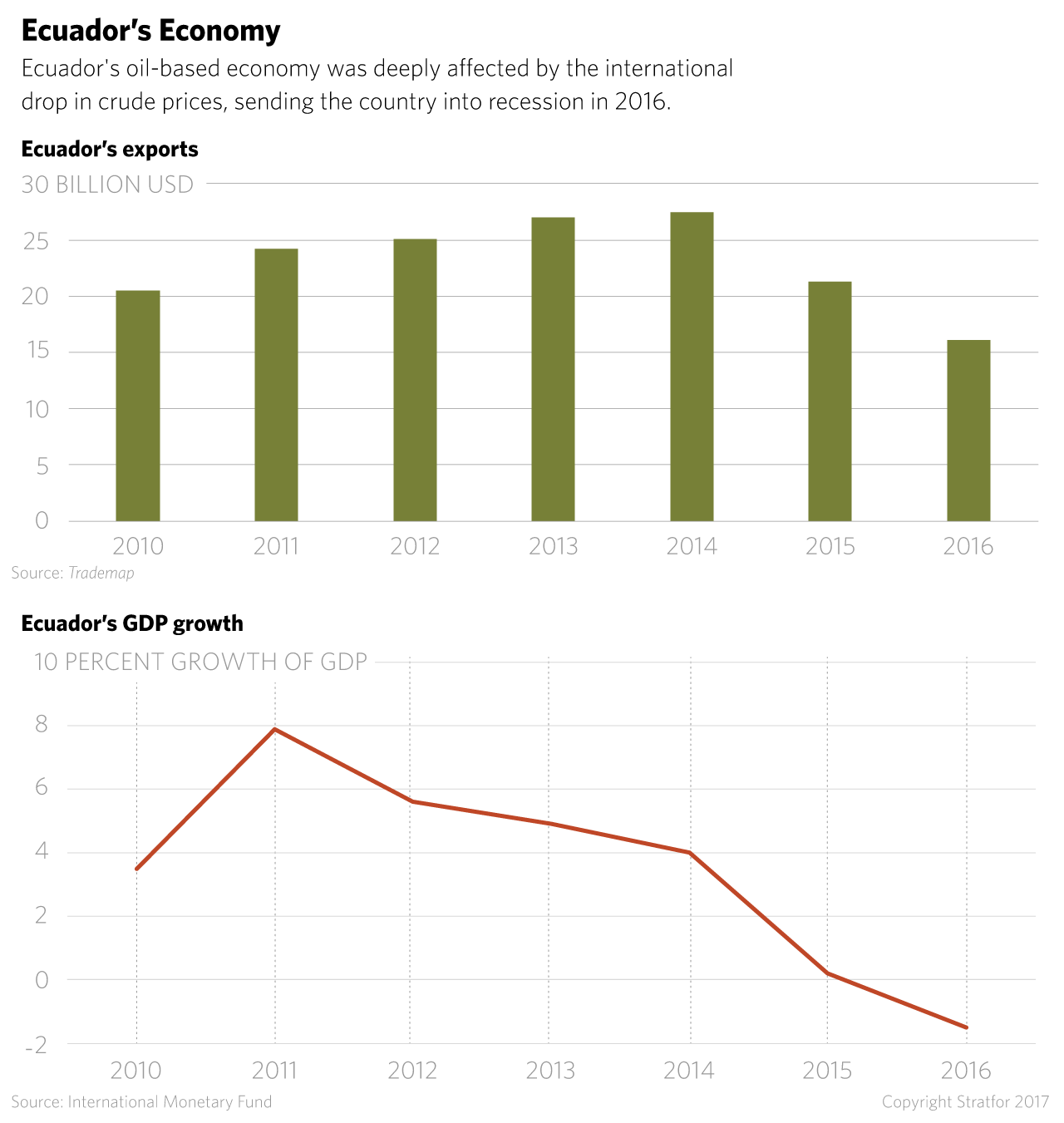
No sooner had Moreno assumed power, things started to change in Ecuador. His first public disagreement occurred with his predecessor, over the country's national debt. Correa said that Ecuador took on $27 billion in debt during his 10 years in office. However, Moreno disputed this number and said that the figure could actually be as high as $40 billion. This difference led to major financial concerns, and the government began the search for new sources of financing. The economy of oil-rich Ecuador was affected by the global drop in crude prices, which put the country into recession last year when its economy shrank by 1.5 percent.
Working on the Economy
To ease the financial pressure, Moreno tried to refinance $6 billion in debt with China, meeting President Xi Jinping in May to discuss the country's oil loan. However, no final agreement was reached. This led the new Ecuadorian government down the path of improving relations with the World Bank and the United States as a way to access new sources of financing and to seek a reduction in U.S. tariffs. This is a revisionary move. Relations between Ecuador and the World Bank have been poor since 2007 when Correa expelled the bank's representative from the country. And though the World Bank has participated in some loans to municipal projects in Ecuador, relations with the national government remain sour.
The same thing can be said about relations with the United States. Over the past decade, Ecuador showed its colors as one of the Latin American countries ruled by left-wing leaders who advocate Venezuela's Bolivarian revolution. The revolutionary sentiment strongly opposes U.S. influence in the region, which resulted in a severe deterioration in relations between the two countries. In 2008, Ecuador accused the United States of participating with Colombia in staging an attack on a Revolutionary Armed Forces of Colombia (FARC) camp inside Ecuador. And Ecuador's decision to lend refuge to WikiLeaks founder Julian Assange in its embassy in London further increased the animosity between Washington and Quito.
To show that Ecuador is moving in a different direction, Moreno is proposing a number of political and economic changes. For example, he supported a corruption probe involving government contracts signed with the Brazilian engineering company Odebrecht during Correa's presidential terms. The investigation has impacted major political figures in the new president's ruling coalition, including Vice President Jorge Glas, who was stripped of his powers by Moreno and eventually sent to jail. Then, on Oct. 2, Moreno announced that a plebiscite on several issues will be held next year. Among the proposed changes is a return to presidential term limits, something altered during Correa's term. Moreno also wants to end an advisory council created by Correa that is made up social movement groups. He also wants to limit oil and mining activities in environmentally protected areas.
Furthermore, Ecuador's new president has reached out to the United States and is planning to begin trade negotiations with Canada and Russia. The U.S. negotiations will not involve a free trade agreement exactly, but an expansion of the trade preferences agreement between the two countries. Given Ecuador's declining economic growth, the government is under even more pressure to expand U.S. trade ties. But any talks with the United States would probably involve the status of Assange. This is another issue on which Moreno is indicating that he may act differently from his predecessor. Moreno hasn't said that he would turn Assange over to the European authorities, but he has criticized Assange's political statements and urged him to refrain from politicking while in the embassy in London. The latest presidential assertion is that Assange is a hacker and that only the threats against his life keep him a guest of the embassy.
Growing Apart From Venezuela
One of the most remarkable changes in Ecuador since Moreno assumed office has been his criticism of the Venezuelan government. The fall of the left in Argentina and Brazil over the past two years caused Venezuela to become increasingly isolated in South America. Yet, Ecuador and Bolivia remained the most loyal regional allies of Venezuela, which was suspended last year from the Common Market of the South.
One of the most remarkable changes in Ecuador since Moreno assumed office has been his criticism of the Venezuelan government.
Under Correa, Ecuador was a staunch supporter of Caracas and blamed Venezuela's opposition parties and the United States for the political crisis. However, in August, Moreno pointed to the violent repression of protesters and the sheer amount of political prisoners in Venezuela. He emphasized that Ecuador favors noninterference in the domestic affairs of other countries, but also argued that violent repression and political prisoners are contradictory to a democratic approach.
Four days later, Moreno went beyond those statements and replaced the Ecuadorian ambassadors to Venezuela and Cuba, citing their supposed closeness to their host governments as a problem. His own political party criticized the decision though. Gabriela Rivadeneira, executive secretary of Alianza Pais, made sure to state publicly that Moreno's views on Venezuela do not reflect the party's position.
Riding a Wave of Popularity
Moreno's domestic and foreign policy changes make him popular in the polls. In four different surveys conducted since August, his approval rating has varied from 70 percent to 80 percent. In fact, even opposition political parties — including Creando Oportunidades, better known as CREO, which campaigned against Moreno in the last presidential election — have praised his decision to distance Ecuador from Venezuela and to open dialogue with opposition groups.
The president, however, has a rocky political road ahead of him. In power for just five months, he already faces mounting opposition from within his own political party. Notable members of Alianza Pais, such as former Foreign Minister Ricardo Patino, have said that Moreno is betraying the party's agenda and destroying what was built by Correa over the past decade. These party tensions led Moreno to meet with members of the ruling coalition in congress, but those meetings didn't go well and he threatened to fire more members of his party.
As long as Moreno holds on to power, Ecuador will continue to distance itself from Venezuela and seek closer ties with the United States. Suffering low oil prices and excessive debt, the new president is trying to improve the economy by reversing course on some policies. But any bold new direction could create domestic problems if Moreno loses the support of his own party.
