
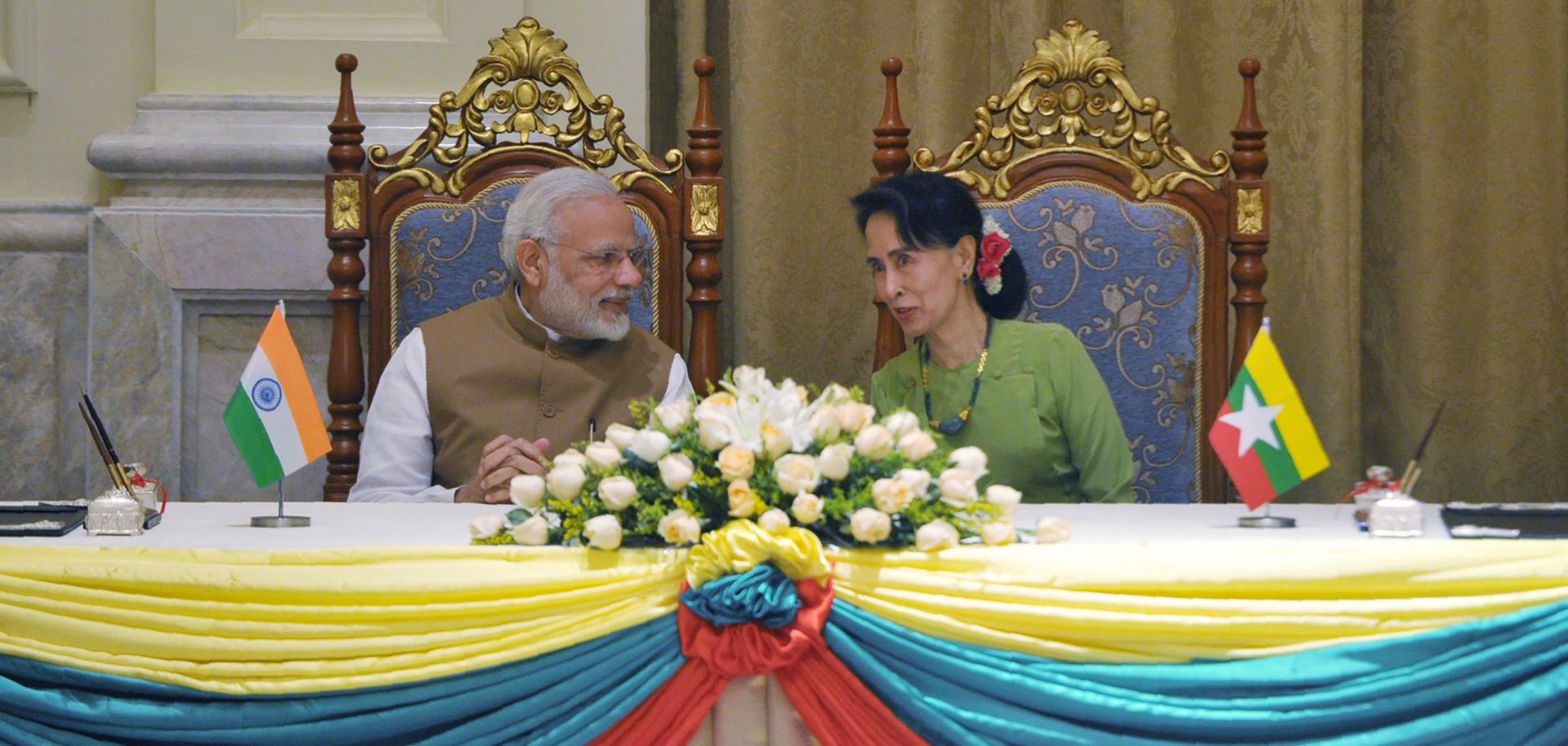
India's Prime Minister Narendra Modi visits Myanmar's State Counselor Aung San Suu Kyi in Naypyidaw on Sept. 6.
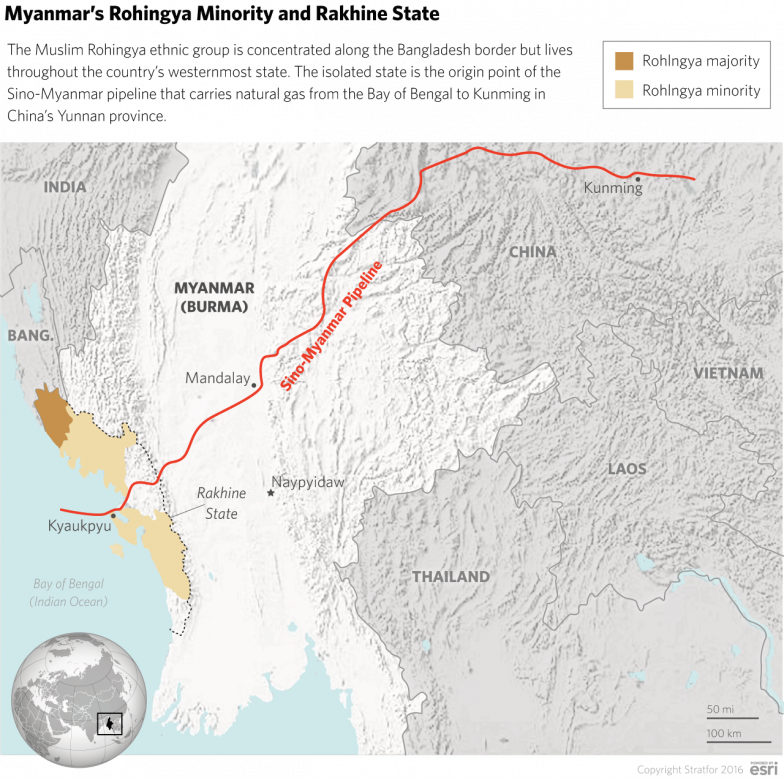
In his first official visit to Myanmar, Indian Prime Minister Narendra Modi has skillfully navigated the third rail of Myanmarese politics: the country's Rohingya minority. The Rohingya are a Muslim ethnic group living in Myanmar's westernmost Rakhine state that has been at the center of a political firestorm since Myanmar's 2010 elections.
Many of the country's other numerous ethnic minority groups have aligned with Buddhist nationalist forces against the Rohingya, insisting that the Rohingya should not be an officially recognized ethnic group of Myanmar. The ethnic Buddhist Rakhine have been particularly insistent, and the 2016 rise of a new Rohingya ethnic insurgent group has escalated the issue. A late August attack on security forces by Rohingya militants — and the resulting harsh military crackdown — has pushed this issue into a crisis once again, causing massive refugee flows into Bangladesh.
At the root of the recent fighting is militant group Arakan Rohingya Salvation Army (ARSA), which killed 12 security officials Aug. 25. A military crackdown has resulted in the deaths of at least 370 Rohingya militants and forced nearly 124,000 Rohingya refugees to flee into neighboring Bangladesh, joining the 400,000 estimated to already be there.
Modi's visit took place against this backdrop, with the prime minister carefully broaching the Rohingya issue but siding very much with Myanmar's government. India condemned the recent Rohingya attack but remained silent about the subsequent refugee crisis. This is in line with India's longstanding defense of the Myanmar government's policies toward the Rohingya. Modi also conspicuously avoided using the term "Rohingya" and expressed concern with the "extremist violence" and loss of life among Myanmar's security forces and civilians. Myanmar's de facto leader, State Counselor Aung San Suu Kyi, has long insisted on avoiding the term "Rohingya," saying she wishes to avoid inflaming ethnic tension. She has rebuffed international criticism of her handling of the growing Rohingya crisis and drawn the ire of the broader Muslim world and the West by saying that the criticism has only served the interests of "the terrorists." Suu Kyi has focused instead on supporting the military in its efforts against Rohingya militants and civilians in Rakhine state.
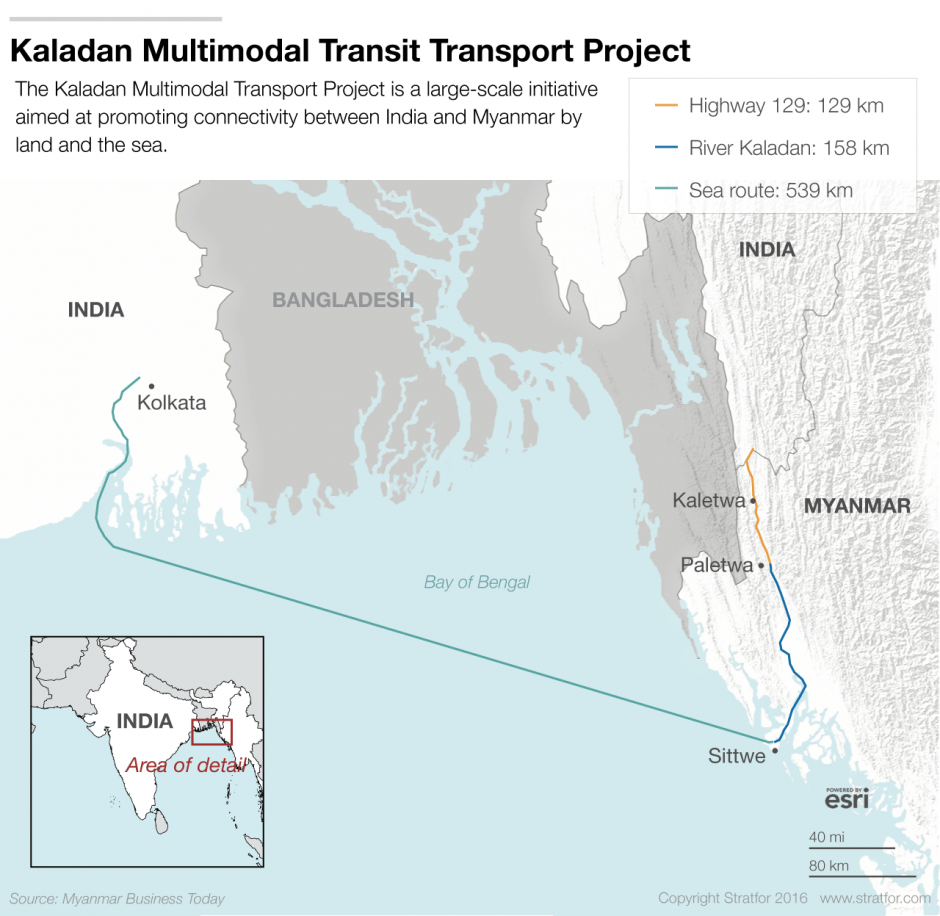
It is important for Modi to maintain good relations with Myanmar — and with the Buddhist Rakhine ethnic group that shares Rakhine state with the Rohingya. Myanmar is critical to India's "Act East" strategy, a push for greater influence and connectivity in Southeast Asia. To this end, Modi signed 11 deals on economic cooperation with Myanmar during his visit. He also discussed the long-delayed $484 million Kaladan multi-modal transport project and the India-Myanmar-Thailand trilateral highway. Both of these projects are relevant to the conflict in Rakhine state and broader Buddhist-Muslim tensions: The trilateral highway runs through Mandalay, a hotbed of Buddhist nationalism, and the Kaladan project runs directly through the contentious Rohingya conflict in Rakhine state. Given that the state government is dominated by Rakhine Buddhist political groups, India must maintain good relations with these groups. China has made inroads with ethnic Rakhine Buddhist parties and has defended Myanmar on the international stage over the Rohingya with an eye toward securing the Sino-Myanmar pipeline in the region — an even stronger incentive for India to do the same with respect to its highway projects.
Modi's alignment with Myanmar on the Rohingya is also consistent with his domestic Hindu nationalist agenda. Rohingya Muslims that have fled Myanmar live throughout India and have become a lightning rod for Hindu nationalist politics. Local ruling party leaders have even suggested that Rohingya could be used by Pakistani intelligence or the Islamic State. Most notably, in Jammu and Kashmir, Hindu activists allege Muslim groups have brought Rohingya in to tip the sectarian balance. In line with this Hindu nationalist push, India announced plans to deport all Rohingya living in India. The planned deportations have now been delayed by a supreme court challenge and are part of a broader push, which includes a proposed amendment to the citizenship law that would extend deportation protections to long-term illegal migrants from all religious groups except for Muslims, who would remain "economic migrants" eligible for removal.
The Rohingya issue will continue to irritate regional tension, as few workable solutions to the crisis exist. Bangladeshi Prime Minister Sheikh Hasina on Sept. 5 asked the international community to pressure Myanmar to take its Rohingya refugees back. For the Myanmar government, taking the Rohingya back into the country is a politically fraught issue — and one that Suu Kyi is wary taking on for fear of making herself vulnerable to political attack by pro-military interests. But few other countries have stepped up to accept refugees and — as in India's case — have stayed remarkably quiet, making a solution unlikely.
