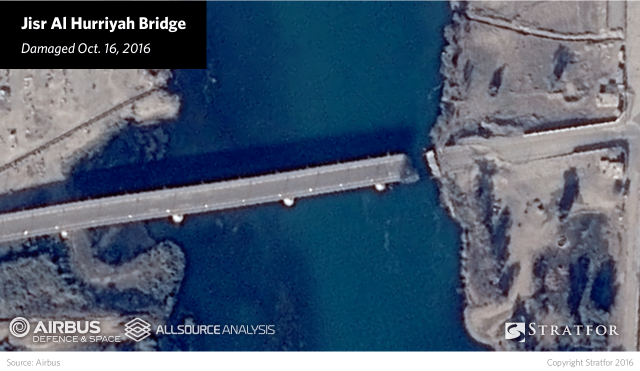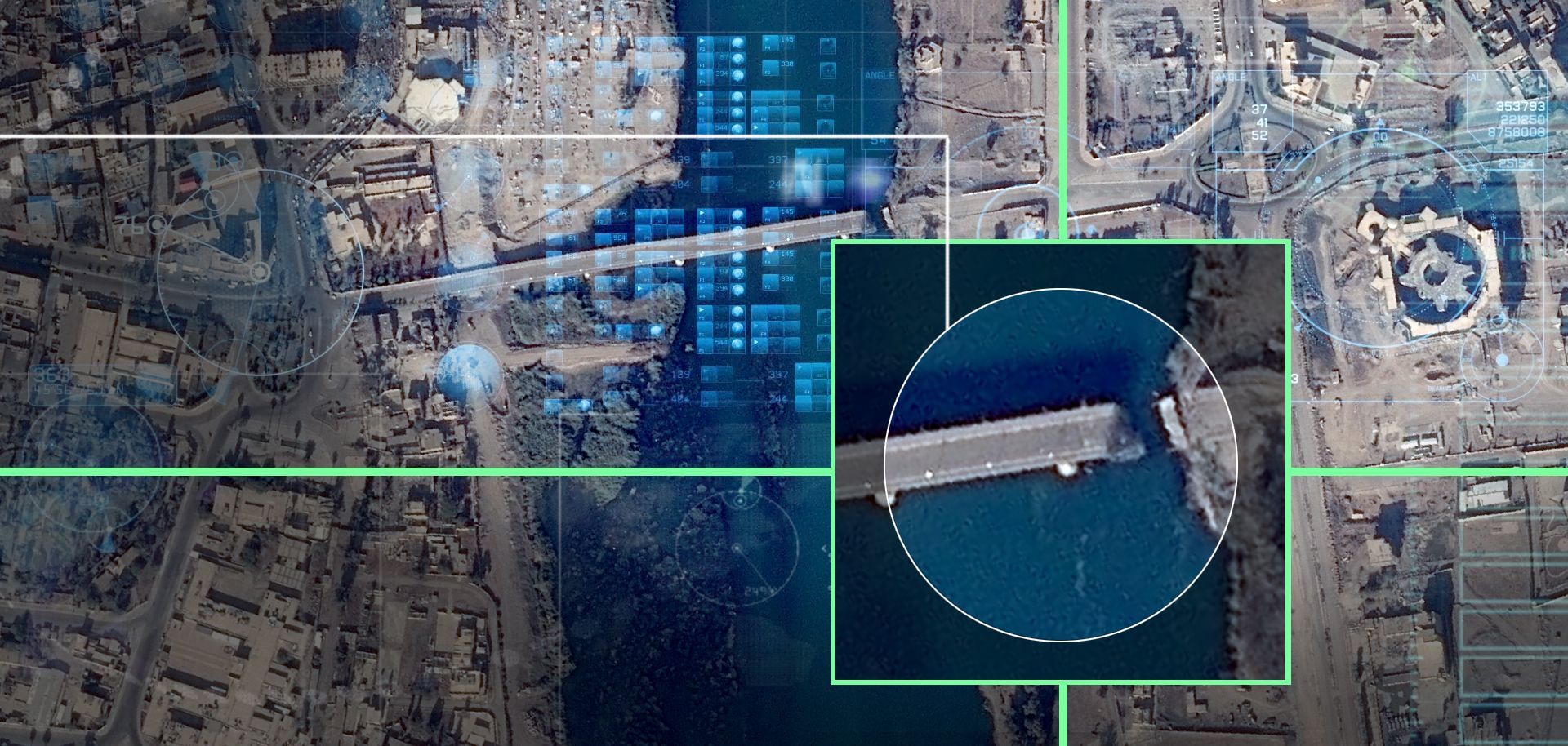
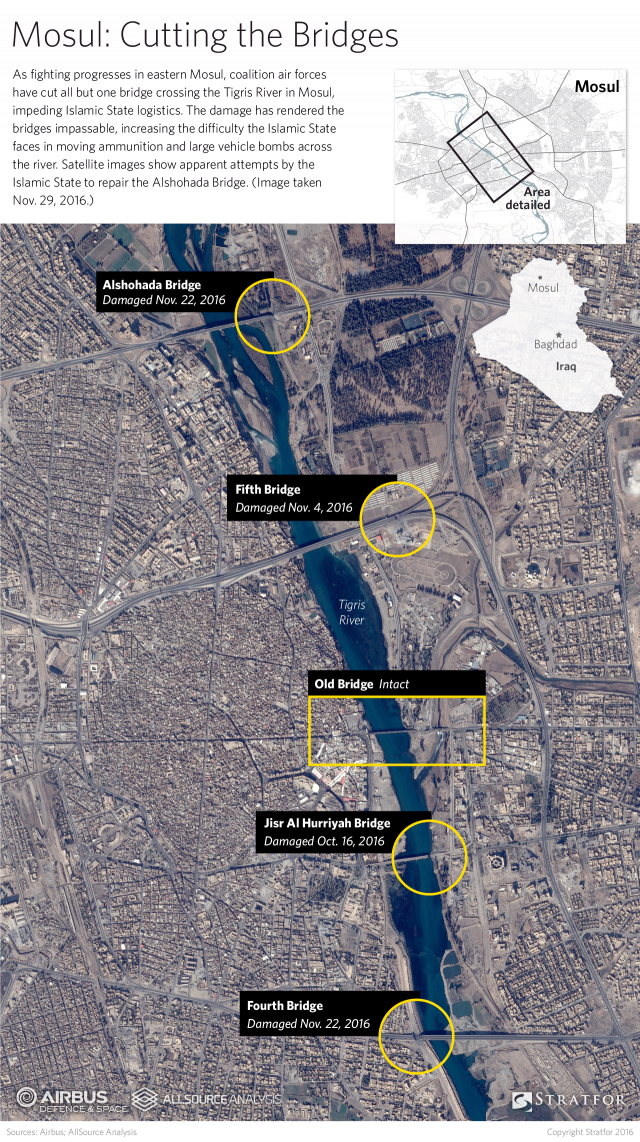
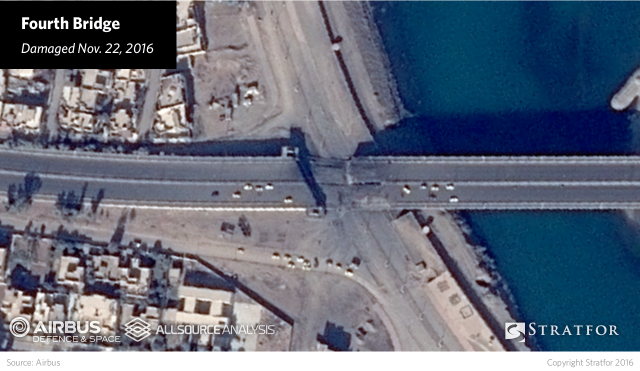
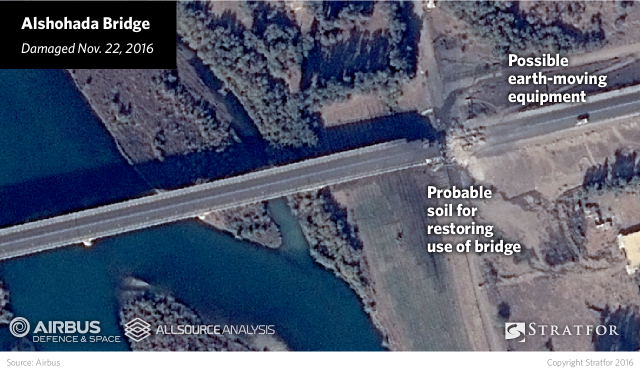
The U.S. Air Force carried out airstrikes against three of the crossings in November, damaging the structures in a way that would deny their use by the Islamic State but leave them simpler to repair once the operation to retake Mosul wraps up. The bombings on the Alshohada, Fourth and Fifth bridges, which took place on Nov. 4 and Nov. 22, targeted the parts of the bridges on land rather than their main spans suspended over the water.
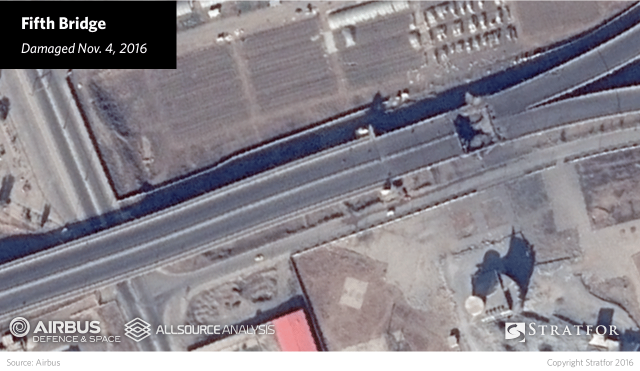
The limited scope of the damage could reflect political and strategic considerations on the coalition's part. Iraqi Prime Minister Haider al-Abadi initially resisted plans to target the bridges. But as the battle progressed into eastern Mosul and coalition troops met with stiff resistance from Islamic State fighters, he changed his position.
Severing the bridges without destroying them would make them easier to repair for civilian use after the battle, easing Iraqi concerns about adding to the considerable destruction of infrastructure already inflicted on the city. Notably, the city's venerable iron Old Bridge has been left intact.
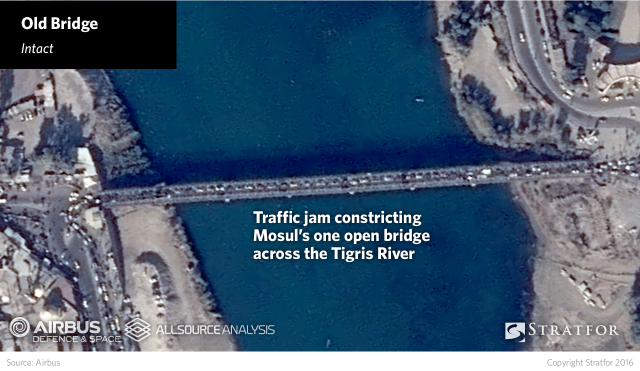
Once the battle moves to the western half of the city, coalition forces could perform temporary repairs that would allow the structures to be used for the Iraqi troops' own logistical purposes. However, the downside of this targeting tactic is clear on the Alshohada Bridge, where the images show an apparent stockpile of soil and an earthmoving vehicle, indicating Islamic State efforts to restore the bridge's function. The importance of the bridges to the militants was immediately demonstrated on the battlefield: After the strikes, the number of vehicle bombs used against Iraqi forces in eastern Mosul was reported to have significantly dropped.
Depending on the pace of the coalition's progress inside Mosul, the Islamic State may be able to restore at least one of the bridges or adjust its logistical efforts to counter its loss. On the other hand, once the offensive reaches the Tigris, cross-river mobility could benefit Iraqi forces, who then would not be forced to fight isolated battles on both banks of the Tigris.