
When King Abdullah II endorsed the new electoral law in March 2016, he played his part in what has become a ritual with each election cycle. With each parliamentary election, the government issues small changes followed by an awareness campaign to communicate how those reforms will lead to greater accountability and popular representation. In the past several years, this has meant a progressively larger Lower House — now at 130 seats — as well as increased quotas for female and minority representatives. This year's replacement of the one person, one vote system is meant to entice disaffected voters. The government has an uphill battle ahead: A poll in April indicated that 87 percent of Jordanians thought the previous 16th session of parliament had yielded no important policies for them or anything else of value.
One person, one vote undergrids a lot of this frustration. Passed into law in 1992, this system is known elsewhere as single transferable voting and was meant to suppress gains made by Islamist parties. Because each voter could cast only one vote to fill several seats in a constituency, the incentive was to pick the person most likely to win and not waste a vote. Parties were also incentivized to field fewer candidates in each area to avoid dividing their vote. Those parties who could make sure that the votes were parceled out evenly among their numerous candidates thrived. This yielded an environment in which establishment parties brokered with local tribal leadership to select winners behind the scenes. Even before this 1992 law, many Jordanians voted according to tribal and familial ties — often swayed by buffets and entertainment paid for by candidates. But with the new system, such vote-buying became decisive: It was not uncommon for winning parliamentarians to be announced well in advance of elections.
The return to bloc voting means that instead of having one pick, voters now select lists of candidates prepared by parties (containing a minimum of three) and their favored candidate among those. This system favors political parties instead of individual candidates who can buy local loyalty. The hope is that this empowerment of parties will make Jordan's parliament more technocratic and less hostage to tribal ties.
The last election to use the bloc voting system was held in 1989, resulting in numerous Islamist parties winning seats. The Muslim Brotherhood alone gained 30 percent of parliamentary seats. Alarmed by the anti-establishment stance of the Muslim Brotherhood, King Hussein (the father of King Abdullah II) proposed the one person, one vote system. The end of this system in March has brought the Islamists back to the table. Although the Muslim Brotherhood was outlawed earlier this year, their political arm, the Islamic Action Front, has been allowed to run. The government knows that parties like the Islamic Action Front generate a lot of popular support, and the establishment has no intention of allowing Islamists to sweep the polls. But instead of suppressing them, the new system aims to dilute their power. To this end, the government has encouraged more parties than ever to compete. And it has worked — on Sept. 20, candidates from 49 parties will stand for election.
Islamist politicians, though, are pragmatic and also intend to adapt to the new rules. Numerous parties from that camp are running, each appealing to different constituencies. The Islamic Action Front candidates will be competing with independent Islamist candidates from the offshoot Zamzam movement, which appeals to youth, as well as the Muslim Brotherhood Society, which split off in 2015 and emphasizes nationalism and draws in Jordanian (as opposed to Palestinian) supporters. Islamist candidates across the board are running in those three-person minimum joint lists that include female, Christian and minority candidates, a unique departure from previous years of Islamist campaigning. More women have campaigned this year than in years past, leading some to speculate about the unprecedented possibility of women actually exceeding their 15-person quota.
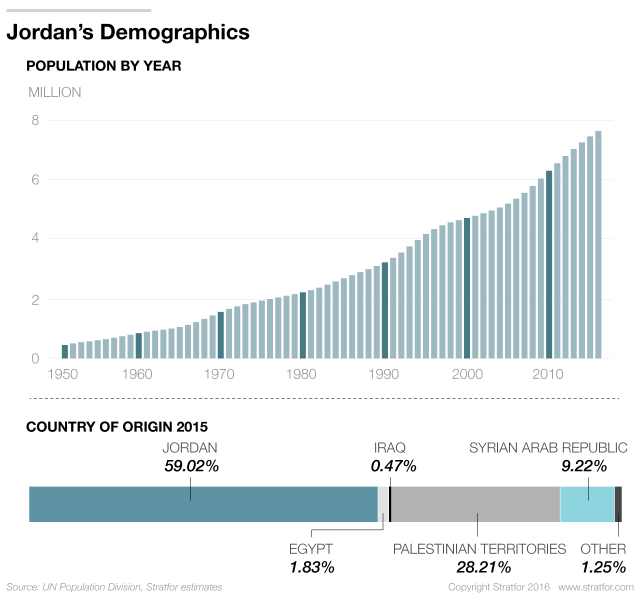
That Muslim Brotherhood candidates have nested their names among female and minority candidates is not simply an attempt to liberalize their message. (Although the Jordanian Muslim Brotherhood slogan of this electoral cycle has been "Reform" instead of the standard "Islam is the Solution"). Nor is it a way to ensure they win some votes in rural minority constituencies, even though that dynamic is at play too. Instead, it is primarily a testament to the pressure of Jordan's changing demographics. Jordan's large, educated youth population is growing increasingly restive and coexists with millions of more conservative Palestinians as well as an influx of Syrian refugees in desperate financial straits. This demographic mixture has the potential to become politically volatile, as both Jordanians and refugees become frustrated that their demands have not been met. This is a situation to which Jordan's well-trained and capable security services pay close attention. Islamist parties, however, plan to take advantage of this potential threat by running candidates who appeal to these groups, even as the government tries to mitigate that with the new voting system.
To its unstable corner of the Middle East, Jordan's continued stability is key. King Abdullah II and his father both managed to keep unrest to a minimum. But this has taken careful political brinksmanship. Future stability is far from guaranteed. Over the next few weeks of campaigning leading up to the election, several indicators will be key in determining whether the government's reform has generated enough interest to ensure crowded polls and mollify the public. The campaign will play out on college campuses, where aggressive political campaigns are trying to drum up votes, as well as in traditional Islamist strongholds like Palestinian camps and neighborhoods in the cities of Amman, Irbid and Zarqa. Depending on how these constituencies vote, the election could be a disappointing flop for the government or a chance to build up its diminished legitimacy.
And more than anything, watching Islamist candidates as they campaign in a manner that looks more like Tunisia's liberal Islamist Ennahada party than Egypt's traditional, and vilified, Muslim Brotherhood will help determine whether the Islamic Action Front's message of "reform" is what Jordanians were searching for after all. And, if this message appeals, it bears monitoring whether the government can handle the effects of opening up its electoral system even if that grants political Islamists greater power. Amman's strategy is a gamble — and one that merits close watching, especially as the rest of region grapples with the same dilemma.
