
For the better part of a year, oil production in Libya has been slowed by a variety of protests involving ethnic groups such as the Tuaregs and Toubou, powerful regional militia councils in cities such as Zentan and pockets of supporters of former Libyan leader Moammar Gadhafi. Protesters have demanded a range of concessions, particularly increased political authority, greater shares of oil revenues and the disbandment of Libya's interim government, the General National Congress. Tripoli has proved capable of temporarily quieting unrest, primarily with cash payments. These tactics have been profitable for Libya's various local and tribal groups, but they have not resolved the underlying sources of tension in the country.
The most prominent ongoing dispute surrounds the Libyan Muslim Brotherhood and its political arm, the Justice and Construction Party. The group is widely viewed as the prime political force behind the contentious May 4 election of Prime Minister Ahmad Mitig, whose win has been contested on legal grounds. The Brotherhood is unlikely to support disbanding the General National Congress without first guaranteeing its political leverage. The movement can rely on support from powerful militia councils in Misrata, the original home of Mitig's family, as well as Islamist-leaning militias such as Benghazi's powerful February 17 Martyrs Brigade.
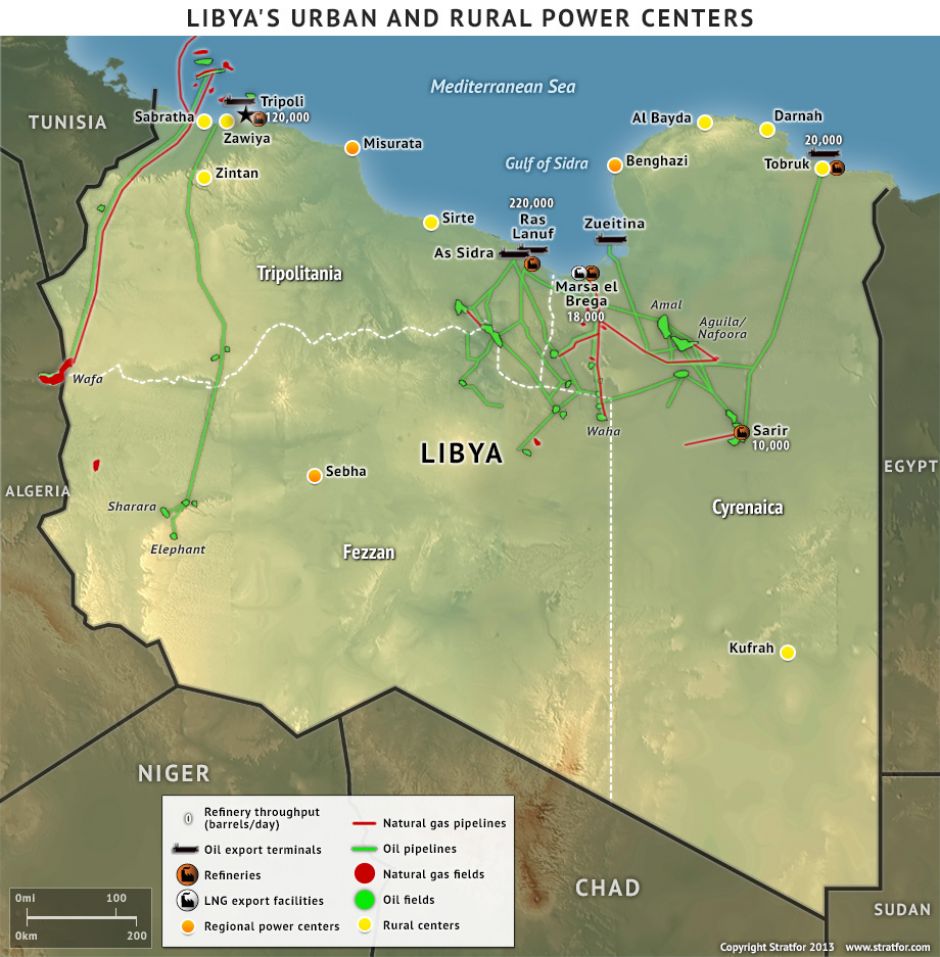
Without a permanent government, stable enforcement mechanisms or a reduction of militia capabilities, agreements in Libya are impermanent. Thus, the new Mitig administration is unlikely to be able to deal effectively with the forces of protest leaders such as Ibrahim Jadhran, whose blockade of Libya's eastern oil terminals have caused the most damage to Libyan export capacity. Jadhran's demands are strongly opposed by the Misratans, Islamists and the Justice and Construction Party. Meanwhile, opposition from the Zentani militia to the federalists and Islamists, along with competition with Misrata, means Zentani forces will likely try to leverage their positions in the Nafusa Mountains through strikes or cut-offs. In the southwest, conflicting Toubou, Arab and Tuareg tribal interests have long kept the large western Sharara oil field from producing reliably.
It is unclear when the next round of tribal or militia tensions will begin, but conditions in Libya do not currently support a lasting political arrangement or normalized energy production. The nominal central government in Tripoli has an incentive to play up even temporary gains to foreign investors, capitals and its own population, but Libya's overall trajectory points toward continued political fragmentation and production volatility.
