
Editor's note: Rim of the Pacific (RIMPAC), a multinational maritime exercise conducted every two years around the Hawaiian Islands, is being held June 27-Aug. 7. This year's exercises mark an important step in the projection of power and interoperability between participating nations as the United States begins its strategic shift toward the Pacific region, particularly with regard to China, the region's rising power, which was not among the 21 nations invited by Washington to participate. This series analyzes the naval capabilities displayed during the exercises and weighs them in the context of regional relationships. Click here for part one, part two and part three.
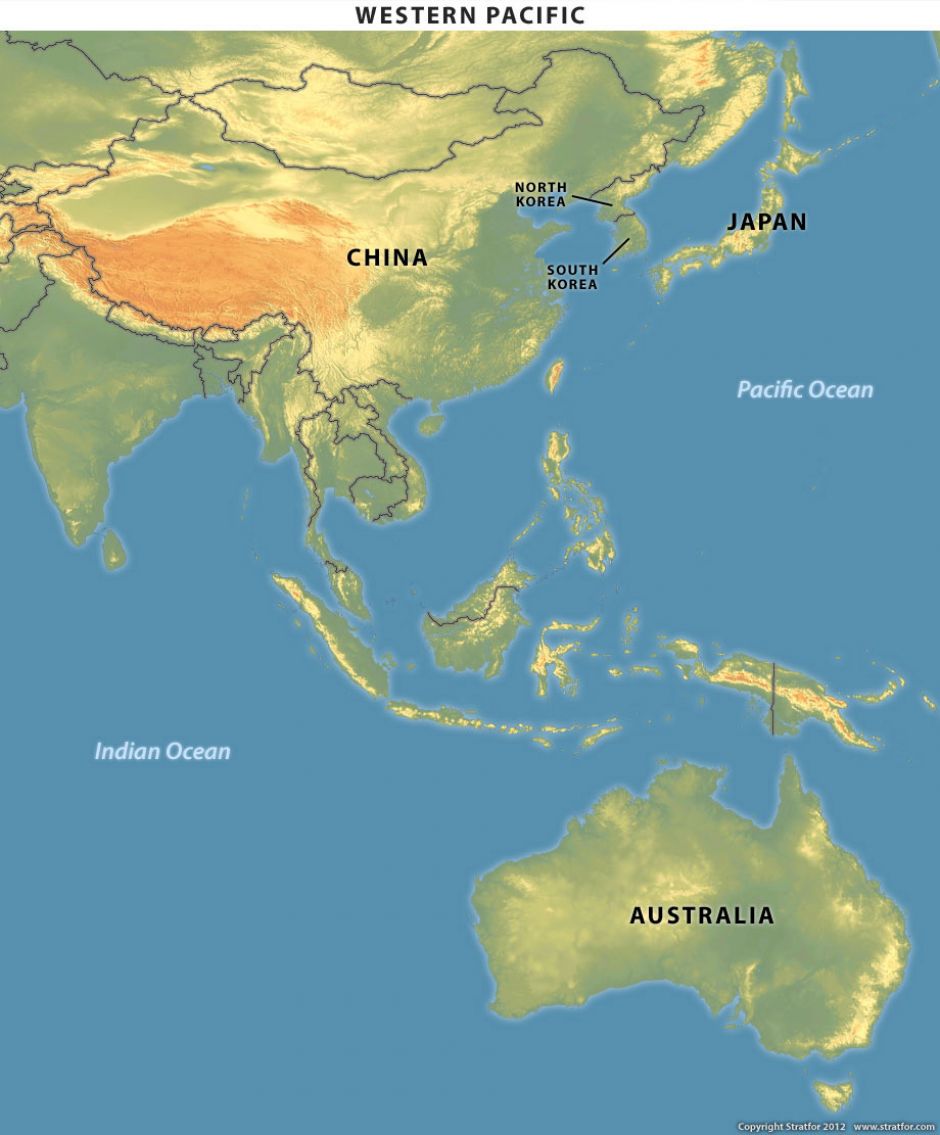
The Western Pacific's geography, where multiple states continually struggle to balance each other, limits the rapidity and flexibility of significant land forces. As a predominantly maritime environment, most of the states in the region are relatively isolated islands or archipelagos. Even China is much more dependent on the sea than it might seem. Projecting military power across this environment is difficult and requires a large military infrastructure dedicated to air and naval power.
The movement and projection of sizeable, conventional land forces is constrained by a state's ability to either ship or fly them into a battle space and maintain supply lines through secure sea-lanes or airspace. Few states can do this for a large force, and even those with the capability cannot seize or clear every bit of enemy territory. Waging a successful conflict requires good intelligence and a focused strategy as well as a careful allocation of resources.
Special operations forces are highly valuable due to their adaptability to a wide variety of missions and contingencies, the limited resources they require, and their mobility through multiple environments. In the restrictive terrain of the Western Pacific, such advantages can be potentially decisive in any conflict. The region's terrain, combined with differing military imperatives of regional countries, requires the special operations forces of each state to possess distinct characteristics.
The Value of Special Operations
Special operations can be defined as operations conducted in hostile, denied or politically sensitive environments to achieve military, diplomatic, informational, and/or economic objectives by employing military capabilities for which there is no broad conventional force requirement. These units require large amounts of time and resources per capita to be effective. Selection of special operations soldiers involves an array of methods designed to detect a potent mixture of intelligence, physical fitness, perseverance, loyalty, and stability under stress. The forces typically operate in small elements (relative to conventional forces) to conduct missions independently. Given their wide mission spectrum, special operations forces require a wide range of skill sets and, thus, a large amount of training.
Special operations units usually have specialized equipment that serve as force multipliers. The forces can be inserted into the battle space through a variety of sea, air and land platforms, providing much of their flexibility, stealth and rapid response capabilities. The relatively small footprint of the forces requires little to no logistical support, which can be the Achilles' heel of larger forces.
Special operation forces can provide intelligence to help direct where conventional resources should be deployed, and they can execute various strategic direct action missions such as raids behind enemy lines, sabotage, targeted assassinations or harassment attacks. They can be designed to handle specific contingencies such as the seizing of weapons of mass destruction in failed-state scenarios, combat search and rescue situations, or the training and coordination of foreign military personnel. The forces also can be trained to operate clandestinely and rapidly in several types of terrain where larger conventional forces would struggle for mobility.
States decide how to use their special operations forces assets, like any other asset, through a combination of threat assessments, military imperatives and available resources. This means that different special operations forces have unique focuses and missions. Many Western Pacific countries, such as the Philippines and Indonesia, have suffered protracted insurgencies, so their security concerns focus inward. Such countries design their special operations forces for counterterrorism, which requires precision work and highly trained units but limits use in external military operations. For example, Vietnam's Dac Cong unit was established to counter U.S. special operations forces during the Vietnam War, but it has since been used predominantly for counterterrorism and urban defense operations. The unit, as with others like it in the region, rarely considers force projection beyond Vietnamese borders.
To assess a state's ability to project force with special operations units, it is important to consider its selection and training methods, equipment, and manpower. It is equally important to understand how the deployment of such forces aligns with the state's military imperatives and ability to physically move forces into battle spaces in a clandestine and timely manner. Several countries in the Western Pacific — primarily China, Japan, North Korea, South Korea and Australia — have focused heavily on developing these forces and emphasized their use in multiple contingencies.
China
Before the 1980s, the war doctrine of China's People's Liberation Army focused on defending the home territory using the military's considerable mass. This doctrine has since evolved into what the Chinese refer to as "winning local wars under conditions of informatization." China's goal is to use flexible forces with technologically advanced weaponry to fight within the immediate region while preventing any intervention by an outside third party such as the United States.
The new doctrine emphasized the development of multiple special operations units attached to regional commands. One common scenario for their use involves a Taiwanese declaration of independence to which Beijing would feel compelled to respond militarily. Under this scenario, mainland units would rapidly infiltrate Taiwanese territories through various air and sea routes to conduct reconnaissance and provide intelligence to commanders about potential strike locations, battle damage assessments and enemy force movements. Chinese special operations forces are also trained to quickly execute direct action engagements aimed at decapitating essential military or political leadership, sabotaging key infrastructure, or creating confusion through harassment attacks. China has not deployed these forces in combat, but their intended use is implied by training and established doctrine.
Japan
The Japan Self-Defense Force operates under a "defense only" doctrine as dictated by Article 9 of the Japanese Constitution. Since the 1950s, Japan has trained heavily with the U.S. military, which maintains a permanent presence in the country. The U.S. Army's 1st Battalion, 1st Special Forces Group is forward deployed in Torii Station, Okinawa, providing a direct working relationship with Japanese special operations forces.
With 6,852 islands spread across a large area, protecting the entirety of Japanese territory is difficult. North Korean infiltrations into these areas, usually comprised of small teams on vessels disguised as fishing boats, and territorial disputes with China that could potentially lead to seizures of disputed islands have shaped a force designed to counter such threats. In 2007, Japan created the 3,200-troop Central Readiness Force for counterterrorism and counter-guerrilla operations. The Japan Maritime Self-Defense Force has a Special Boarding Unit specifically designed to interdict maritime infiltration attempts. Meanwhile, ranger platoons have been integrated into the country's Western Army Infantry Regiment and tasked with the reconnaissance of 180 isolated islands and rapid response responsibilities to deter guerilla actions.
Japan plans to use its special operations forces to detect and repel any territorial infiltration or seizure by hostile actors. Its special operations forces would likely be used to rapidly respond, reconnoiter and then guide Japan's 1st Airborne Brigade and the Japan Self-Defense Force's robust naval and air assets into the disputed area. Japan's challenge is that the country cannot occupy all of its territory in the face of outside threats. Rather than spreading its forces thin, Japan has developed a strategy of relying on special operations response units to rapidly thwart violations. The country rarely operates outside its own territory due to constitutional constraints, but it has the capability to do so.
The Koreas
The special operations forces of both North Korea and South Korea are designed primarily for use against each other. The Koreas have maintained an uneasy armistice since the July 1953 cease-fire that halted the Korean War. Resumption of conflict has remained an ever-present possibility requiring both sides to continually plan for military contingences. The variety of these contingencies and the constant rebalancing of forces has motivated both sides to heavily rely on special operations forces.
The most striking characteristic of North Korea's special operations force is its purported size, estimated to be around 200,000 members. The North does not have the logistical assets to project a majority of this force beyond the Korean Peninsula. Small elements of its force have been quite active and are known for kidnappings, assassinations and infiltrations throughout South Korea, Japan and China. The North Koreans can also conduct other special operations such as sabotage and reconnaissance. However, the force's primary task — and the probable reasoning for its size and majority stationing along the Demilitarized Zone — is to move behind South Korean lines at any outbreak of hostilities and open a second front. This would generally serve to harass and tie down South Korean forces.
The South's special operations forces are designed similarly to those of the United States in that each branch of its armed forces has a designated special operations force that helps to enable its branch's mission set. This is an outgrowth of the South Korean military's close cooperation and training with the U.S. military for the decades following the Korean War. These units work for Special Operations Command Korea, which reports directly to the commander of the combined U.S./U.N. forces. Any usage of these forces would be coordinated with all U.S. regional assets, including those in Japan.
One tasking is to be prepared for any number of wildcard scenarios that North Korea is potentially capable of executing and mitigating their effects, whether through kidnapping attempts, terrorist attacks or even the securing of weapons of mass destruction in the event of the collapse of the North. Due to the nature of the ongoing tensions, South Korea's special operations forces also generally stay focused on the peninsula.
Australia
Australia is one of the most geographically isolated countries in the world and, as such, relies heavily on its sea-lanes. This requires the country to seek the assistance of the dominant naval power in the world to help secure its sea-lanes, since it cannot do so itself. This alliance imperative has compelled the Australian military to be consistently involved in conflict throughout the 20th and 21st centuries. The institutional knowledge gained through such vast experience has created a highly professional special operations forces community that has consistently worked in conjunction with U.S. and British units.
Australia's special operations forces are very similar in form and function to the British model. While considered small in comparison to similar units in the region, they are well-equipped and well-trained, and Australia has the necessary transportation infrastructure to project its forces quickly and clandestinely throughout the world. Australian forces have also garnered the most combat experience by far compared to any other country in the region given their participation in operations in Iraq and Afghanistan over the past decade.
In any conflict in the Western Pacific, it is likely that the United States will be involved in some capacity, along with Australia. Being regional experts, Australian special operations forces would be relied upon even more heavily to support and work within a coalition similar to that seen in other regions over the past decade.
Special operations forces should be viewed like any other military asset that can be designed to operate in a specific environment and have a desired effect on the battlefield. The nature of these forces allows them to be quite flexible in missions and highly mobile. Their ability to insert clandestinely into a given battle space on a variety of land, sea or air platforms makes them well-suited for the unique geography of the Western Pacific. This has led to the formation of many unique units specifically tailored to the countries for which they operate. Any state engaged in hostilities within this region will need the unrivalled capabilities that these units provide.
