
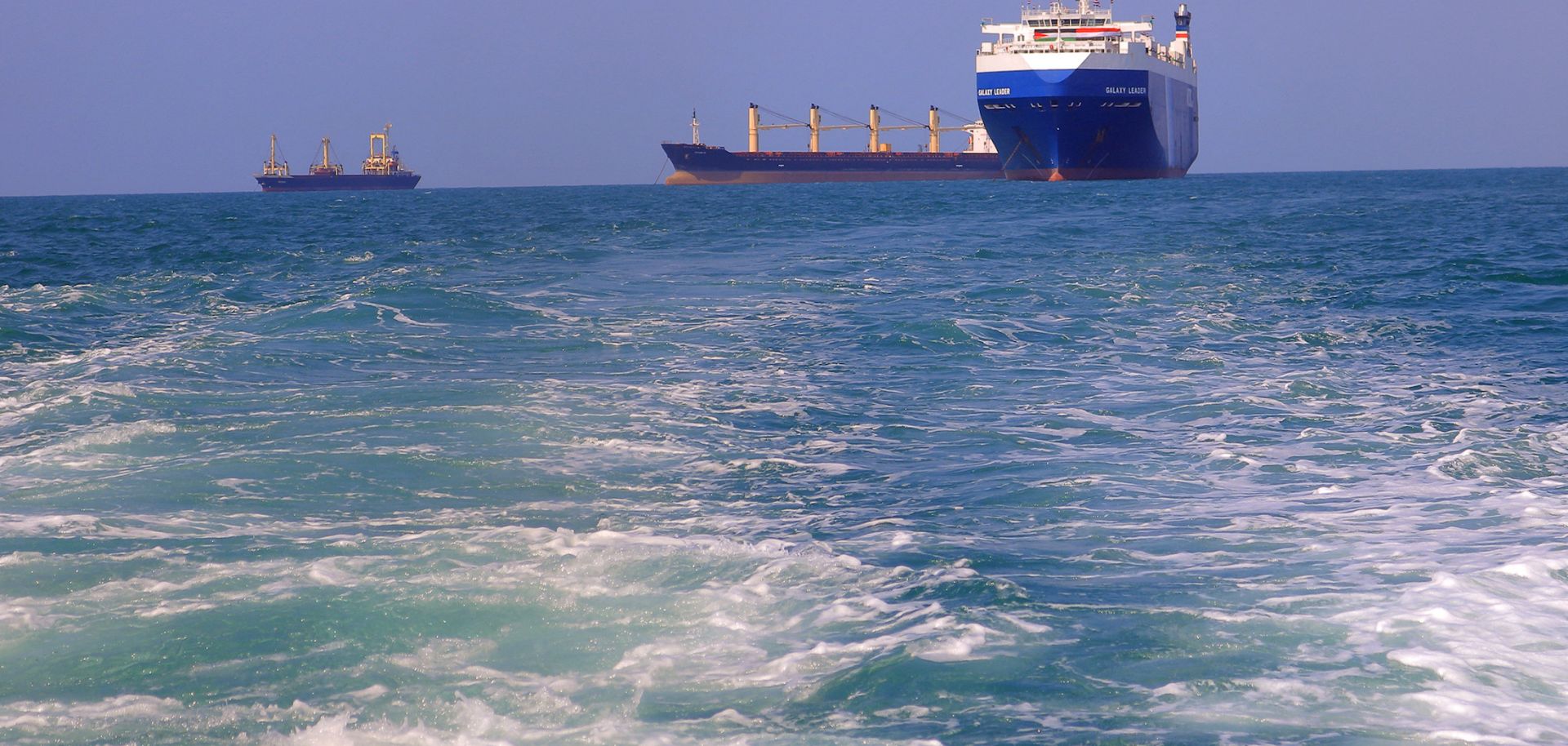
The United States and its allies will likely adopt a restrained strategy to end Houthi attacks on commercial ships on the Red Sea while avoiding a prolonged military intervention. But even this approach would risk escalations that could collapse Saudi-Houthi cease-fire talks in Yemen, and prompt Iran to broaden its maritime attacks in the region. On Jan. 3, in a joint statement with 13 countries, the United States warned Yemen's Iran-backed Houthi movement to halt attacks on Red Sea shipping and release detained crews and ships. The official statement said that the Houthis would ''bear the responsibility of the consequence,'' though a White House official, speaking to the Associated Press, was more explicit, saying that the Houthis should ''not anticipate another warning'' from the United States. Also on Jan. 3, White House officials met to discuss military options in Yemen. U.S. President Joe Biden reportedly did not approve military strikes at that time, but his administration continues to face growing pressure, particularly from allies like the United Kingdom, to respond to Houthis' maritime harassment that has been raising global shipping costs and interfering with freedom of navigation.
- The Jan. 3 statement came from the United States Australia, Bahrain, Belgium, Canada, Denmark, Germany, Italy, Japan, the Netherlands, New Zealand, South Korea, Singapore and the United Kingdom. Some of these countries, including the United Kingdom and France, have deployed warships to the region in response to the Houthi attacks.
- The Houthis began attacking ships transiting the Red Sea in November, in solidarity with Hamas amid the Palestinian militant group's ongoing war with Israel in the Gaza Strip. The attacks are designed to give the Houthis a political boost in Yemen itself, where anti-Israel sentiment is strong and where many Yemenis welcome confrontations with Israel's ally, the United States. They're also aimed at increasing economic pressure on Israel by targeting shipping related to the country.
- A flotilla of international warships is in place in the Red Sea and the Indian Ocean, some having arrived after the Houthi attacks began, including the American aircraft carrier USS Dwight D. Eisenhower, which provides an array of military options for Washington should it decide to proceed with strikes on Yemen. Previous reporting suggested U.S. strikes might focus on origin points for attacks on commercial shipping and/or command and control that enabled such attacks.
- Since the Houthi attacks began, CNBC has estimated that $200 billion worth of trade has been diverted to the much longer route around Africa.
The United States will resist efforts to lead a more holistic campaign to substantially impose military and diplomatic pressure on the Houthis to end their attacks in the Red Sea. The United Arab Emirates and some U.S.-based hawks are pushing for a more holistic response to the harassment. The Emiratis have continued to call on the United States to re-designate the Houthis as a foreign terrorist organization, which would deepen the Yemeni group's economic isolation, while some in U.S. media want to see more expansive strikes on the Houthis. This more expansive strategy would mean hitting not only infrastructure related to the attacks but other Houthi political and military sites, like the capital city of Sanaa. Washington would also likely increase intelligence and military support to the Saudi-led coalition in Yemen and the internationally recognized Yemeni government to enable them to apply military pressure on important frontlines like near Marib, which the Houthis and Yemeni government have been battling over for years. But while such an expansive campaign would bring the most significant military pressure to bear on the Houthis, Western governments are not eager to enter the nearly decade-old Yemeni civil war, especially without a clean exit strategy. It would also mean the end of Saudi-Houthi peace talks and a resumption of Houthi attacks across Saudi Arabia and/or the United Arab Emirates, including on energy infrastructure and targets that could put upward pressure on global energy prices. This campaign would also very likely cause sustained Iranian retaliation in Iraq and harassment of shipping to the Persian Gulf and Indian Ocean as Iran began solidarity operations to support the Houthis.
- Despite overwhelming coalition airpower, increased strikes on Houthi targets in Yemen would not guarantee a substantial change in the military balance of the civil war, as the Saudi-led coalition in Yemen also suffers from internal division, inexperience, corruption and poor governance that has impeded its ability to make gains against the militant group.
Against this backdrop of constraints, the United States and its allies will likely adopt a restrained strategy to prevent and intercept Houthi attacks. To limit the scale of retaliation and potential escalation, the United States and its allies have several options to strike against the Houthis. One is to maintain their current tactics of striking Houthi ships, missiles, drones and other aircraft as they enter the Red Sea, a method that may intercept many attacks but has so far not reassured shipping companies that the area is secure, with the U.S.-led coalition reacting to attacks rather than preempting them. Another option is to become more proactive on the seas by trying to intercept attacks earlier. Washington and its alies may also escalate to limited attacks on Yemen itself, which could either be reactive (with the coalition responding to attacks by striking targets associated with those attacks) or proactive (with the coalition choosing to attack targets associated with imminent attacks). All of these strategies are relatively restrained, would require precise intelligence and would be unable to intercept all attacks, given the mobile nature of Houthi military infrastructure on the ground and at sea. Still, they would signal that the coalition is prepared to act preemptively against imminent attacks, and may also slow down the pace of Houthi attacks by forcing the militant group to relocate military infrastructure, while forcing its political leaders to recalculate the costs of further escalation with the West. Moreover, these tactics would reduce the Houthis political incentives to escalate their attacks on the coalition or maritime shipping by limiting the amount of damage the coalition causes to them.
- Pursuing more limited approaches to containing Houthi attacks could enable the coalition's individual members — like France and the United Kingdom — to take the lead on such missions. This would decrease Houthis' incentive to retaliate against the United States and/or expand their retaliation across the region. Attacking a more limited set of targets would also be more within the capabilities of these junior partners in the coalition.
- However, the Houthis will likely only halt their maritime attacks once their political incentives, which are tied to appear to confront the Houthis rivals, to do so are exhausted. These incentives are more tied to developments in Yemen and the broader region, rather than the war in Gaza, meaning that even if the Israel-Hamas war winds down, the Houthis may keep attacking Red Sea shipping if the group continues to politically benefit from such attacks.
Even this restrained strategy could lead to tit-for-tat attacks between the U.S.-led coalition and the Houthis that would risk escalation and broadening the conflict. Should the coalition strike in Yemen itself, it will incentivize the Houthis to respond militarily against coalition forces, sparking a cycle of incidents that incentivizes the coalition to conduct a wider set of strikes on the Houthis. Should one of these incidents result in significant coalition casualties in a successful attack on a warship, the coalition would then consider strikes on a limited number of Houthi targets on land, like ports, helipads, drone launch pads, airfields, command and control centers, launcher sites, missile and rocket storage, roads, and ammunition depots that may not necessarily be related to the Houthis' operations in the Red Sea. Such an increased scale of attacks would likely convince the moderates within Houthi political leadership to de-escalate in the Red Sea before coalition forces conduct strikes at a level that could destabilize the Houthis' positions in Yemen itself, or before the United States is compelled to re-designate the militant group as a foreign terrorist organization designation. However, if such military pressure does not dissuade the Houthis' political leadership and the group's hard-liners prevail, it might instead provoke more widespread Houthi attacks against coalition warships and maritime traffic, like drone warms, suicide boats and/or ballistic missile strikes. These attacks could freeze or even collapse Saudi-Houthi cease-fire talks and spark a return to Houthi attacks on Saudi Arabia and other Arab Gulf targets as the public opinion in Yemen sours against engagement with Western-aligned powers. Finally, in such an escalatory scenario, Iran might ramp up its own maritime attack strategy in solidarity with its Yemeni ally; this could see Tehran conduct strikes against a broader set of Western targets, including those in Iraq, the Persian Gulf and near the Strait of Hormuz, in support of the Houthis.
- Should the United States and its allies begin directly attacking Houthi targets in Yemen, major cities like Sanaa would most likely remain off limits because of the potential for causing civilian casualties and giving the Houthis a stronger incentive to increase their attacks on the coalition or even resume fire on Arab Gulf states.
