
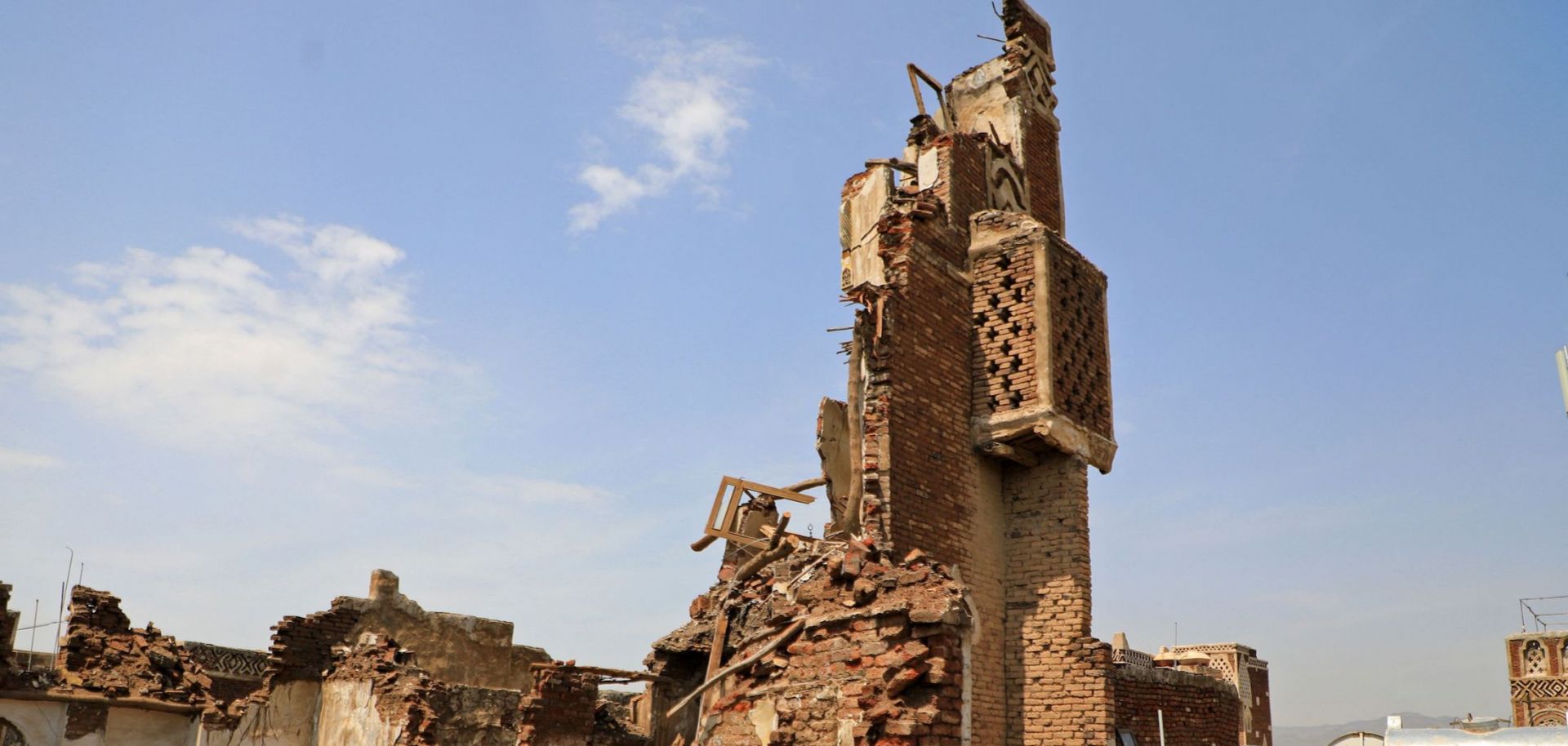
A partial view shows a collapsed UNESCO-listed building in the old city of the Yemeni capital Sanaa on Aug. 10 following heavy rains.
Yemen's warring parties have agreed to another extension of a now four-month-old cease-fire — opening the door, ever so slightly, to the possibility of at least freezing the war-torn country's seven-year conflict. The factors compelling the Yemeni government and Houthi rebels to continue prolonging their truce — namely, waning foreign support, fuel and food insecurity, and the lack of a clear way for either side to achieve their military objectives — are unlikely to change anytime soon. But even if this results in a sustained period of reduced fighting, real and lasting peace in Yemen — while not impossible — remains improbable. And that's because a frozen Yemeni war would likely resemble the unstable conflicts in Gaza and Syria, where periods of violence alternate with long swathes of relative calm. Why Yemen (Still) Matters If one says ''Yemen matters,'' the question that might follow is ''to whom?
