
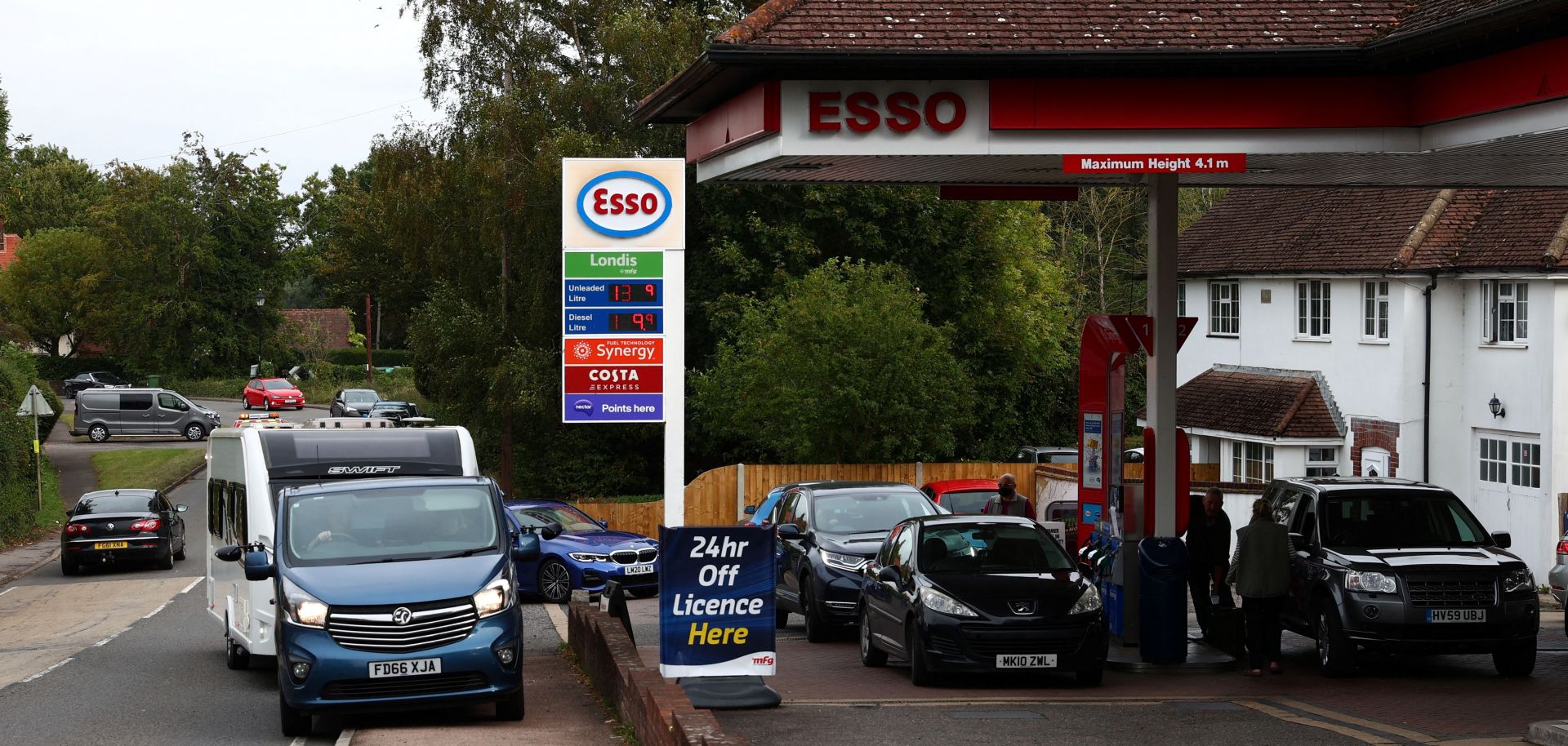
Cars line up at a gas station in the U.K. village of Odiham amid fuel shortages on Sept. 30, 2021.
High global energy prices are likely to remain through the end of the Northern Hemisphere’s winter, which will undermine COVID-19 economic recoveries in energy-importing countries, hurting low-income population segments the hardest. The higher prices will also exacerbate the global manufacturing sector’s fragile recovery and ongoing supply chain challenges, while increasing pressure on governments’ energy transition plans. On Sept. 28, European light sweet crude benchmark Brent hit $80 per barrel for the first time since 2018. As of Oct. 1, European natural gas hubs Dutch TTF and U.K. NBP benchmarks, as well as the Asian JKM liquified natural gas (LNG) benchmarks, were also all trading between $30 to $35 per British thermal unit (mmBtu), which is equivalent to about $170 to $200 per barrel of oil. Brent has since fallen back to around $78 per barrel.
