
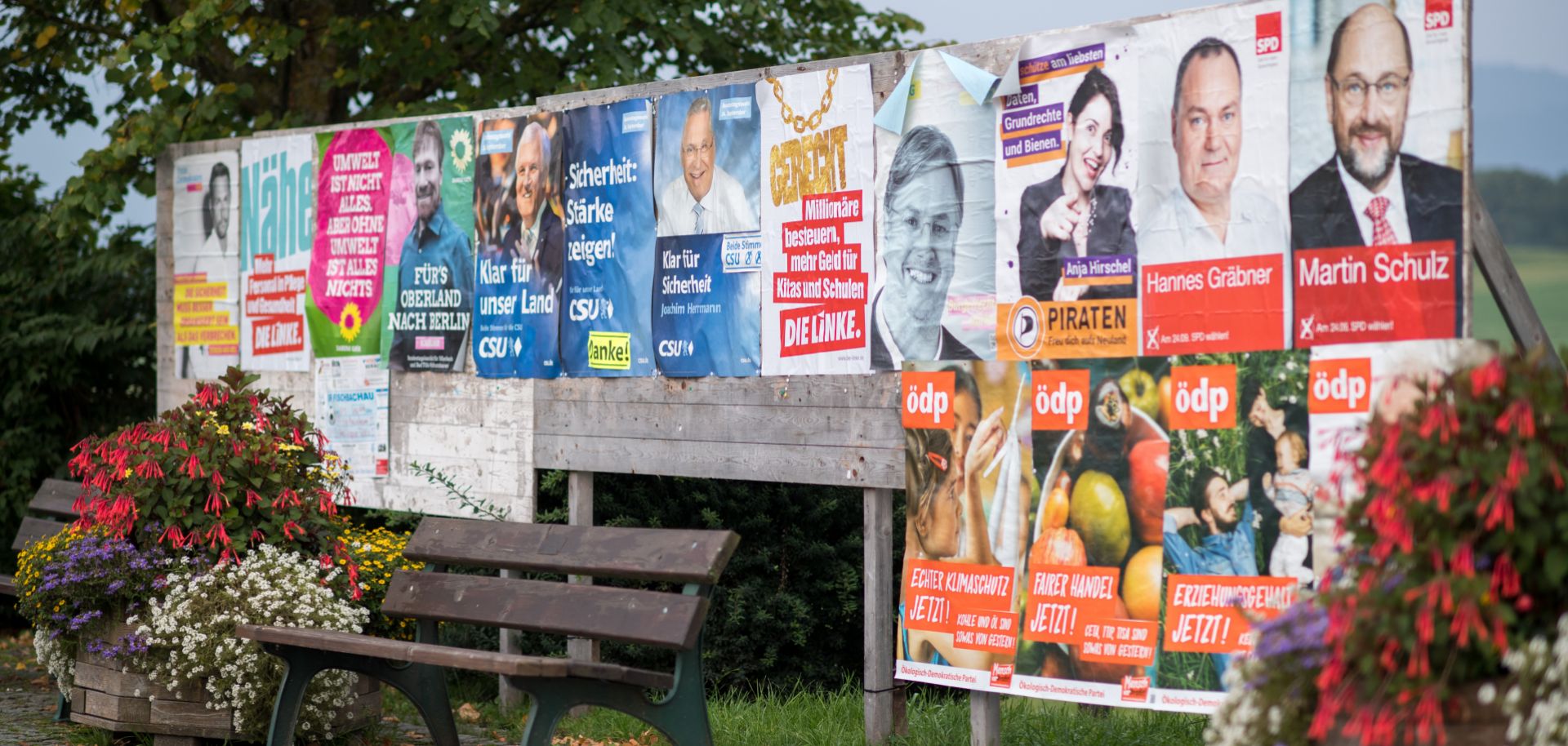
Campaign placards for various parties are seen during German federal elections on Sept. 24, 2017 near Bayrischzell, Germany. Chancellor Angela Merkel's conservative Christian Democratic Union (CDU) won the largest portion of the vote, while another five parties received enough support to gain seats in parliament. With so many voices earning a say, the negotiations could take weeks if not months. The rest of Europe will be following them closely: Germany's domestic concerns may impact the future of EU reform.
After yesterday's elections produced the most fragmented Bundestag in decades , German political parties must now take on the exhausting task of forming a coalition government. Chancellor Angela Merkel's conservative Christian Democratic Union (CDU) won the largest portion of the vote, while another five parties received enough support to gain seats in parliament. With so many voices earning a say, the negotiations could take weeks if not months. The rest of Europe will be following them closely: Germany's domestic concerns may impact the future of EU reform. If the CDU and the center-left Social Democratic Party (SPD) repeat their previous coalition again, they would control a comfortable majority of parliament. But the SDP, which earned second place, has stated that it won't partner with Merkel's party this time around. In the coming weeks, then, the CDU will be reaching out to smaller political forces.
