
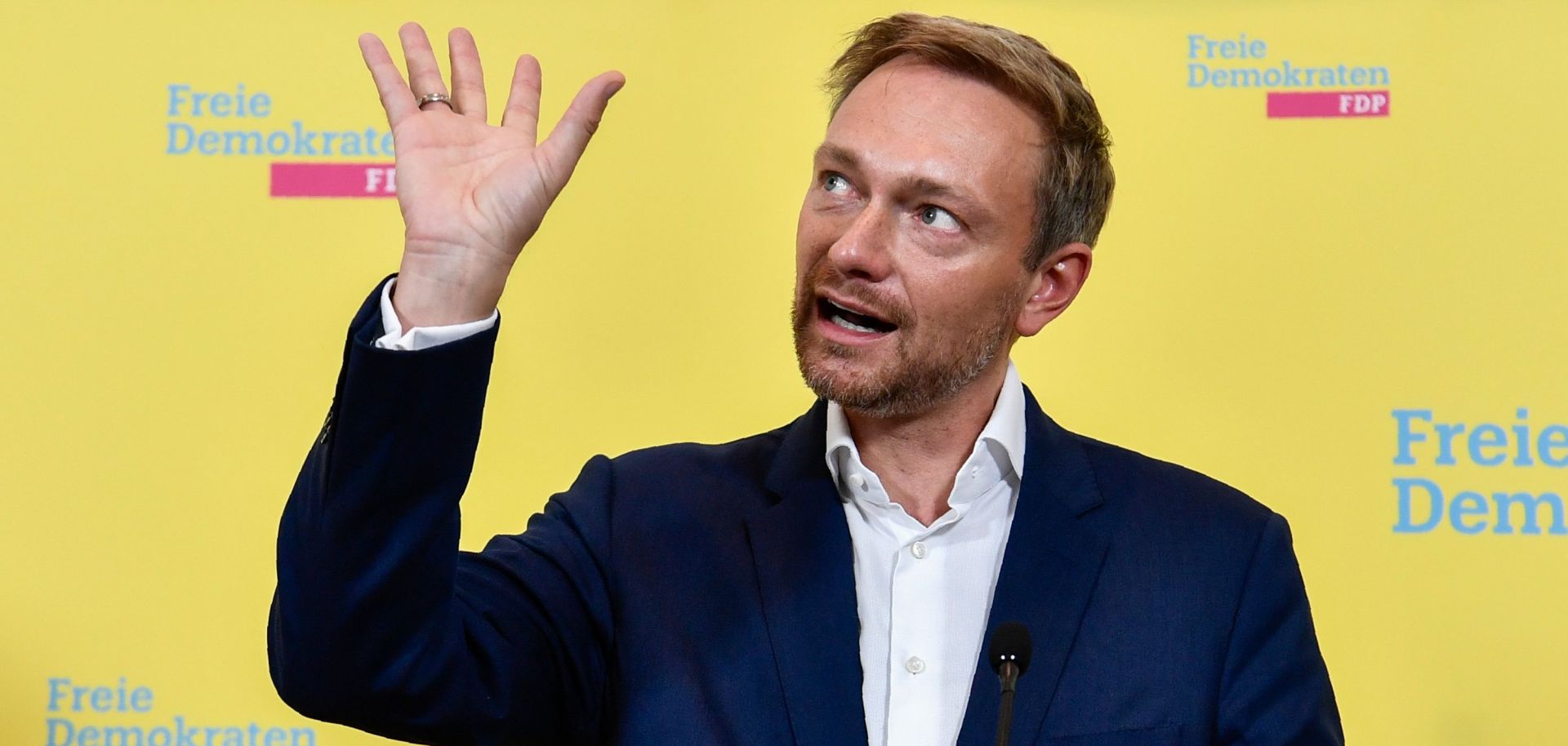
Since the electoral fiasco of 2013, the Free Democratic Party has tried to rebrand itself and to become more attractive in an increasingly competitive landscape. Part of the strategy was to appoint 38-year-old Christian Lindner as party leader and chancellor candidate.
If opinion polls are to be trusted, the Bundestag that emerges from the Sept. 24 general election in Germany could be the most fragmented in decades. As many as six political parties stand a chance of entering the lower chamber of the German Parliament — up from the four currently represented. Germany's largest parties, the center-right Christian Democratic Union (CDU) and the center-left Social Democratic Party (SPD), have been governing together since 2013, but after the election, they will try to form governing alliances with other parties. This will give smaller political forces an important role when it comes to deciding who will be in charge of the federal government. Of all of Germany's potential kingmakers, one has the most experience in the role: the centrist Free Democratic Party (FDP). The FDP was created in the late 1940s as an association of several liberal parties.
