
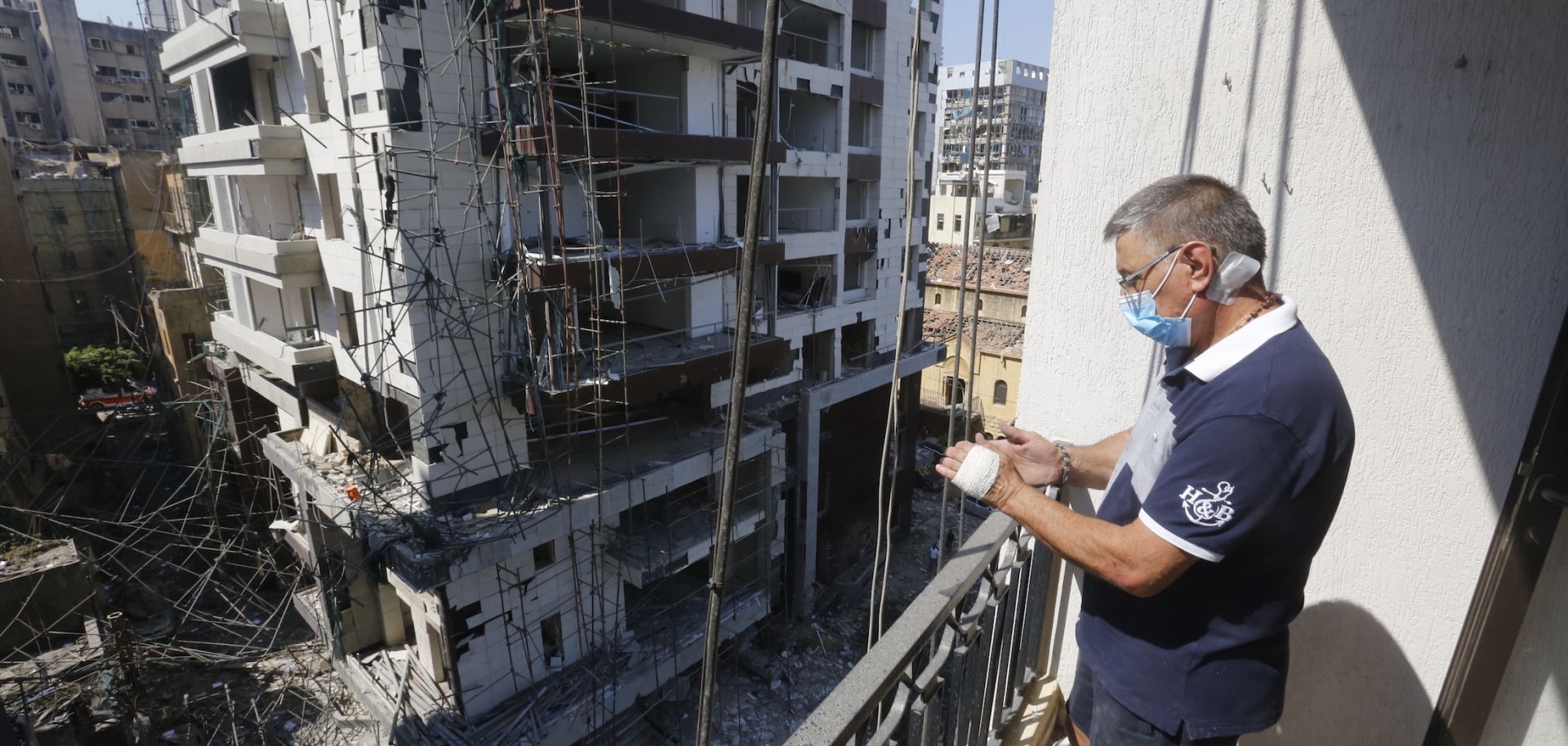
A man looks from the balcony of a building, damaged by the port explosion a day earlier, in Beirut, Lebanon on Aug. 5, 2020.
The rising tide of popular anger over the Beirut explosion, along with the subsequent resignation of Prime Minister Hassan Diab’s government, could yield piecemeal economic and political reforms by reinvigorating demands for real change in Lebanon’s entrenched political system, which has long benefited wealthy sectarian stakeholders while failing to address the country's deteriorating economy. From Bad to Worse Prior to the Beirut explosion, Lebanon's dual economic and financial crises were already expected to deteriorate, disproportionately impacting the country's poor and middle classes who lack the leverage to pressure the government for concrete change. Wealthy Lebanese, who back political elites throughout the country's government, maintain foreign currency cash reserves and overseas bank accounts, which cushion them from some of the depreciation of the Lebanese lira and associated losses of purchasing power .
