
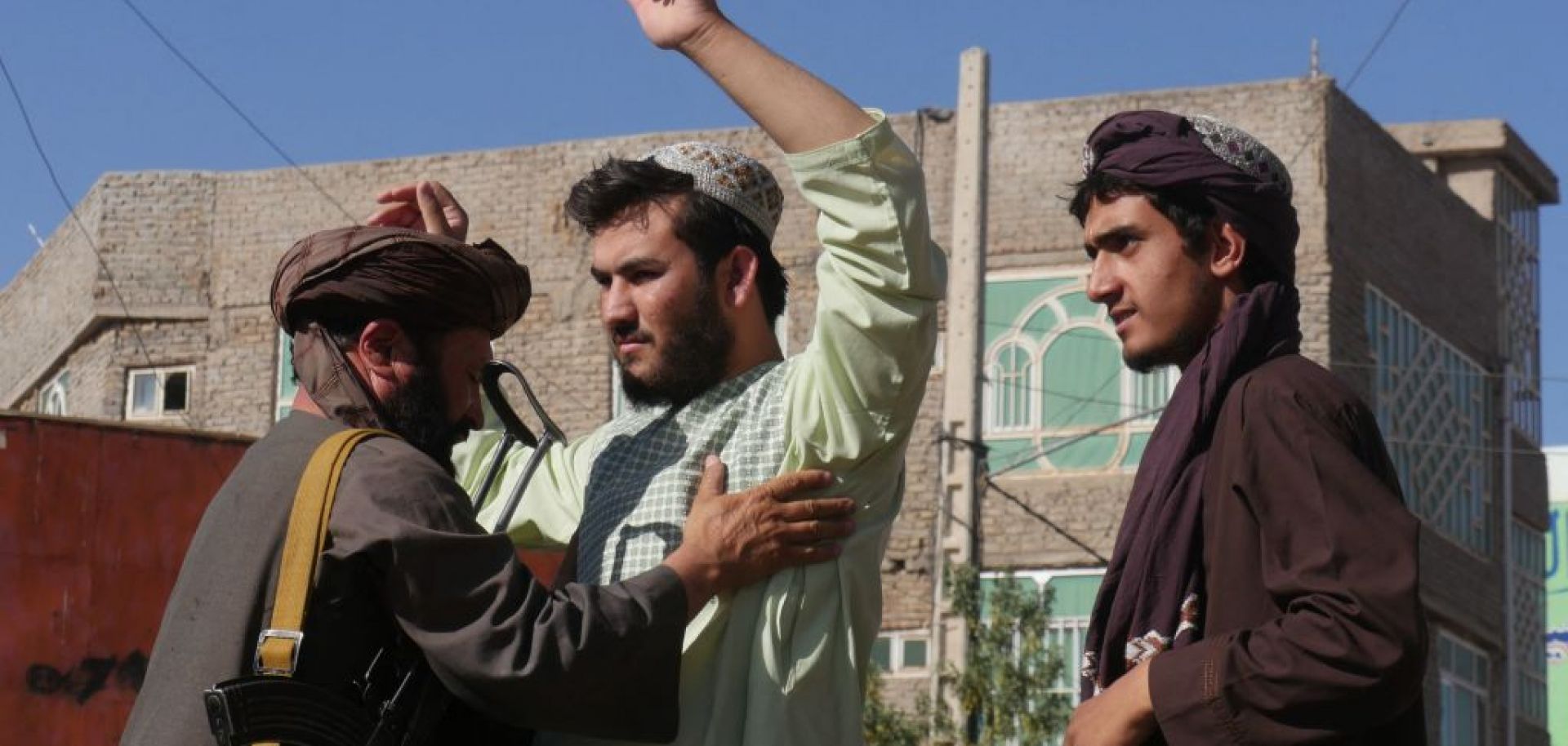
A Taliban fighter (L) frisks men at a checkpoint after a blast during Friday prayers Sept. 2, 2022, in Gazargah mosque in Herat.
By Isaia Galace Despite the recent U.S. killing of al Qaeda leader Ayman al-Zawahiri, a survey of foreign counterterrorism action in Afghanistan over the past year demonstrates foreign states' limited abilities to counter terrorist groups in the country, which may allow for an eventual extremist resurgence. After nearly a year of ambiguity and scant reporting regarding foreign counterterrorism operations in Afghanistan, U.S. President Joe Biden confirmed Aug. 1 that the United States conducted an unmanned aerial vehicle strike the morning of July 31 that killed al Qaeda leader Ayman al-Zawahiri in Kabul. Al-Zawahiri was residing in the upscale neighborhood of Sherpur in the house of a top aide to Taliban senior leader and Interior Minister Sirajudiin Haqqani. A U.S. "ground team" was reportedly present in Afghanistan to support the operation and helped confirm al-Zawahiri's killing, though few details about its activities have been publicized.
