
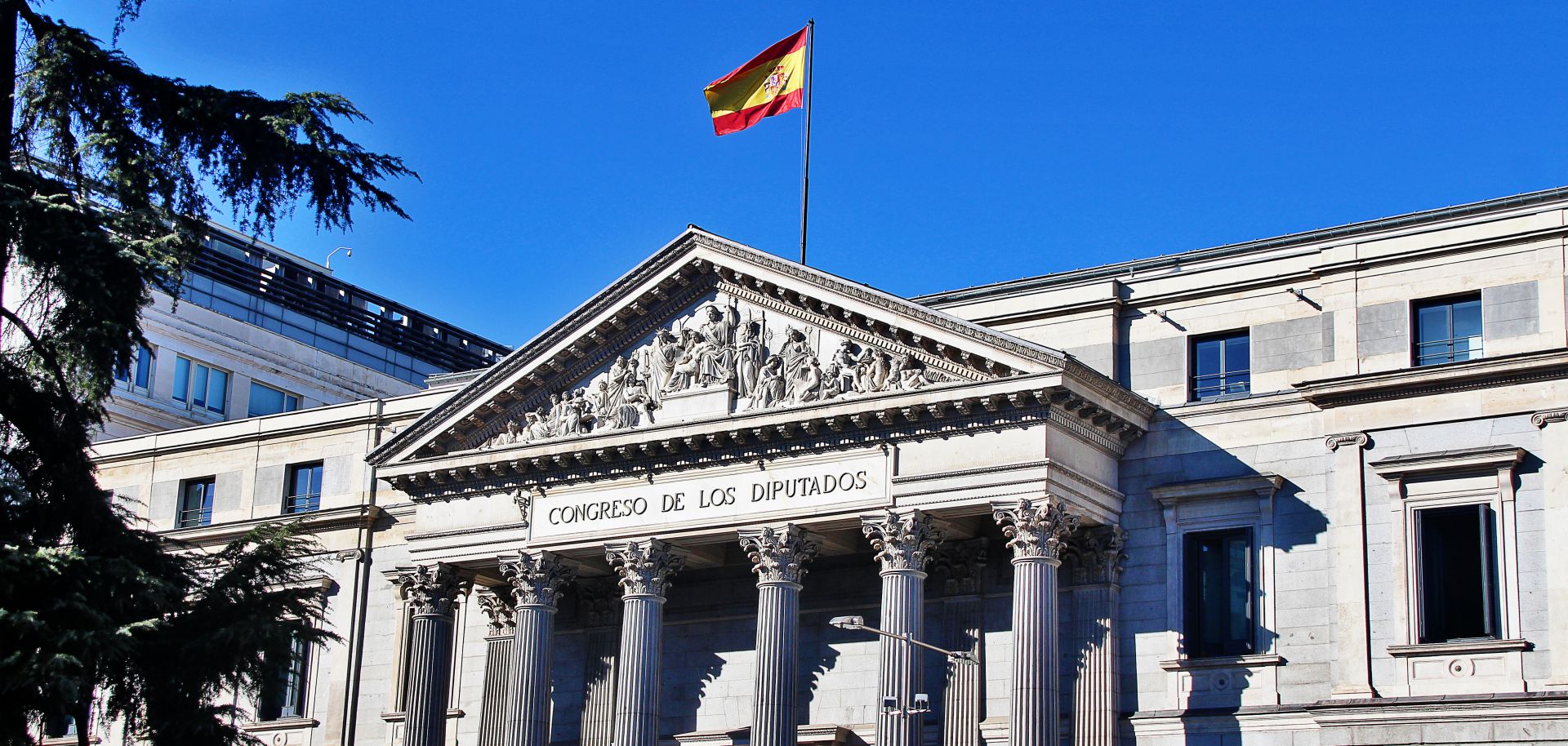
Spain's Congress of Deputies building. Spain's new coalition government faces a fragmented political landscape, a slowing economy and unresolved secession disputes in Catalonia.
Spain has just appointed its first coalition government since the return of democracy in the late 1970s, but the new government will struggle to pass structural reforms at a time of growing political fragmentation and slowing economic growth. Prime Minister Pedro Sanchez, who won a vote of investiture in parliament on Jan. 7 and will lead a coalition between his center-left Socialist Party (PSOE) and the left-wing Unidas Podemos (UP), will have to deal with a worsening economic environment, a precarious labor market and secession pressure from Catalonia. Companies operating in Spain, for their part, will face higher taxes and the reversal of some of the market-friendly policies that were introduced during the peak of the economic crisis in the early 2010s. A Fragmented Political Landscape Between the 1980s and early 2010s, Spain had single-party governments led by either the PSOE or the center-right People's Party.
