
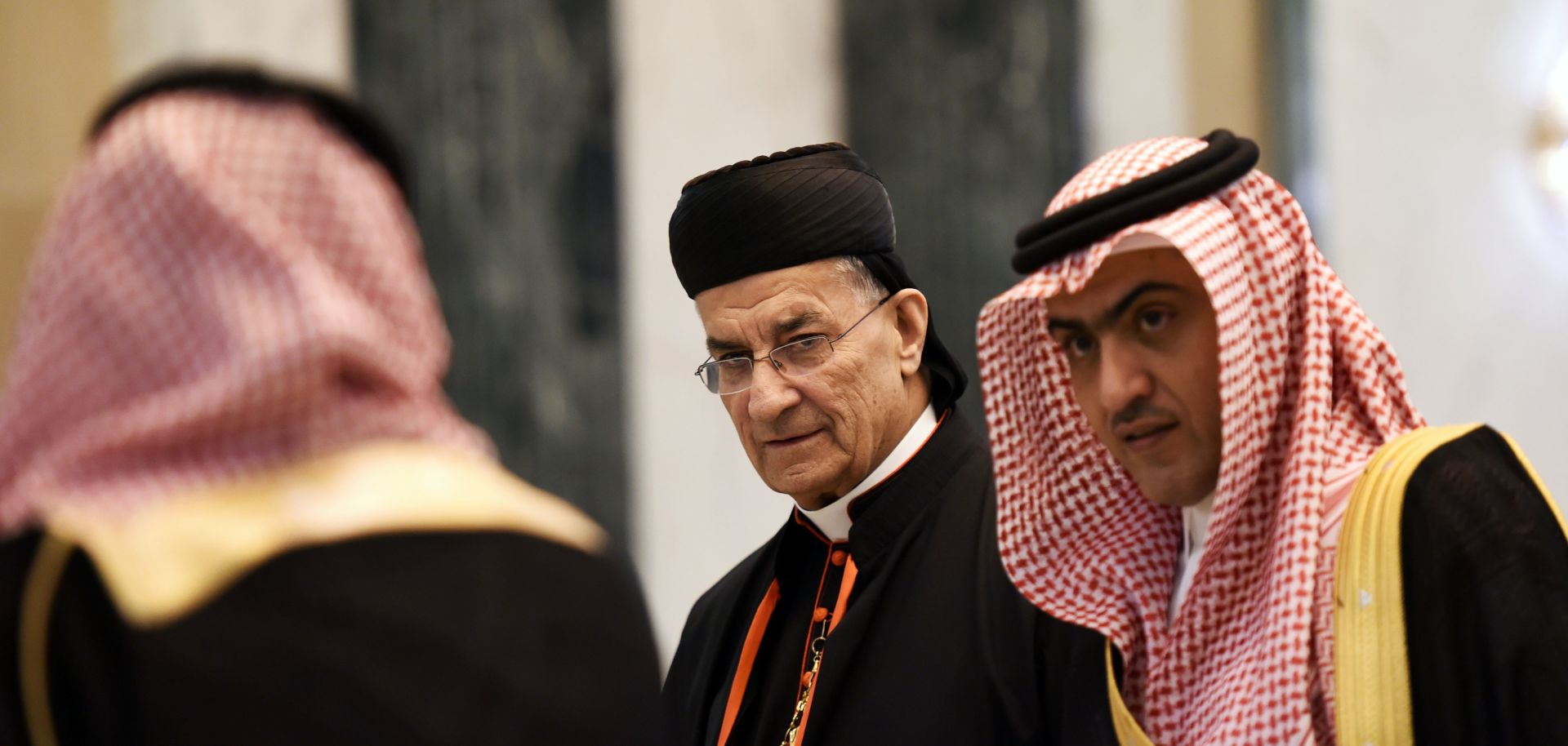
Lebanon's Christian Maronite Patriarch Beshara Rai (C) arrives for a first-time meeting with Saudi Crown Prince Mohammed bin Salman on Nov. 14, 2017, in Riyadh.
Saudi Arabia, long known for a society, culture and government steeped in conservative Islamist policies, has begun introducing a new nationalism that allows limited expressions of other faiths. The monarchy is hoping that by encouraging a broader nationalism, it can create space for modernization-focused social and economic reforms, which are a key element of the country's broader Vision 2030 plan . But while reducing hard-line Islam's role in the kingdom would have its benefits, establishing a more secular atmosphere also risks inviting a nationalist resistance to domestic government policies and imposing constraints on Saudi foreign policy . The Limits of a Unifying Hard-line Islamism in Saudi Arabia Saudi Arabia's policy of hard-line Islam has traditionally been so strong that the government expelled or suppressed all other religions.
