
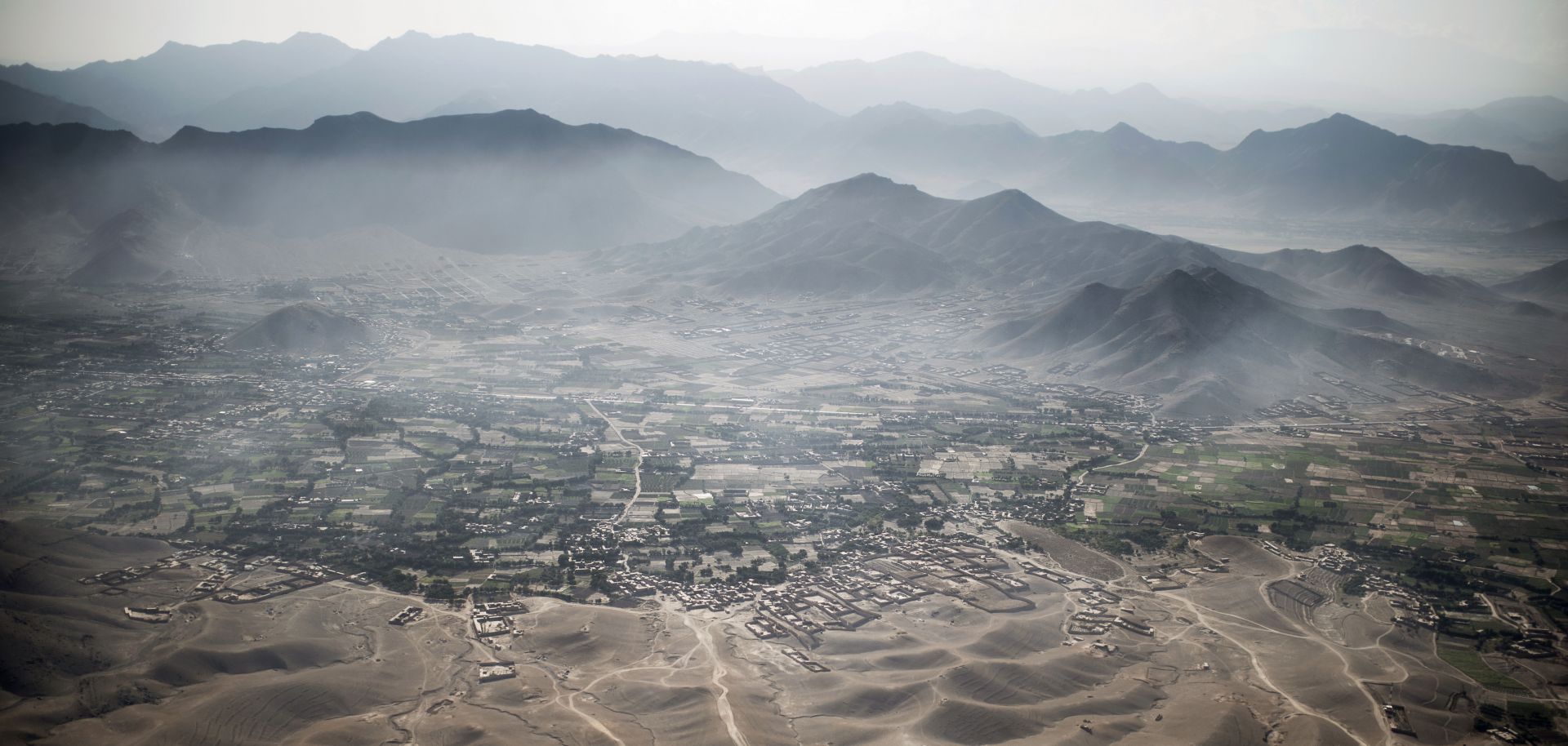
Aerial picture of an Afghani landscape taken on September 26, 2012. The French unit form Bitche (Moselle) will spend a week disassembling weapons, cleaning tanks and preparing their departure for France. The withdrawal of French combat troops from Afghanistan will happen "a bit more quickly than anticipated" and could be completed before the end of December, France's Foreign Minister Laurent Fabius said on Oct. 20, 2012. AFP PHOTO / JEFF PACHOUD
Editor's Note: This assessment is part of a series of analyses supporting Stratfor's upcoming 2018 Fourth-Quarter Forecast. These assessments are designed to provide more context and in-depth analysis on key developments in the coming quarter. As the great powers deepen their presence in South Asia, all eyes are on Afghanistan. A year has passed since U.S. President Donald Trump unveiled his Afghan war strategy in August 2017, seeking to break the stalemate in America's longest-running conflict. But the Taliban's sustained assault on the city of Ghazni demonstrates that the addition of a few thousand U.S. troops under operations Resolute Support and Freedom's Sentinel has failed to decisively swing the pendulum in Kabul's favor. What's more, Afghanistan's Interior Ministry blamed Pakistan for planning the Ghazni attack, denting prospects of an improvement in relations after Afghan President Ashraf Ghani telephoned Imran Khan to congratulate him on becoming Pakistan's new prime minister .
