
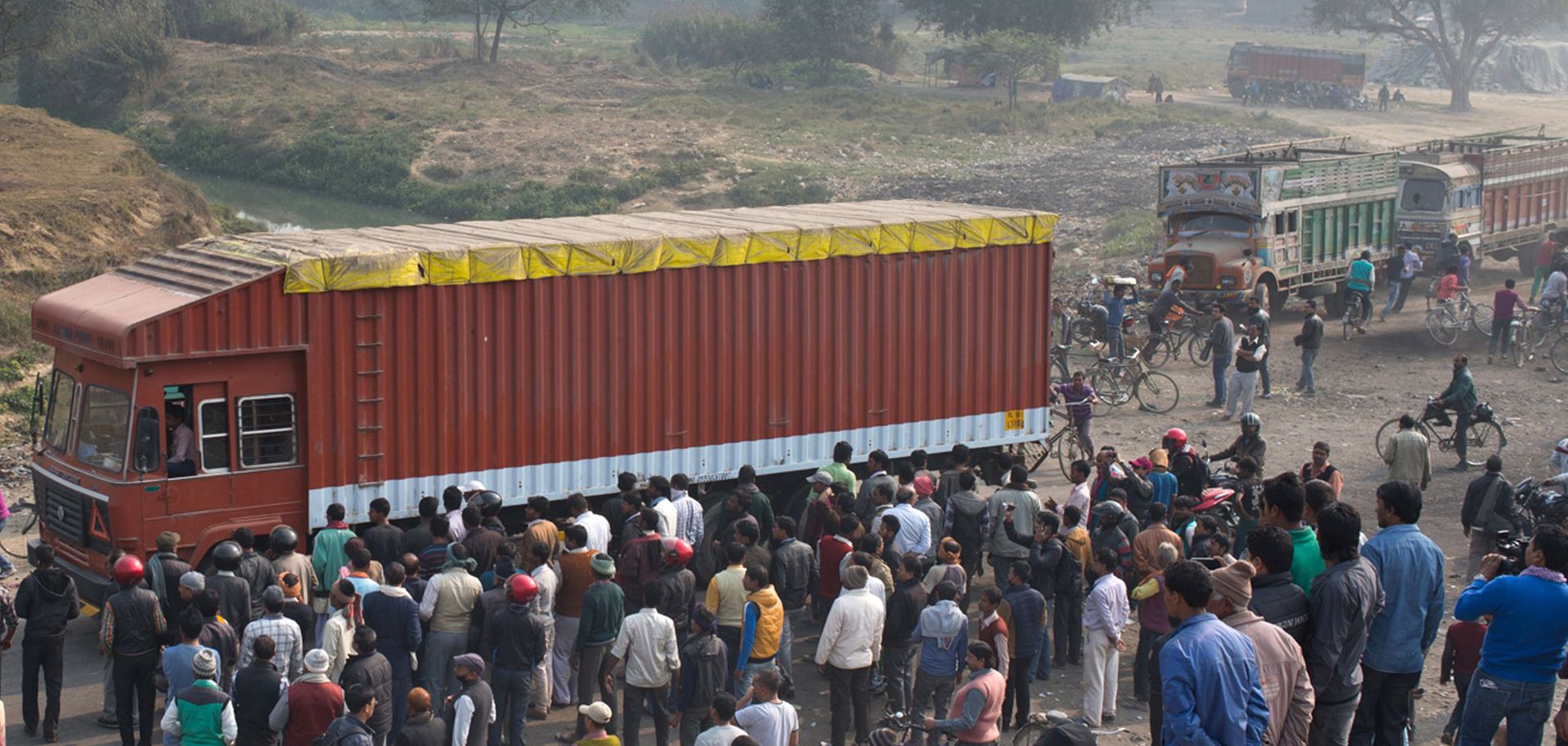
Two days before Nepal ratified the new constitution, Indian Foreign Secretary Subrahmanyam Jaishankar traveled to Kathmandu, ostensibly to convince outgoing Nepalese President Ram Baran Yadav not to approve the constitution until further changes were made to appease the Madhesi. Jaishankar was unsuccessful, and the new constitution went into effect Sept. 20. While China praised the document, India instead proffered a list of seven suggested constitutional amendments. When the Madhesi erected their blockade at the border crossing in southern Nepal, right on the Indian border, some Nepalese concluded that a disapproving India had helped organize the blockade as a way of forcing Nepal to revise its constitution. The stoppage angered traders from both countries, especially because Nepal is still in desperate need of vital imports to help rebuild and recover from last year's earthquake, which killed more than 8,000 people.
