
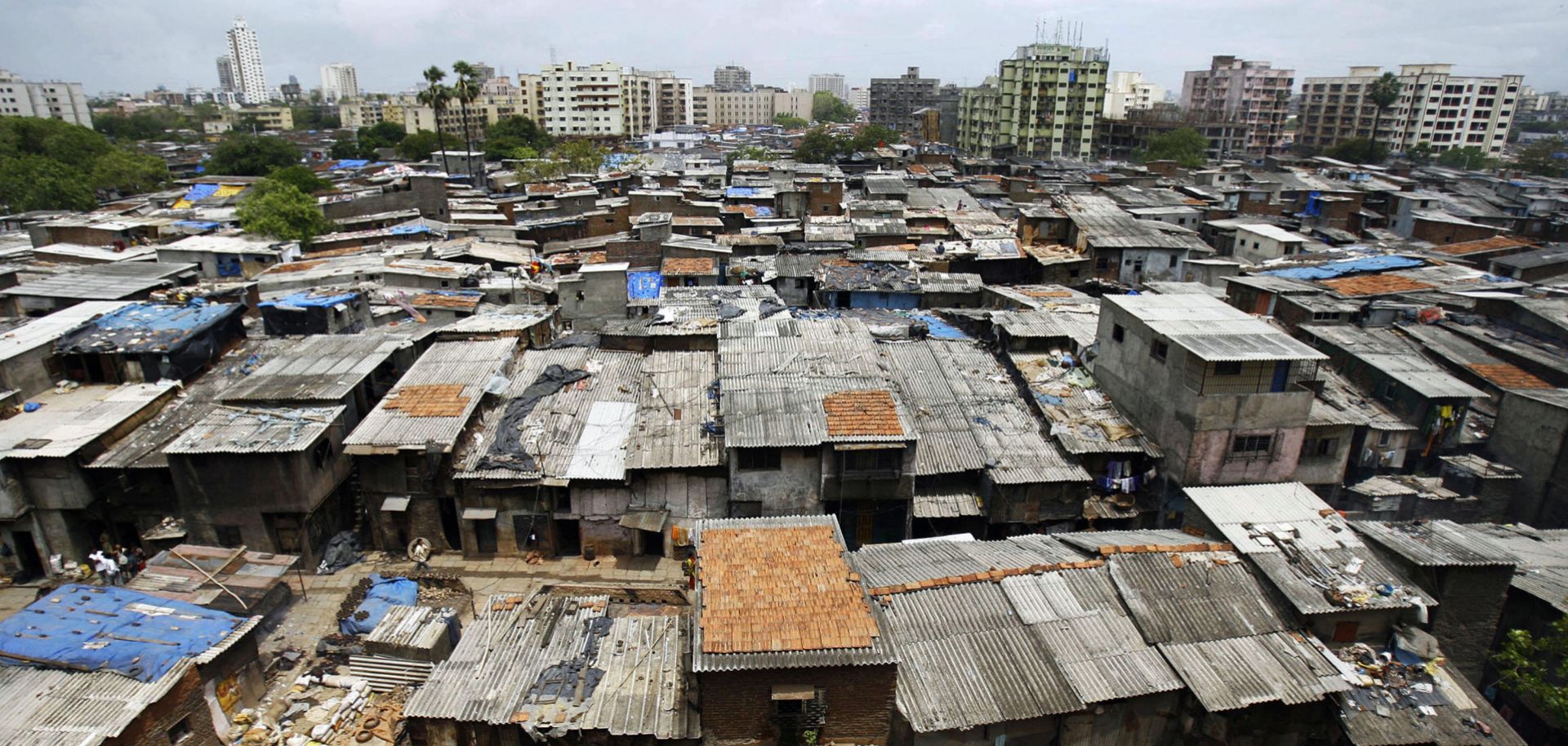
Office blocks and residential buildings tower over the notorious slum colony of Dharavi in Mumbai, India. In 2007, Asia's largest slum was a labyrinth of of one- and two-story shacks in the country's financial capital.
In March, the whole of India tuned in to watch as 35,000 farmers — many barefoot — traipsed across the western state of Maharashtra for six days on the way to Mumbai, India's financial capital, to register their discontent about the hardships so many feel in the subcontinent's countryside. Aware of a nation's eyes upon it, a chastened state administration gave the marchers an obsequious welcome, rapidly caving into demands for financial concessions. Mollified, the marchers dispersed and returned to their farms, as the rest of the country returned to its daily life, awaiting the next conflict. This vignette — which is common in India, albeit notable for its scale — shines a light on some of the economic tensions that profoundly impact the world's second most populous country. India's economy has developed, but so too has domestic inequality.
