
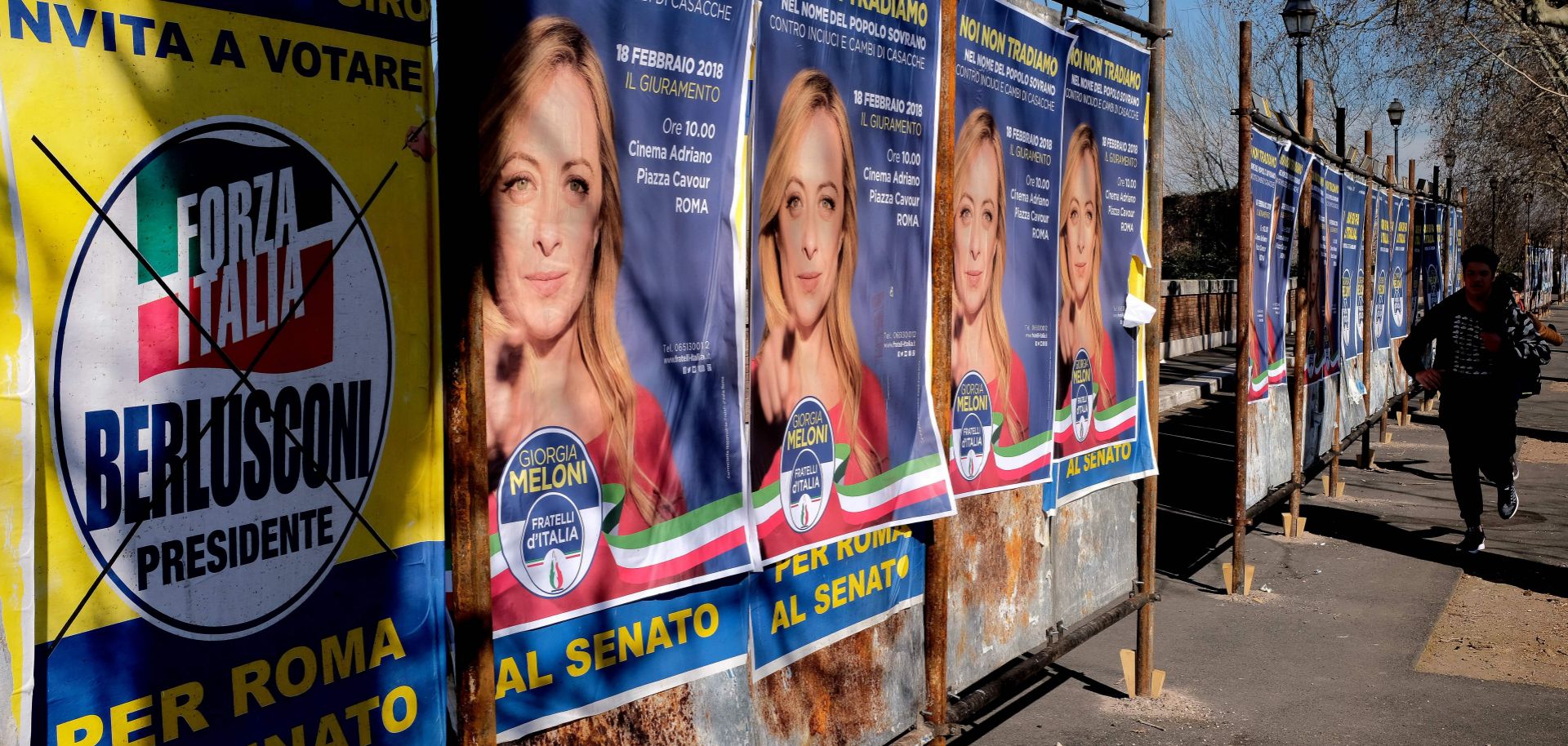
Election posters line a sidewalk in Rome on Feb. 16, 2018. Italy heads to the polls to vote in crowded general elections on March 4. The shadow of ex-leader Silvio Berlusconi looms large, as do populist gains across Europe.
Italians are heading to the ballot box this weekend , but it's anyone's guess as to who will ultimately emerge as the victor. What is clear, however, is that the results on March 4 will be felt well beyond Italy's borders. A likely push by the next Italian government to cut taxes and to increase public spending could put the country on a collision course with EU institutions and could generate concerns in international markets about Italy's efforts to maintain a balanced budget and to reduce its staggering debt levels. No matter who is in charge — and the prospect of drawn-out coalition negotiations suggests a new administration won't be in charge anytime soon — any Italian government will have to deal with a weak economy and a heavy debt burden, as well as an electorate that is unhappy with politicians in Rome and Brussels.
