
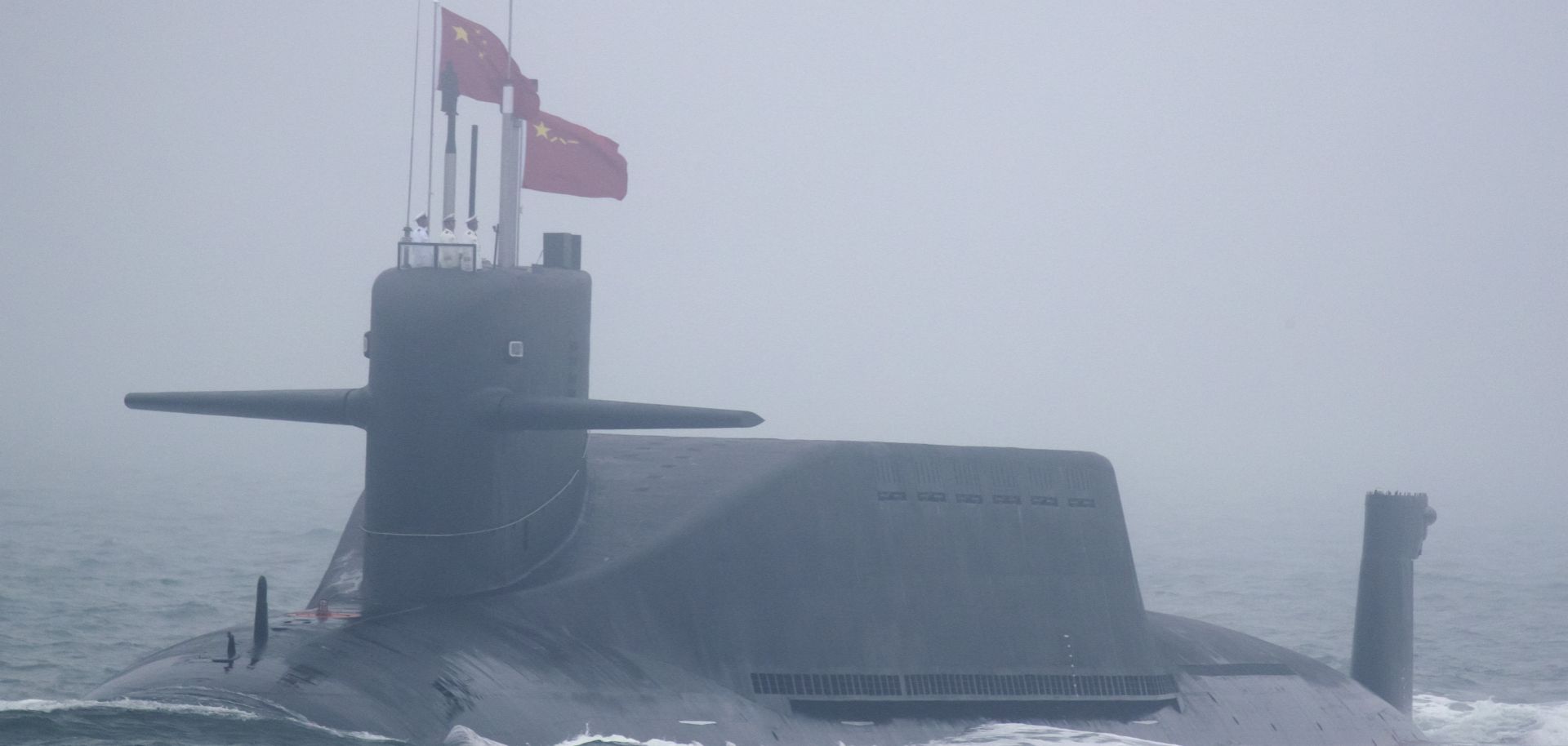
A new type 094A Jin-class nuclear submarine of the Chinese People's Liberation Army Navy participates in a naval parade to commemorate the 70th anniversary of the founding of China's PLA Navy in the sea near Qingdao, in eastern China's Shandong province on April 23. Beijing has reason to consider joining a revamped New START arms treaty, but it's likely to decide it's better off remaining on the outside.
The United States never managed to draw China into the Intermediate-Range Nuclear Forces (INF) Treaty , but Washington still harbors hopes that it can lean on Beijing — and also Moscow — to sign up for a new strategic nuclear arms control agreement. Naturally, such a deal could significantly curb the wider arms race among global powers by building on the primary existing agreement, New START, which restricts the number of strategic nuclear weapons and delivery systems that each signatory can have. But given the considerable obstacles , including mistrust among nations, the unwillingness of any global heavyweights to compromise and the rapidly approaching deadline to renew or replace New START before it lapses, the efforts to sign a new treaty are more likely to stall than succeed.
