
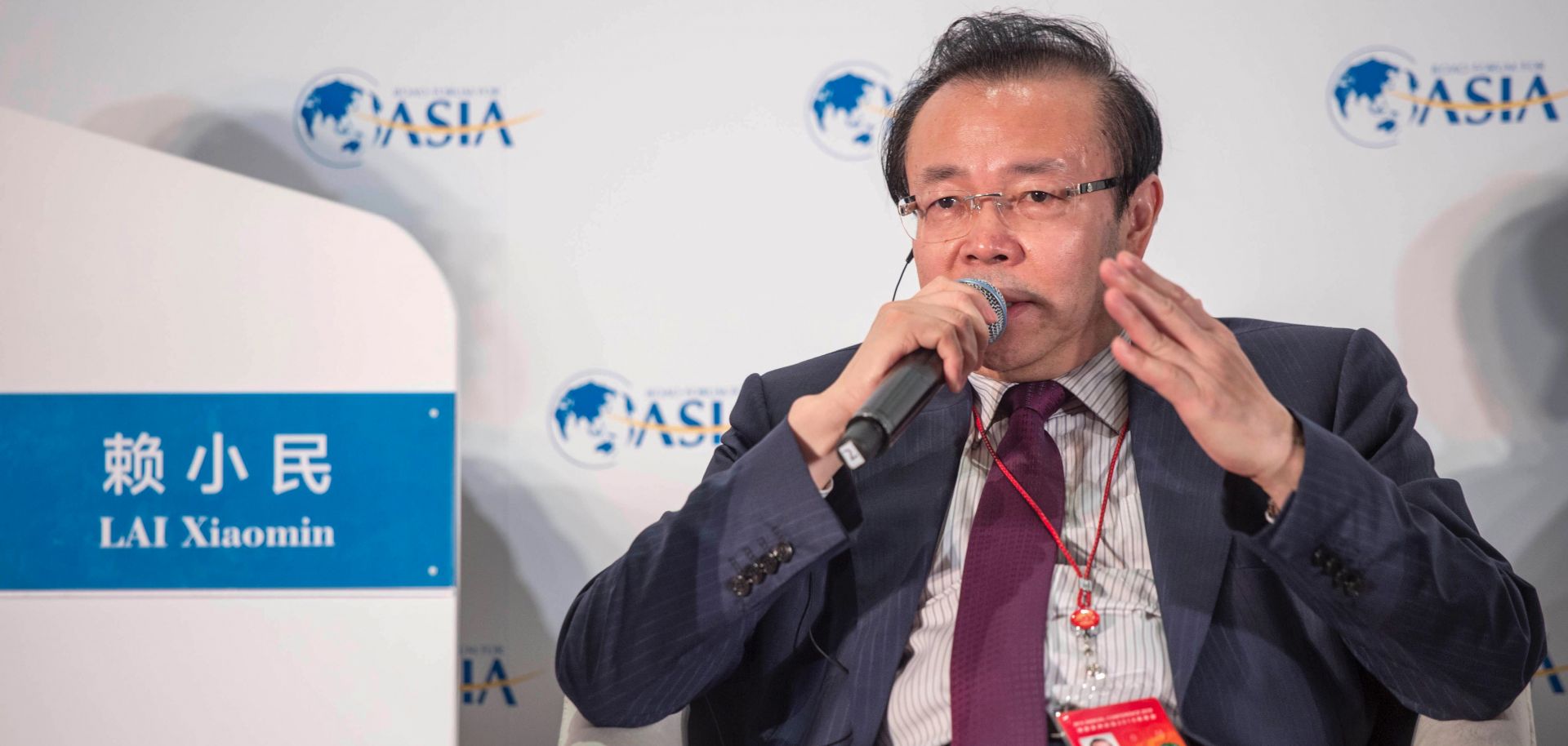
Lai Xiaomin, then-chairman of Huarong Asset Management Co., speaks during a conference in China in 2016. Lai was executed in January 2021 following his conviction on bribery charges.
China’s move to bail out Huarong Asset Management Company while leaving the privately-owned property manager Evergrande Group to work out its financial issues may appear to send mixed messages on how the government addresses financial risks. But it also hints at Beijing’s goal of tackling real estate investment as a priority in risk management. Allowing the potential failure of Evergrande, a privately-owned property developer, while rescuing Huarong is consistent with China’s recent actions to rein in financially risky behavior and distance the central government from implicitly insuring credit risk, especially in real estate. Huarong, a state-sponsored “bad bank” that helped China clean up bad debts in the banking system, announced on Aug. 18 that it was getting a $7.7 billion investment of fresh capital from state-owned Citic Group and other financial state-owned enterprises, according to reports in Bloomberg and Reuters.
