
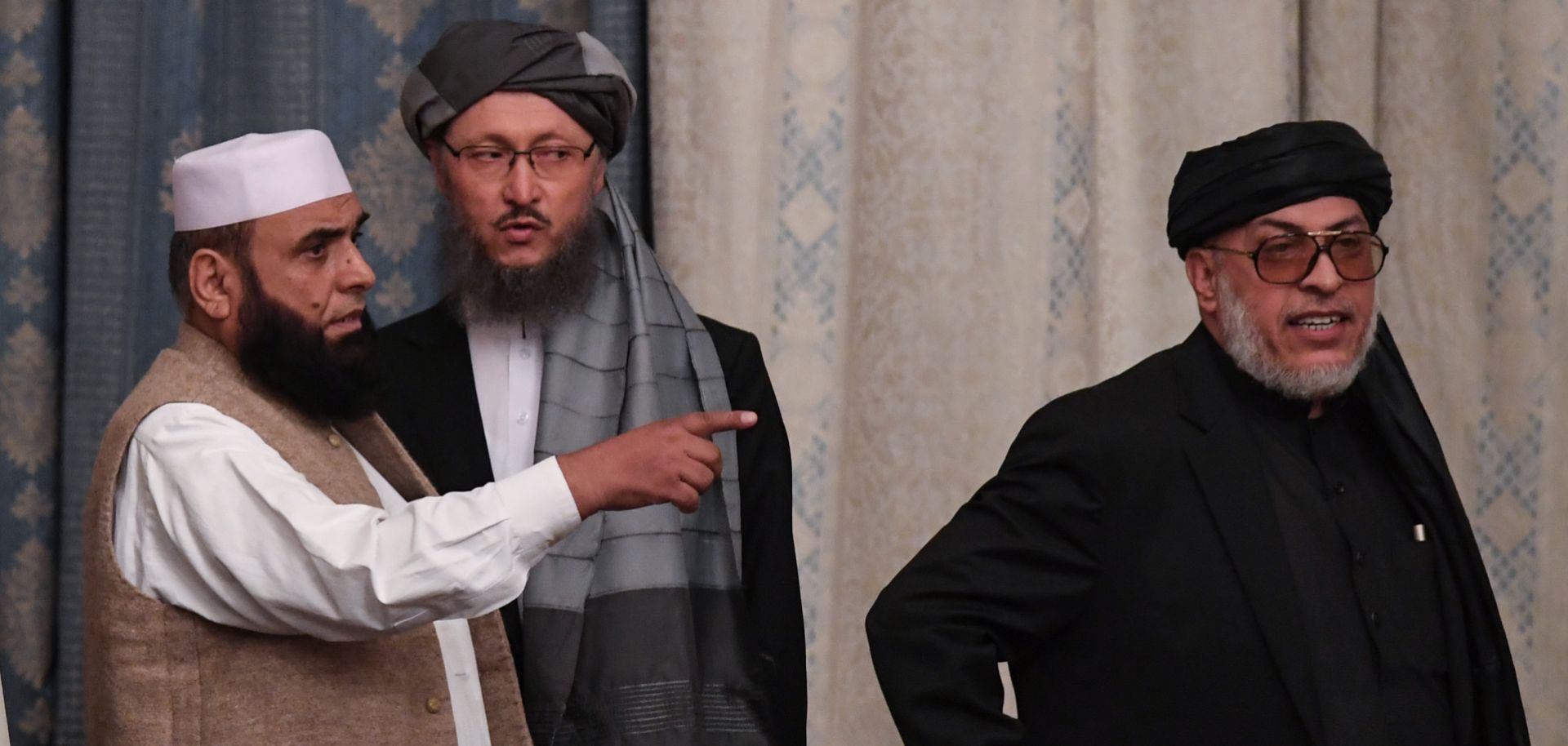
Taliban representatives attend international talks on Afghanistan in Moscow on Nov. 9, 2018. When it comes to Afghanistan, Washington's biggest problem will be figuring out how to balance the Taliban's demand for a complete withdrawal of U.S. and allied forces with Kabul's desire for troops to stay.
The United States is redoubling its efforts to achieve peace in Afghanistan. In September 2018, U.S. Secretary of State Mike Pompeo appointed Zalmay Khalilzad as the U.S. special envoy for Afghan reconciliation, but the 63-year-old, Afghan-born diplomat faces a daunting task in convincing the Taliban to agree to a cease-fire and participate in peace talks with President Ashraf Ghani's administration, all in a bid to end the 17-year war. Formal peace talks could provide the outline for a political settlement that would likely grant the Taliban a share of power in a post-conflict government. Khalilzad has already conducted three rounds of preliminary talks with the Taliban, but the insurgent movement abruptly withdrew from a fourth round of dialogue scheduled to take place in Saudi Arabia this month. Very simply, the Taliban refuses to engage with officials representing the Afghan government, which the group views as illegitimate.
