
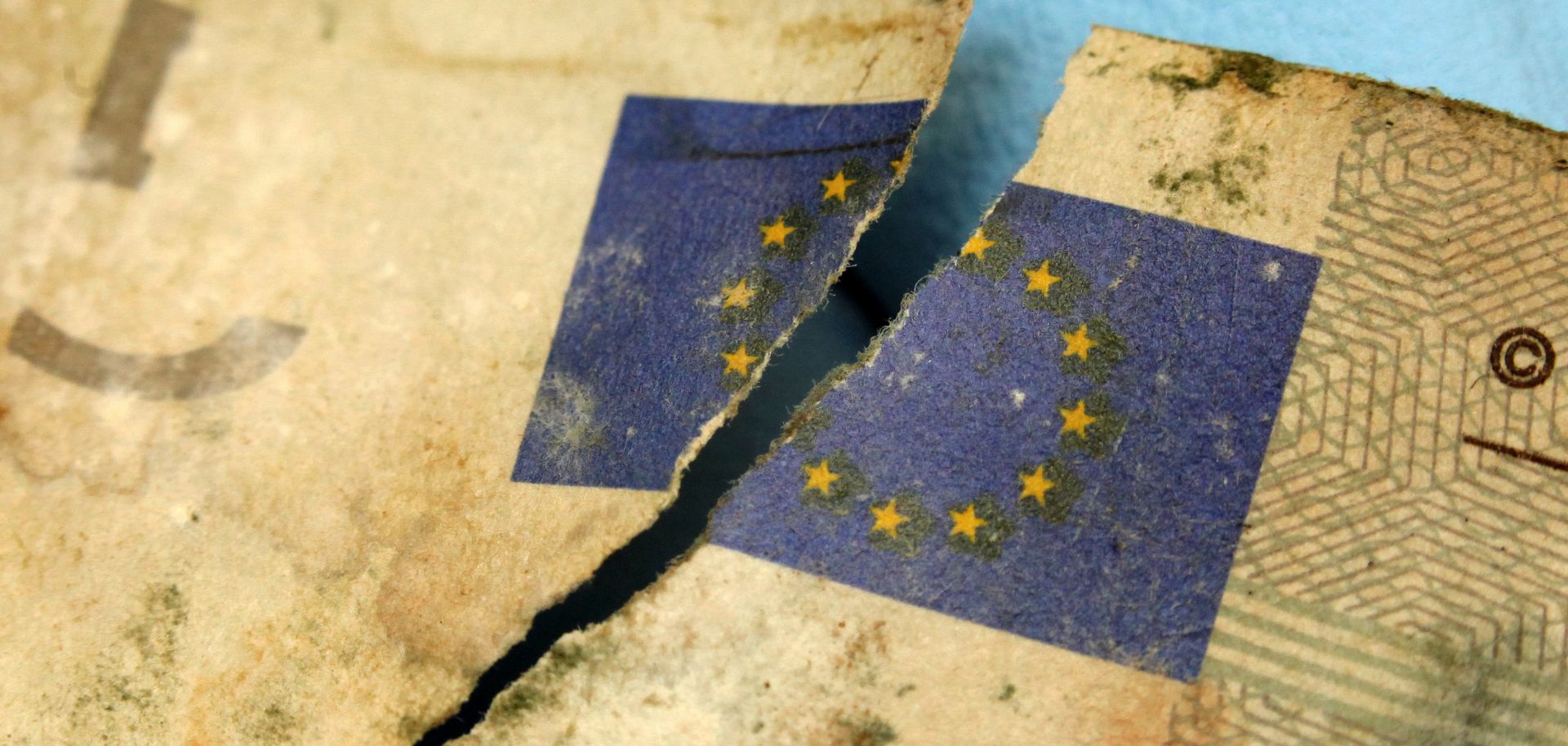
A German Federal Bank employee holds a flood-damaged five-euro banknote with the broken symbol of the European Union at the counterfeit analysis center in Mainz, Germany, on July 15, 2013. Recent election results suggest that the political landscape in several European countries is fragmenting. This fragmentation will make general elections harder to predict and slow the formation of new governments.
The results of the recent Spanish election confirms something that Stratfor has been tracking for some time. Namely, the trend of political fragmentation in Europe. As we said on April 25, 2019, in Political Risk Is on the Rise in Europe: Across the Continent, there is a widespread feeling that the traditional political forces are out of touch with the reality of millions of families, and voters are looking for new options. The economic crisis of the 2010s damaged the popularity of mainstream political parties and contributed to the emergence of new, sometimes anti-establishment, political forces on the right and the left. In Europe, political risk — and its close connection to economic risk — is here to stay. The immigration crisis has also contributed to the emergence of nationalist and anti-immigration parties across the Continent.
