
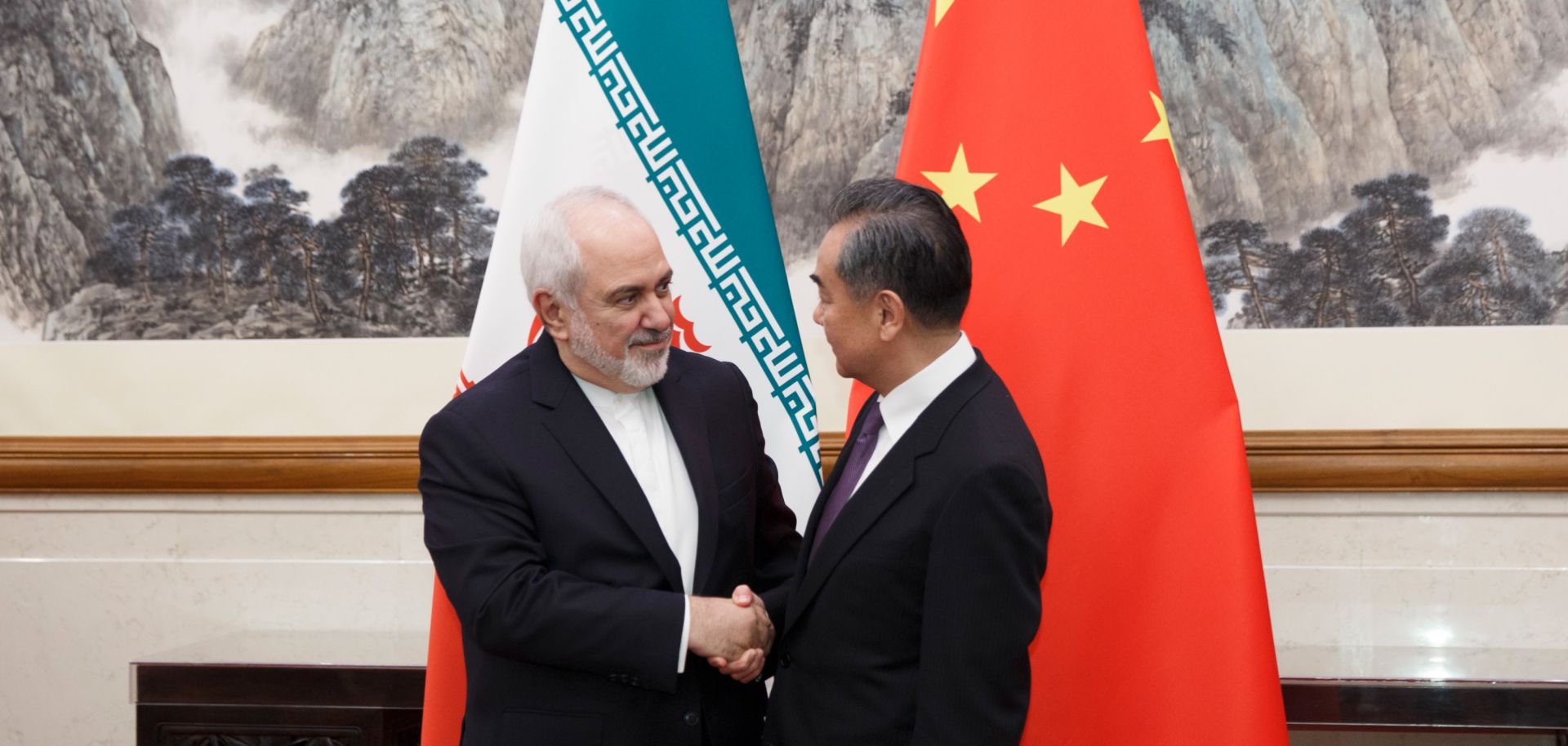
Iranian Foreign Minister Javad Zarif and Chinese Foreign Minister Wang Yi meet in Beijing on May 17. A White House strategy to either coerce Iran to the negotiating table or trigger an uprising against the Iranian government threatens to undermine the United States in an escalating great power competition with China and Russia.
In the course of just two weeks, the White House broke a tariff cease-fire and escalated its tech war with China, North Korea conducted a pair of short-range ballistic missile tests, the United States seized a North Korean vessel, Tehran announced it would stop complying with parts of the Iran nuclear deal, four oil tankers were allegedly attacked near the energy-vital Strait of Hormuz, a major Saudi pipeline was hit by a drone flown by Yemen's Houthi rebels and the United States evacuated nonessential personnel from Iraq in reaction to intelligence threats of Iranian attacks against U.S. targets. When things are moving this fast, it becomes all the more important to take pause and reevaluate the intent of the main players on the world stage to figure out where we're heading.
