
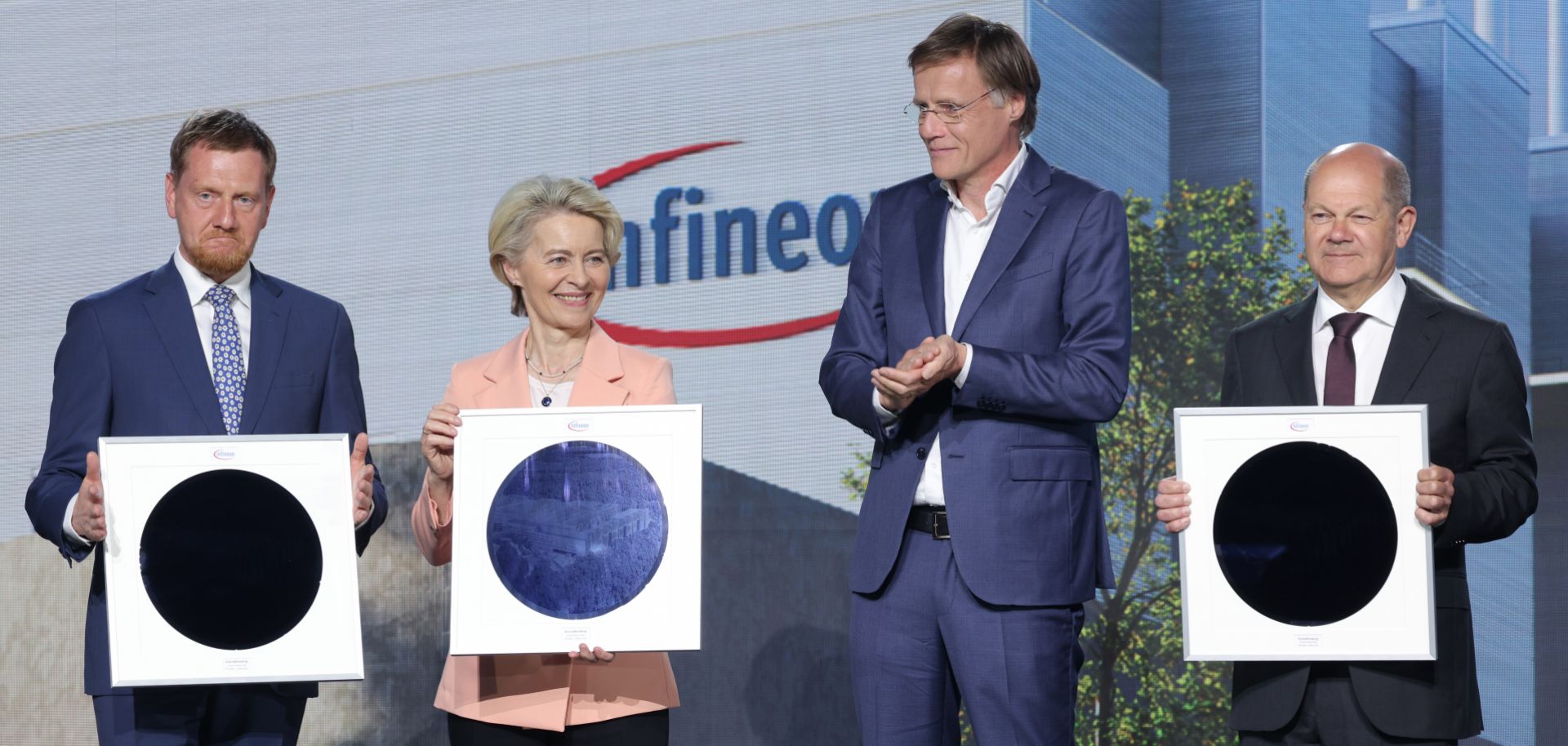
A multitude of financial and technical barriers will keep the European Union from building a self-reliant semiconductor industry, but the bloc's attempts to realize that vision will nonetheless help bolster Europe's resilience against supply shocks in case a crisis in Asia takes Taiwan's chips offline. On July 25, the European Council approved the European Chips Act, paving the way for 43 billion euros ($47.5 billion) in subsidies aimed at helping the European Union achieve its goal of producing 20% of the world's semiconductors by 2030 (up from 10% in 2020). As a part of these plans, Germany's economy ministry announced on July 25 that it would provide about 20 billion euros ($22 billion) in aid by 2027 in an effort to boost the country's semiconductor industry and the production of chips.
