
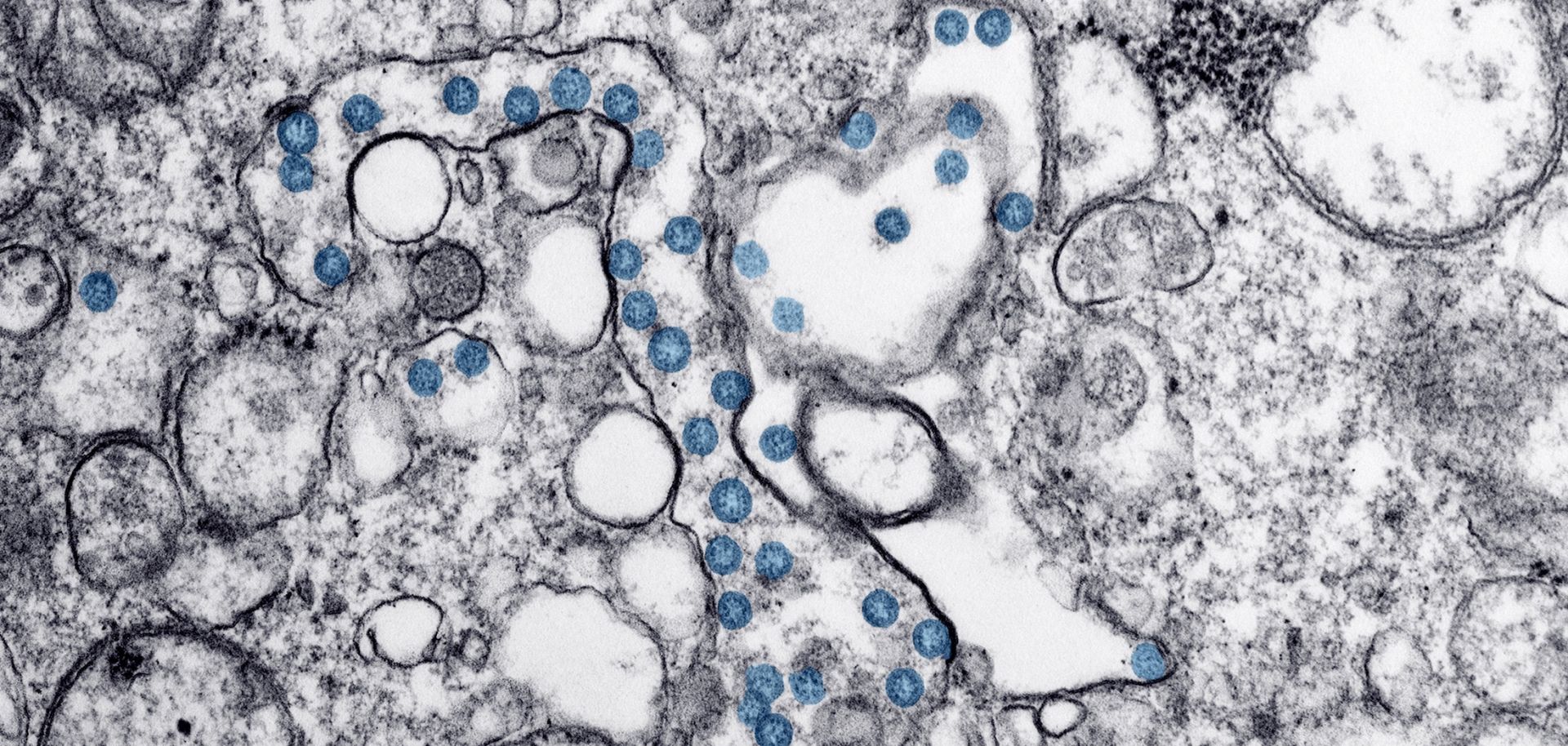
A transmission electron microscopic image of an isolate from a COVID-19 case in March 2020.
A mutation of the virus that causes COVID-19 is compounding struggles with pandemic management in the United Kingdom and upending travel and critical imports from the European Union, highlighting the broader question of the impact of mutations on COVID-19 transmission and the efficacy of new vaccines. Over the weekend, the European Union and other countries imposed stringent travel restrictions on travel and trade with the United Kingdom. While these measures will prove temporary, similar restrictions on other countries may occur elsewhere as cases associated with mutations become more prevalent. Even as vaccination campaigns begin, questions will persist regarding how mutated viruses will shape infection numbers and possibly treatment, leading to greater uncertainty and caution as the world crawls toward a recovery . A new variant of the SARS-CoV-2, the virus that causes COVID-19, dubbed B.1.1.7 was detected for the first time in September in the United Kingdom.
