
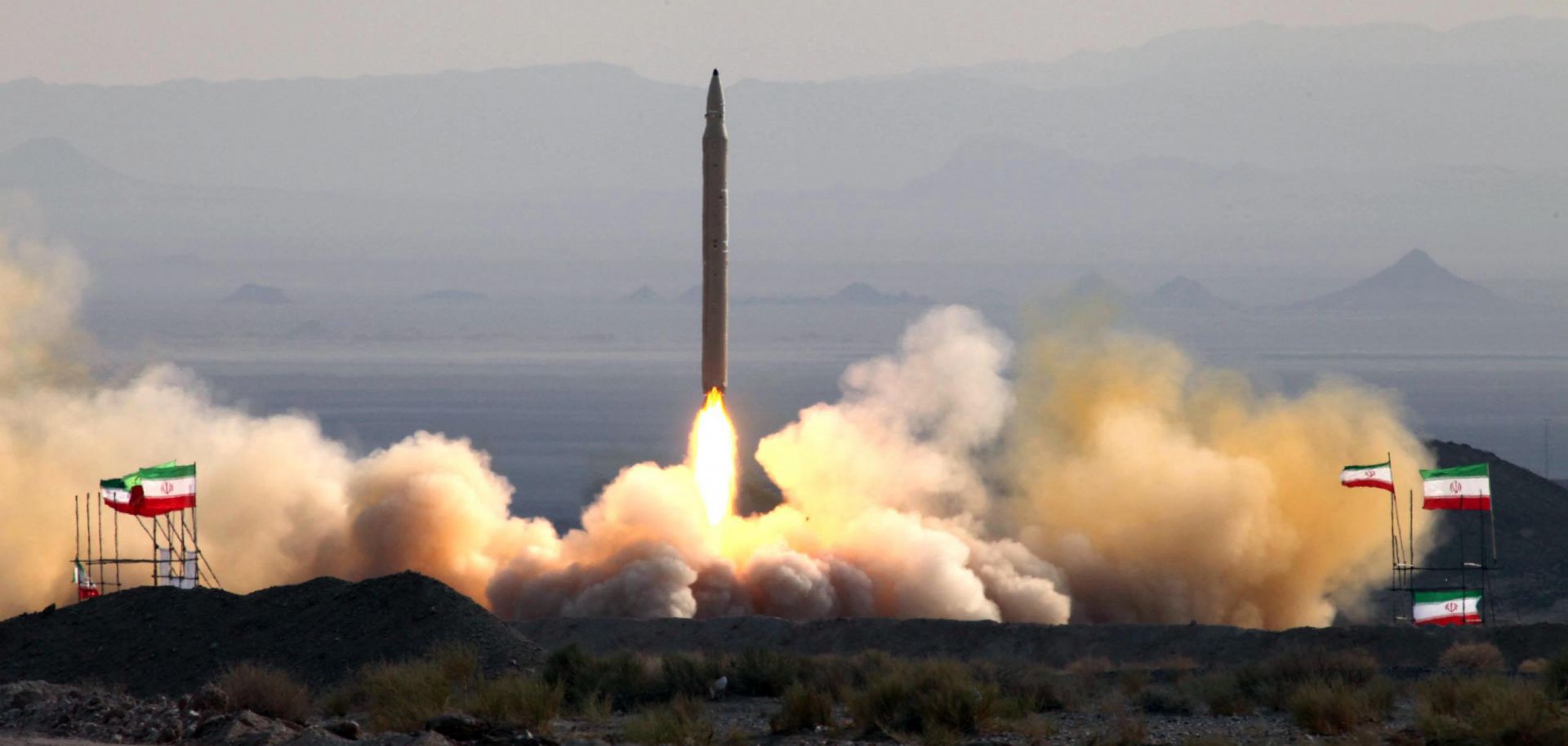
This photo shows a test-launch of the Iranian Qiam-1 ballistic missile. The tactical and strategic advantages that missiles give to Iran mean it will resist any future efforts to limit its ability to develop more advanced missile systems.
Greater attention will be given to Iran's missile and unmanned aerial vehicle (UAV) programs from now on. The September drone attacks on the Abqaiq and Khurais oil facilities in Saudi Arabia and the January missile attack on two military bases in Iraq that left 109 U.S. military members diagnosed with traumatic brain injuries highlighted Iran's increased willingness to use its missile and UAV arsenal for tactical and strategic objectives. Iran's missile program is an integral component, if not the crown jewel, of its armed forces, and Tehran considers the program essential to national security. The United States, however, wants to significantly constrain Iranian missile development in future negotiations that would also cover Iran's nuclear program and its support for regional militias. But to reach a deal, the United States will have to narrow its conditions. This will limit the prospects of an agreement under U.S. President Donald Trump's maximalist demands.
