
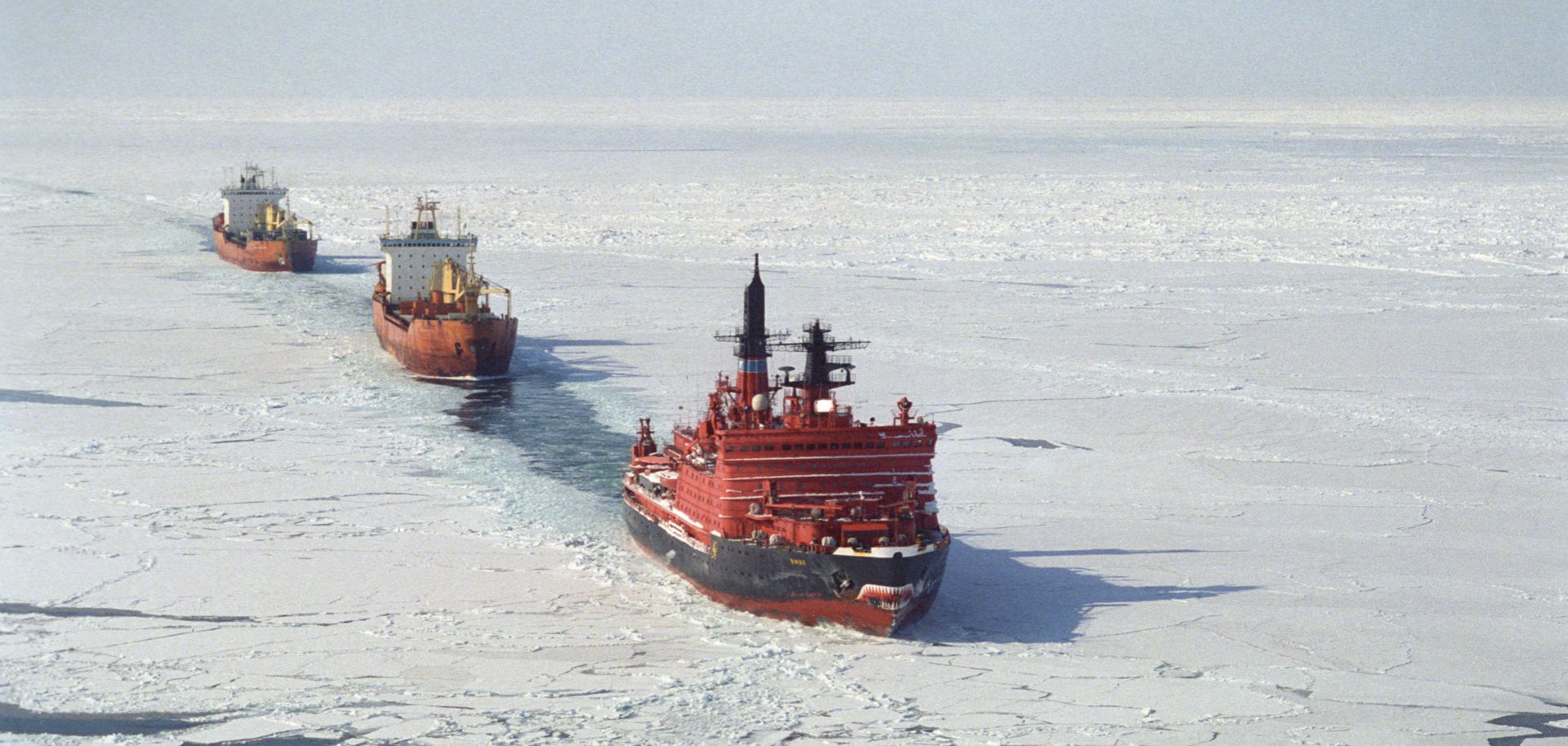
The Yamal, a Russian nuclear-powered icebreaker, clears the way in the Kara Sea. Among the eight countries with territory inside the Arctic Circle, Russia currently sees the greatest economic benefits from its vast, resource-rich northern regions.
Although the Arctic was a front line during the Cold War, the harsh climate and limited transit options also made it a relatively secure frontier in the post-Cold War era. And as a result, Russia's Arctic infrastructure and activity — particularly in the security realm — waned considerably as the country's priorities shifted elsewhere. But this has been changing in recent years, as the sea ice that has long barricaded Russia from the rest of the world begins to open up. Russian shipping in the Arctic recently reached levels not seen since the late 1980s, with Russian President Vladimir Putin highlighting Arctic shipping along the Northern Sea Route as a key development project for the country. Moscow's renewed Arctic push, however, is less about allowing more transit through Arctic waters, but about exploiting mineral and energy reserves that will become more accessible as the climate shifts and technology advances.
