
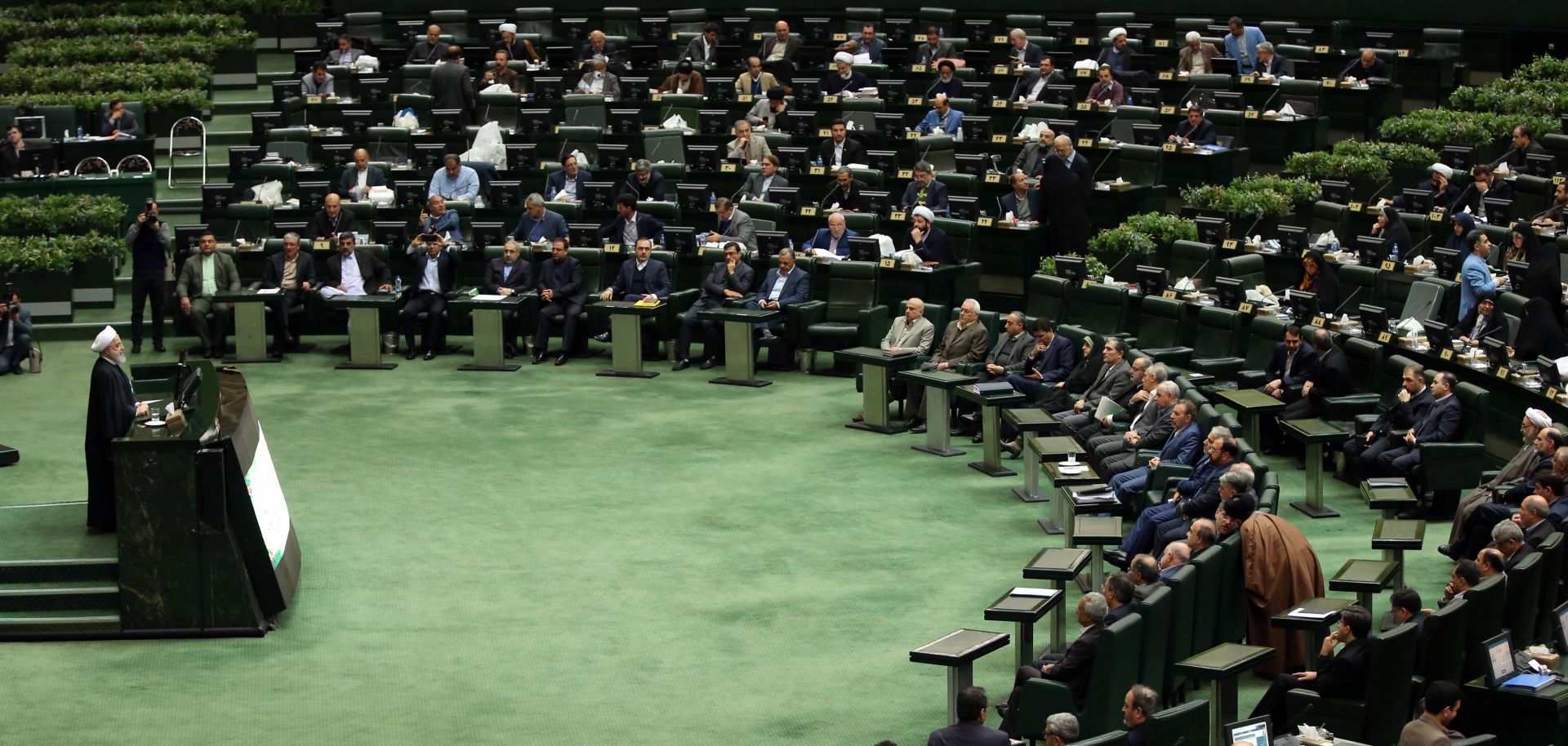
Iranian President Hassan Rouhani addresses the country's parliament in Tehran on Dec. 8, 2019. On Feb. 21, Iran will hold its first parliamentary elections since the United States began ramping up its 'maximum pressure' campaign.
On Feb. 21, Iran will hold the first round of parliamentary elections that could usher in the return of a more conservative legislature. With moderates and reformists taking a back seat, such an outcome would nudge Tehran toward more hard-line and hawkish foreign policies, leaving less room for negotiation with the West amid soaring U.S.-Iran tensions . Regardless of its next ideological make-up, however, Iran's incoming parliament will struggle more than ever to answer the economic and social demands of an increasingly desperate and cash-strapped electorate — a reality that could have dire consequences for Tehran's political stability ahead of the country's crucial 2021 presidential election. Ripe for Change The last parliamentary elections in 2016 occurred at a time when Iranians were optimistic about what negotiation and moderation with the West could bring their country.
