
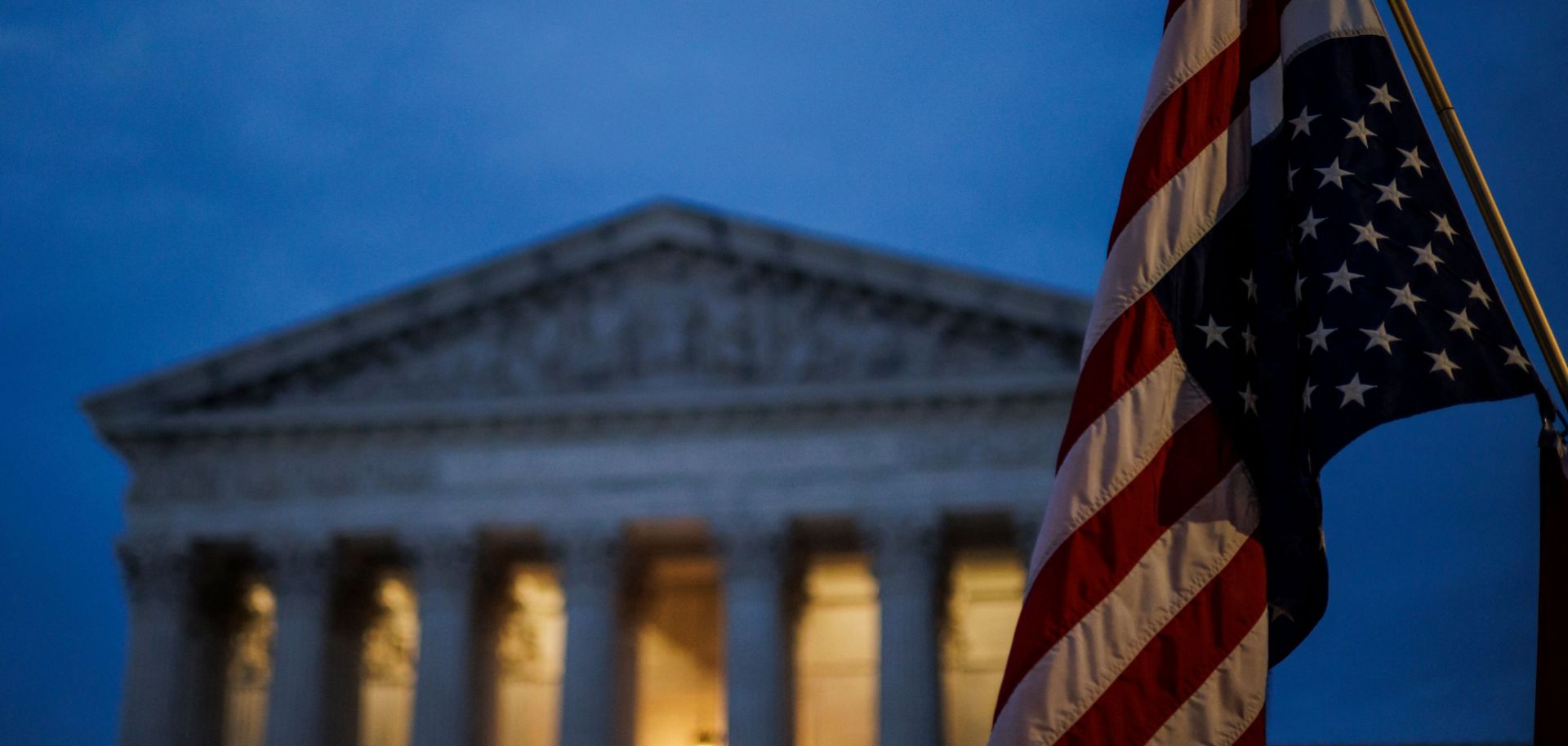
An abortion rights activist flies an upside-down U.S. flag, the international sign of distress, outside of the U.S. Supreme Court during a protest in Washington, D.C., on June 26, 2022, two days after the landmark Roe v. Wade decision was overturned.
Editor's Note: In the first part of this three-part series, we explore how a string of divisive political events in the United States have set the stage for the spread of false or misleading information ahead of next month's vote, and what social media companies are doing to prepare. The next part — which examines the risk of external meddling from actors like Russia, China, Iran and North Korea — can be found here . As the November 2022 U.S. midterm elections approach, state-sponsored cyber threat groups, hacktivists and cybercriminals will ramp up new or capitalize upon existing disinformation campaigns for various malign ends. Although social media platforms are preparing for the onslaught of disinformation, their efforts will likely fail to mitigate the full extent of cyberthreats, heightening societal and physical security risks.
