
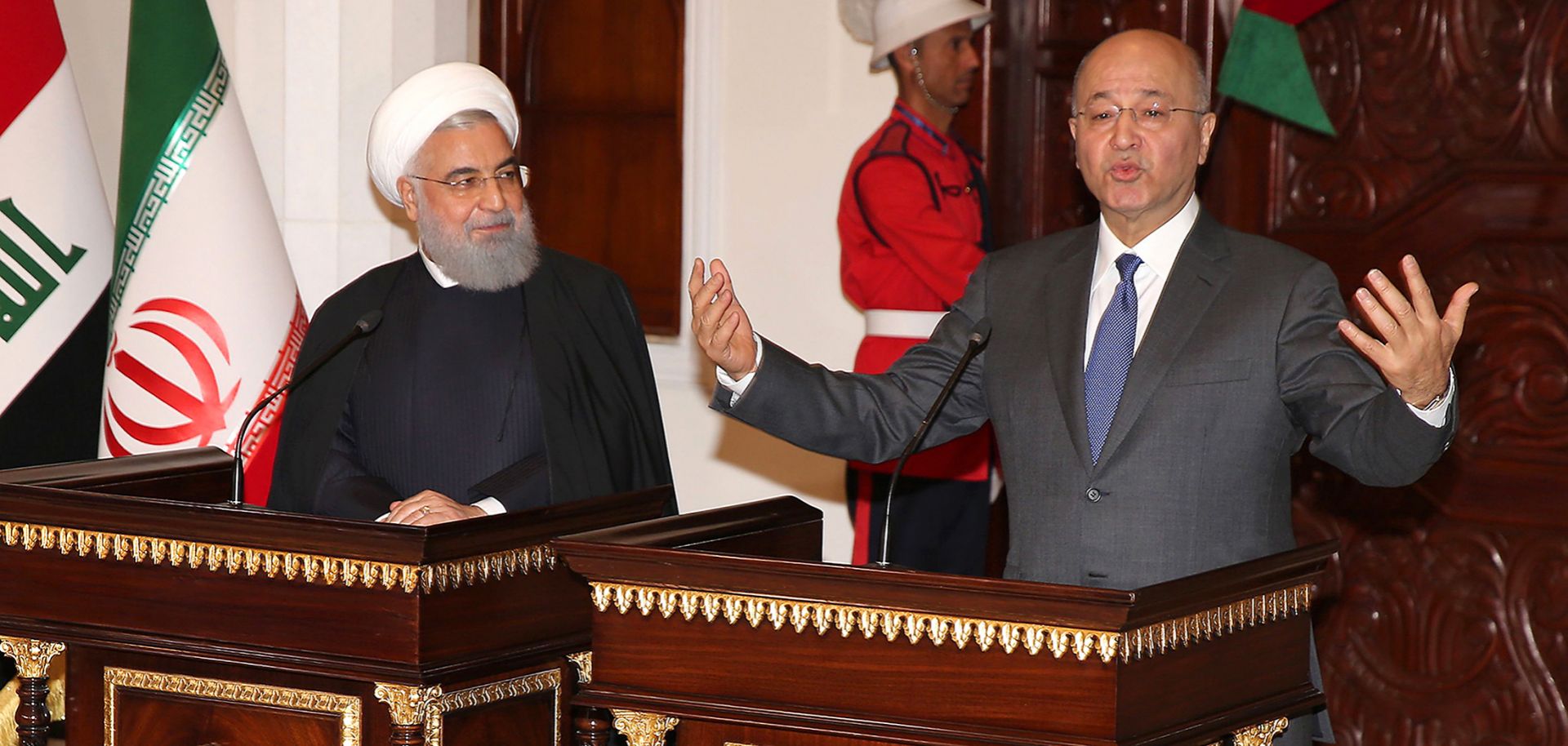
Iranian President Hassan Rouhani, left, took his first-ever official state trip to Iraq in March, meeting with Iraqi President Barham Salih and other Iraqi leaders. Meanwhile, Baghdad faces increased pressure from Washington to limit its ties with Tehran.
In early March, Iranian President Hassan Rouhani visited Iraq for his first-ever official state visit. The trip seemed to underline a newfangled closeness between the two countries, with Iraqi Prime Minister Adel Abdul-Mahdi's announcement that he and Rouhani had signed several agreements to cooperate on issues such as border security and economic development. But the two sides' decision to return to a 44-year-old border demarcation deal garnered the most attention in Iraq because of its immense historical and cultural significance. Iran and Iraq have decided to change their maritime and land borders based on the original terms laid out in their Algiers accord signed in 1975. For Iraq, this means giving up land and maritime waters that it has controlled for decades — the most important of which being the Shatt al-Arab waterway, which has long served as the dividing line between the Persian and Arab worlds.
