
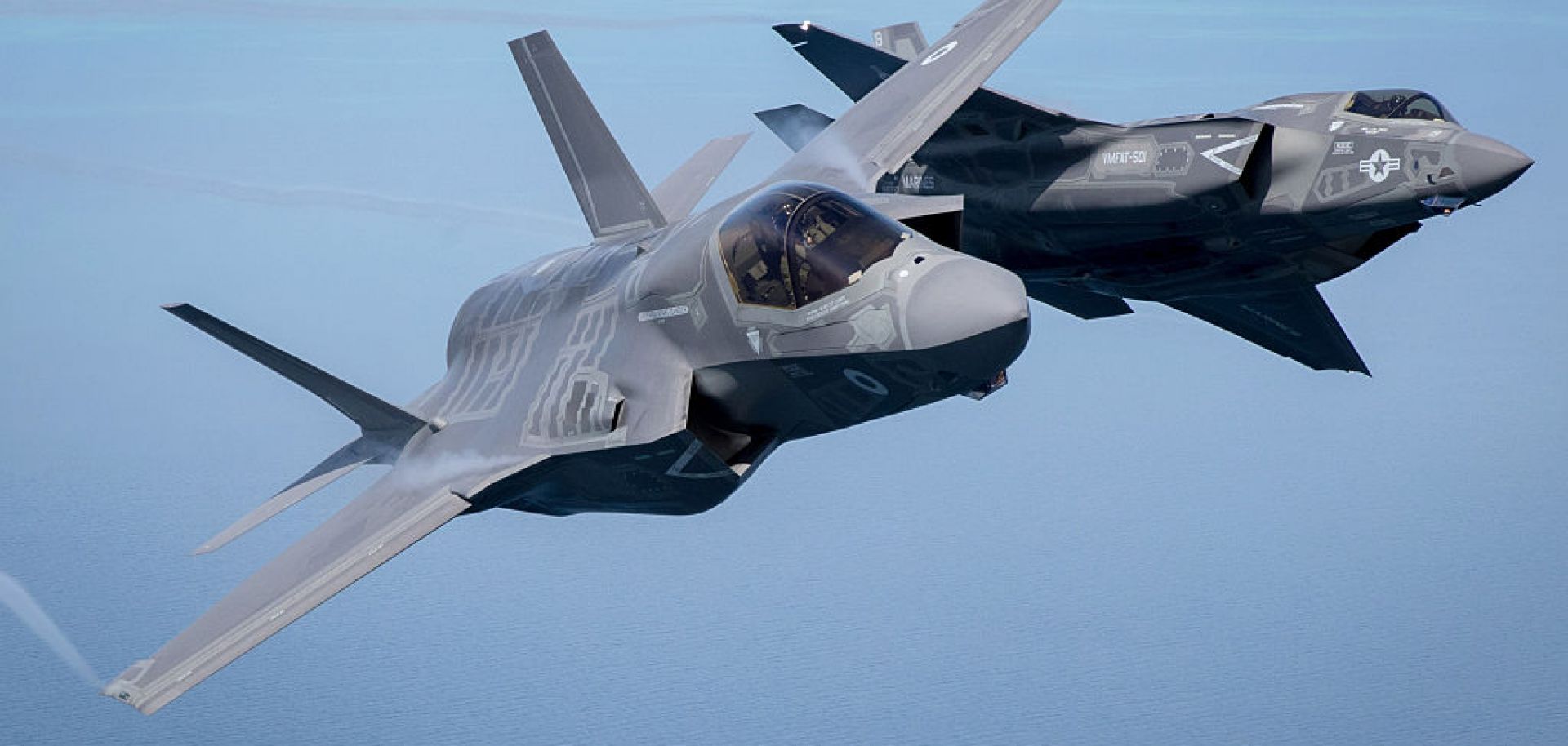
A U.S. Marine Corps F-35B aircraft over the North Sea having taken off from RAF Fairford on July 1, 2016 in Gloucestershire, England.
Against the backdrop of nuclear negotiations, the United States is once again threatening to strike Iran over its nuclear program should such talks fail. Meanwhile, Washington is running an escalated air campaign in Yemen and has frozen air campaigns it could restart in Syria and Iraq. The United States has long had the world's largest and most capable air force, which in the wake of the unpopular ground wars in Iraq and Afghanistan has once again become a favored tool for the superpower in the region, as its politicians on both sides of the aisle are eager to avoid terrestrial political and strategic debacles. To Washington, airpower holds deep appeal: few of America's adversaries have capable air defenses, and pinpoint strikes against specific targets create the perception among the U.S. public that Washington's aims are surgical and achievable, limiting war weariness from putting boots on the ground.
