
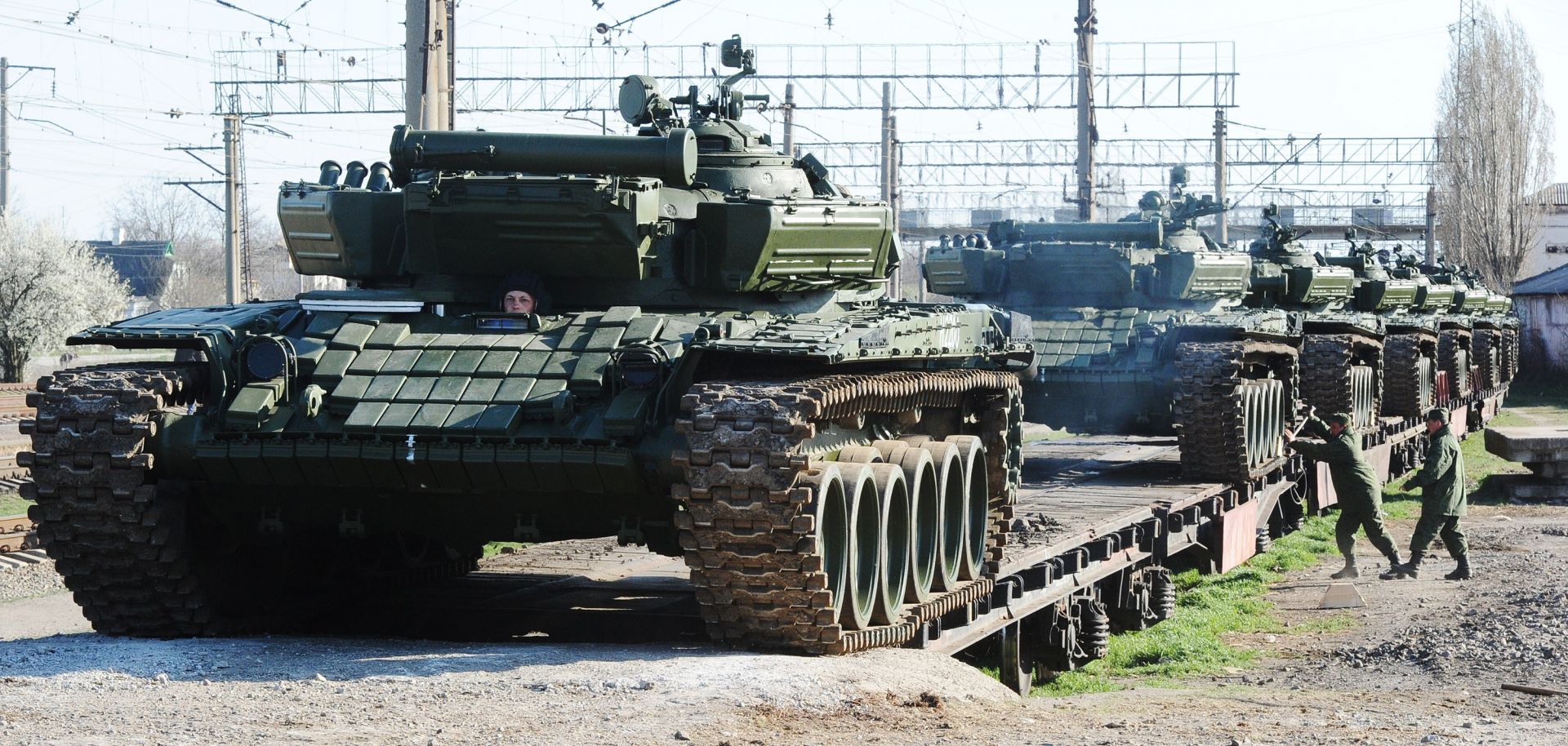
Russian soldiers unload modified T-72 tanks at the Gvardeyskoe railway station near the Crimean capital of Simferopol on March 31, 2014. Crimea sparked a standoff between the West and Russia that has now taken on a life of its own.
It's been half a decade since events radically changed Ukraine. Beyond demonstrations in Kiev, where President Viktor Yanukovich fell from power as a result of the euromaidan movement, the pro-Europe protests led to Russia's annexation of Crimea and the ongoing separatist conflict in eastern Ukraine. Five years on, the status of Crimea continues to be a source of great contention, as Kiev rejects the Crimean Peninsula's accession to Russia, which exercises de facto — and, as far as Moscow is concerned, de jure — control over it. Even outside Ukraine, the events that occurred in Crimea in 2014 continue to cloud political and military relations between Russia and the West, and several of the sanctions against Russia center directly on the Crimea question.
