
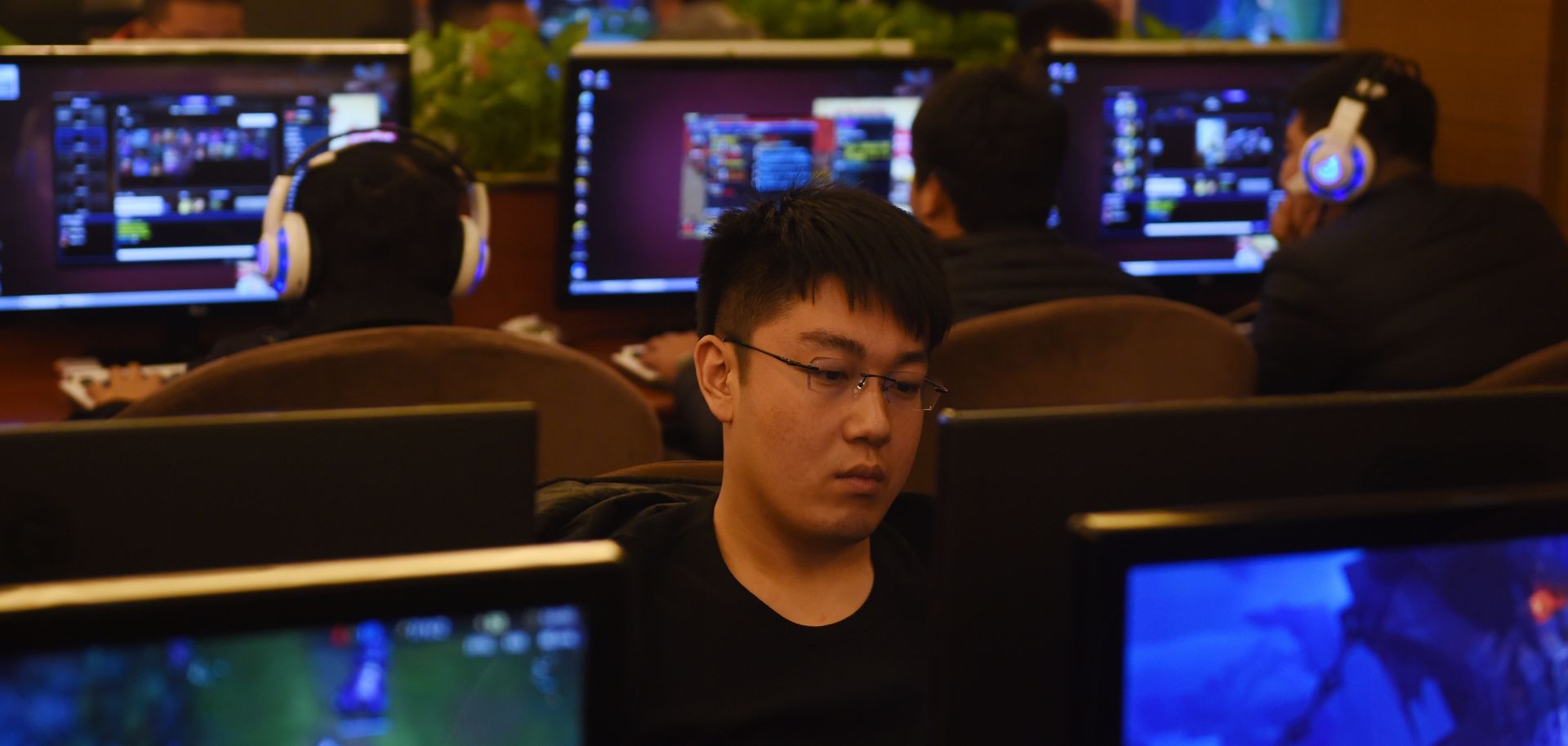
Gamers use computers in an internet bar in Beijing on December 16, 2015.
Access to the internet varies around the globe. Beyond the physical infrastructure required to connect, regional access depends largely on a country's policies and values. Equally, internet freedoms typically align with a country's level of political freedom. At one end of the spectrum are countries such as China, which exercise rigid political control of their citizenry, lock down their networks and exercise strong state control over cyberspace. While Russia also exercises tight control over the internet, it is distinct from China in that it provides it netizens more freedom to operate online. Russia, therefore, has a large pool of private and semi-private actors that it can use to pursue the state's agenda while maintaining some degree of plausible deniability in online operations abroad. On the far end of the freedom spectrum lie the United States and its European allies, which largely promote an open and globally free internet.
