
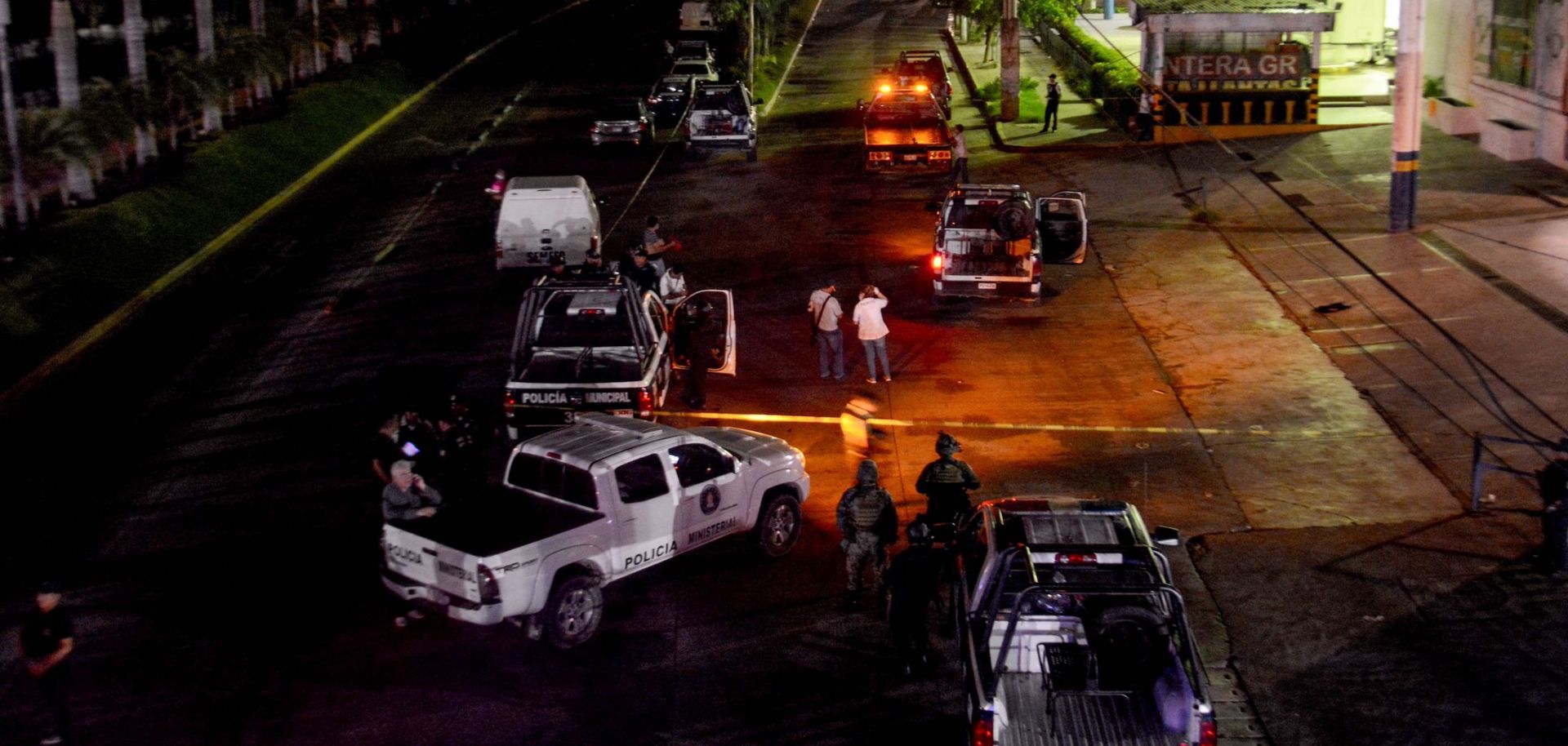
Policemen work at a crime scene after a colleague was killed in Acapulco on July 23, 2018. Mexican President-elect Andres Manuel Lopez Obrador, who will take office on Dec. 1, inherits a messy war on drug cartels from his predecessor Enrique Pena Nieto. Since Mexico deployed its army to fight drug trafficking in 2006 during the presidency of Felipe Calderon, the country has been engulfed in a wave of violence that has killed more than 200,000, left more than 30,000 missing and resulted in complaints against the heavily armed security forces due to rights violations, extrajudicial executions and forced disappearances.
In just over three months, Andres Manuel Lopez Obrador will be inaugurated as the next president of Mexico. He will be armed with a public mandate to tackle corruption and drug violence. His party, the National Regeneration Movement, will also enjoy a majority in both houses of Congress. That control will give him an opportunity that presidents Enrique Pena Nieto, Felipe Calderon and Vicente Fox did not have – a strong chance to carry out his political agenda. Tackling Mexico's endemic corruption is one important part of that program. Another closely related topic is the country's security challenges, which have dominated the agendas of several recent administrations, consuming their attention and political capital. Indeed, in November 2012, I analyzed Pena Nieto's plans to address security, and in 2017, I examined some of the limitations that the next president was going to face.
