
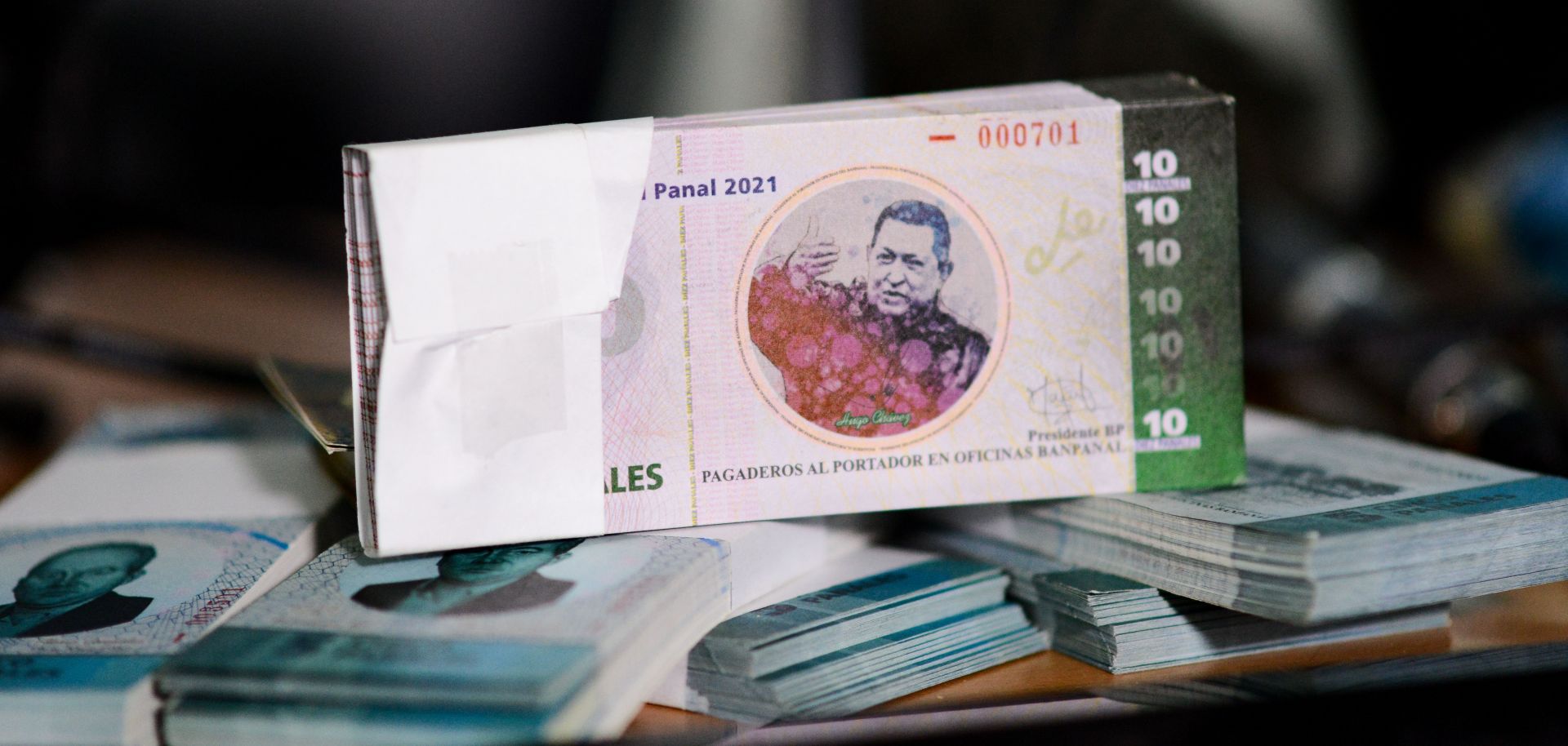
Stacks of bills of a new local community currency, the panal, launched in a working-class neighborhood in Caracas, sit at the BanPanal communal bank during December 2017.
After the turn of the millennium, Venezuela enjoyed a windfall thanks to high oil prices that bankrolled massive public spending. Fast-forward a decade, however, and the situation is bleak: An insolvent central government and high inflation are impoverishing a whole generation of Venezuelans. The current situation will likely force any new administration to attempt major structural reforms to stabilize the economy over the next decade, beyond the current stopgap measures of slashing imports and printing more bolivars. In the short term, the overriding political question centers on whether embattled President Nicolas Maduro will step aside to allow others to begin addressing the crisis. But even after any immediate solution to Venezuela's political impasse, the country's leaders will face the difficult task of fixing a broken economy.
