
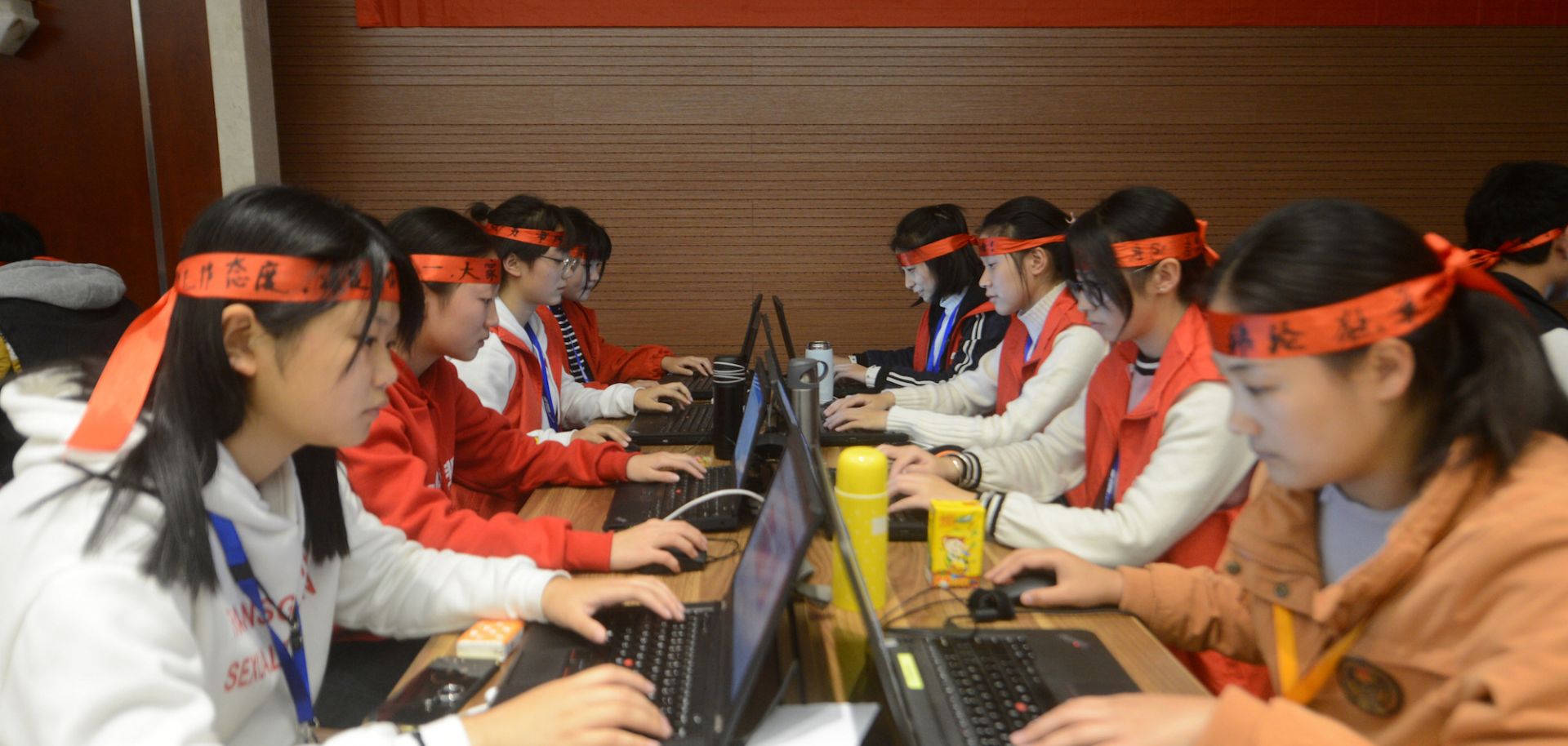
Workers at Chinese e-commerce giant Alibaba prepare for the online shopping extravaganza known as 'Singles Day.' Domestic consumption has become a significant part of the Chinese economy, helping to buffer it somewhat from U.S. tariffs.
A decade after the global financial crisis prompted China to pursue a different economic path, the country continues to push toward a more sustainable model for growth. And now, it's facing a new challenge in the form of massive U.S. tariffs and investment restrictions. But the lessons China has learned over the past decade will come in handy in its current efforts, and the government in Beijing may be able to manage the Chinese economy better than it did in 2008. Unlike the financial crisis, which ultimately prompted China to abandon its old low-cost, export-oriented growth model, the looming trade frictions with the United States represents challenges to China's goal of establishing a new, tech-based development model.
