
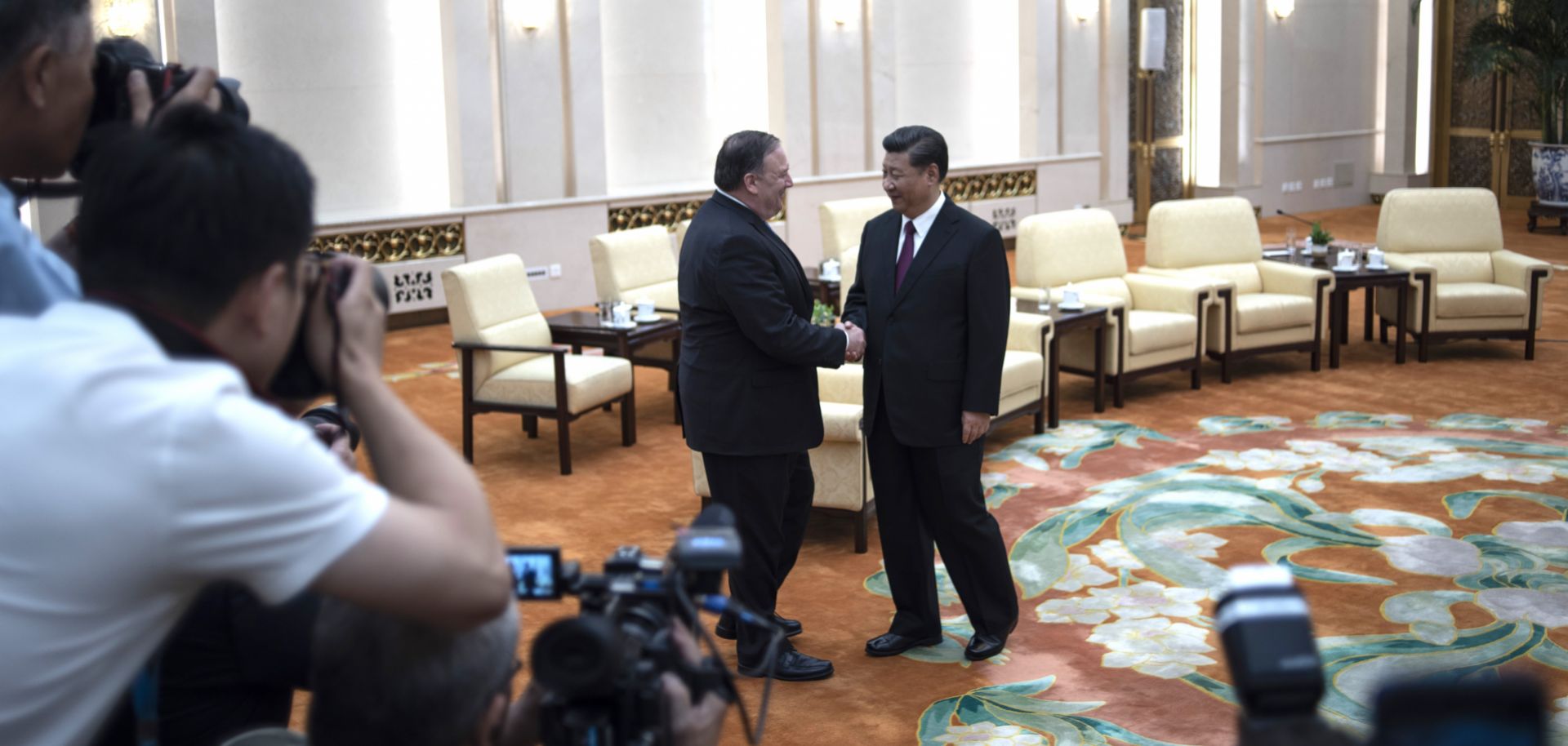
U.S. Secretary of State Mike Pompeo (L) shakes hands with Chinese President Xi Jinping during a meeting on June 14 in Beijing. China might not impose more tariffs on the United States in response to the White House's actions, but its alternate methods could still have a big impact on U.S. exporters and consumers.
The United States has fired new salvoes in its dispute with China, but the latest blow is unlikely to be the last in a rapidly developing trade war. On June 18, the White House announced that President Donald Trump had directed the U.S. Treasury to identify a list of imports from China worth $200 billion for subjection to a 10 percent tariff. Trump's move is itself a response to China's retaliation against the United States’ first round of tariffs, which will impose a 25 percent duty on $34 billion worth of Chinese imports starting July 6. But the latest announcement could ignite an even deeper conflagration, as Trump also promised to impose yet more tariffs on $200 billion worth of imports from China if Beijing also retaliates against the June 18 measures.
