
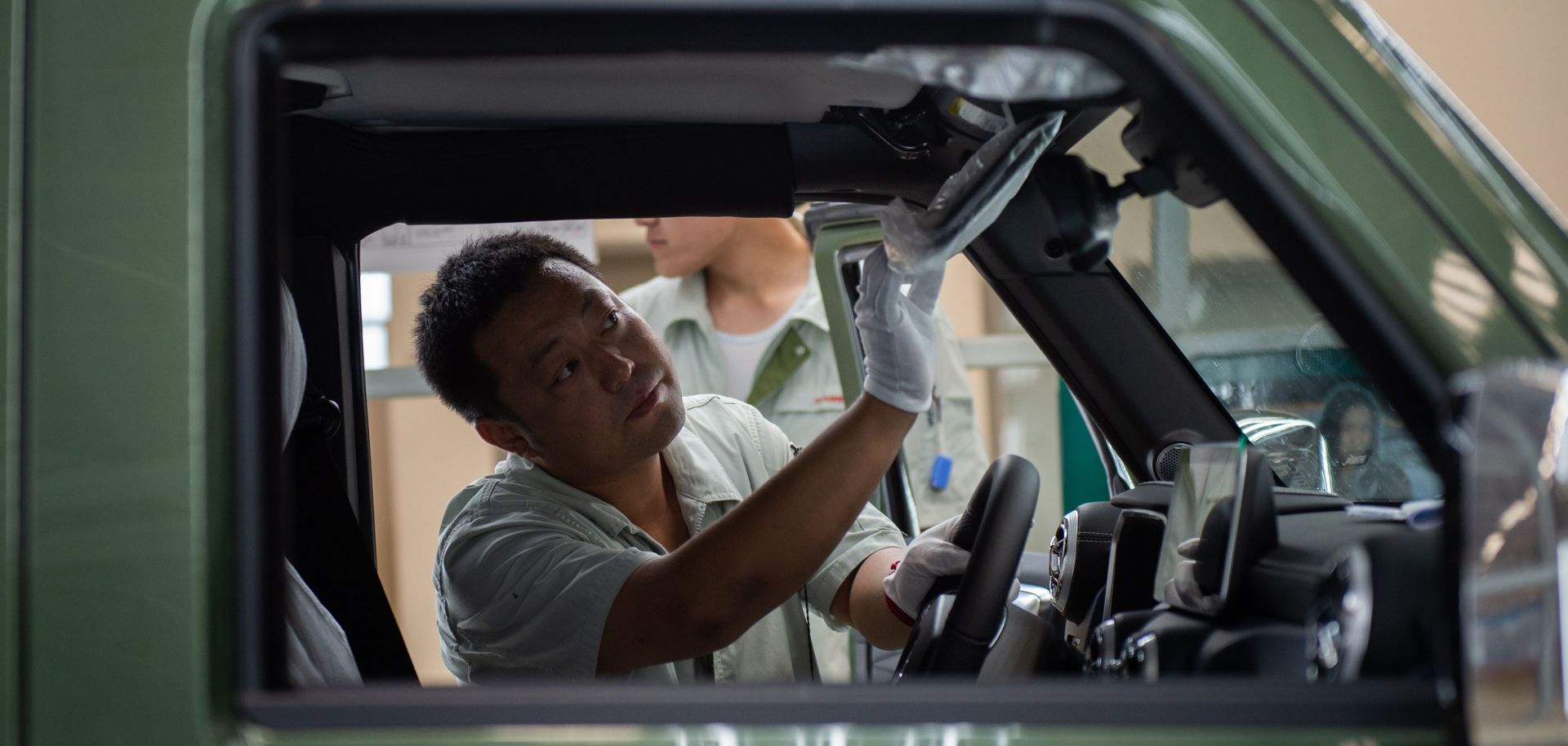
A Chinese autoworker is pictured on an SUV production line for the BAIC Motor Corp. on Aug. 29, 2018. China aims to consolidate its automotive sector to make it more competitive. But the road to reform will be long and difficult.
China's formidable but fragmented auto industry is ripe for a restructuring. As the world's largest auto producer, China now makes more cars than its market can handle. Yet China exports only a tiny fraction of the vehicles it produces, mostly to developing markets such as those in Iran and Vietnam because its cars primarily are lower-end vehicles and, with the exception of electric vehicles, Chinese brands still can't hold their own against the competition overseas. On top of these problems, China is under growing pressure from other countries, including the United States, to open its auto market to foreign brands and investors. President Xi Jinping announced measures in part to address the U.S. demand, including lowering import tariffs and easing Beijing's 20-year-old restrictions on foreign ownership in the auto industry, in a speech at the Boao Forum in April.
