
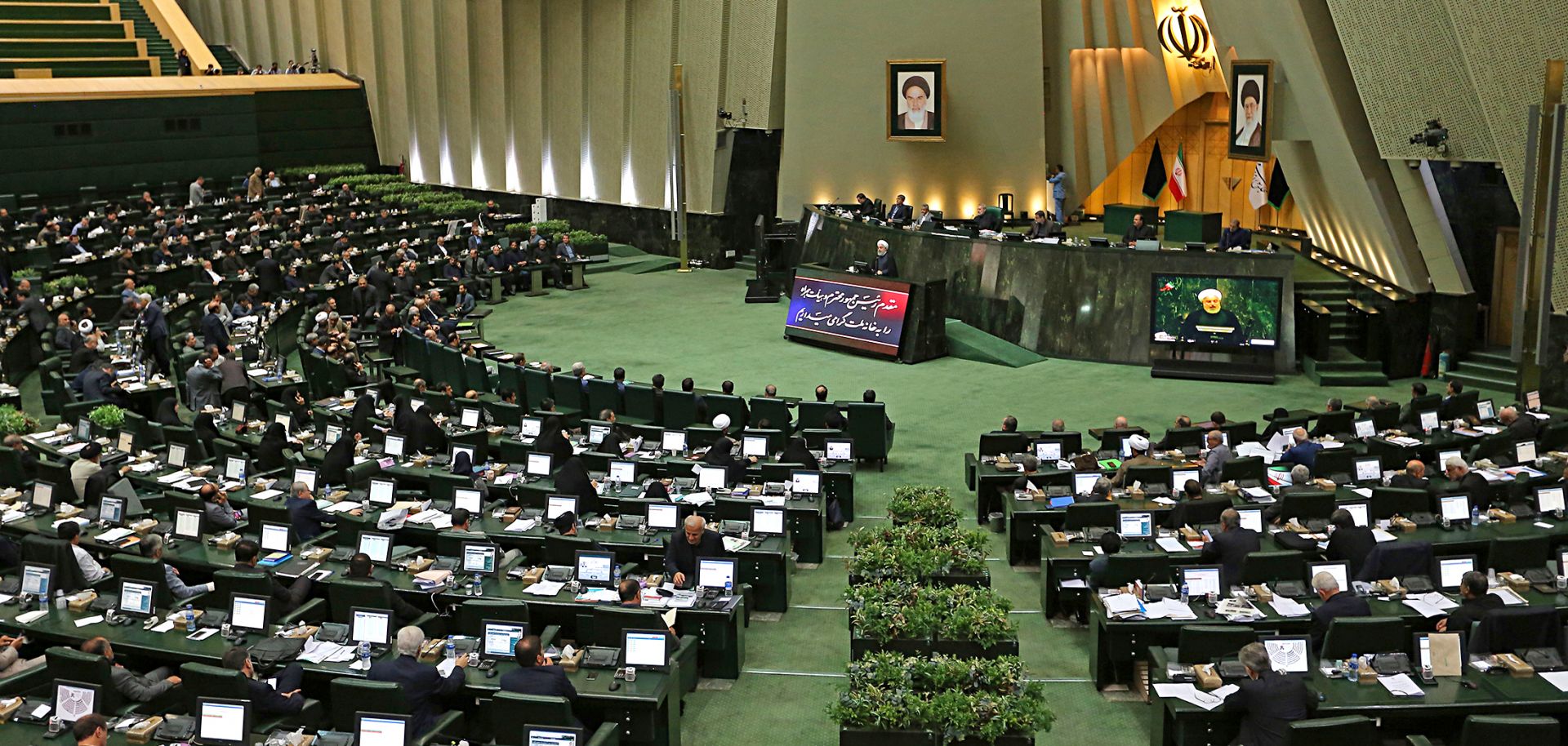
Iranian President Hassan Rouhani addresses parliament in Tehran on Sept. 3, 2019. Following the recent spike in U.S. tensions, Iran's Feb. 21 elections will likely yield a more decisively hard-line parliament.
As the first parliamentary contest since the United States began ramping up its pressure campaign, Iran's Feb. 21 election will provide a key glimpse into Iranians' mixed feelings about the recent uptick in tensions between Washington and Tehran. On one hand, many Iranians criticize hard-line elements of the Islamic Revolutionary Guard Corps (IRGC) for incidents like the Jan. 8 strike on a Ukrainian passenger jet, which risked further alienating Iran from its allies and, in turn, the global economy. But by highlighting just how hostile U.S.-Iran relations have gotten, the U.S. assassination of Iranian General Qassem Soleimani has also made it clear that President Hassan Rouhani's more moderate approach to Washington's provocations isn't working either. Against the backdrop of renewed U.S. threats, conservative candidates' promises of revenge will likely win out against reformists candidates' promises of negotiation.
