
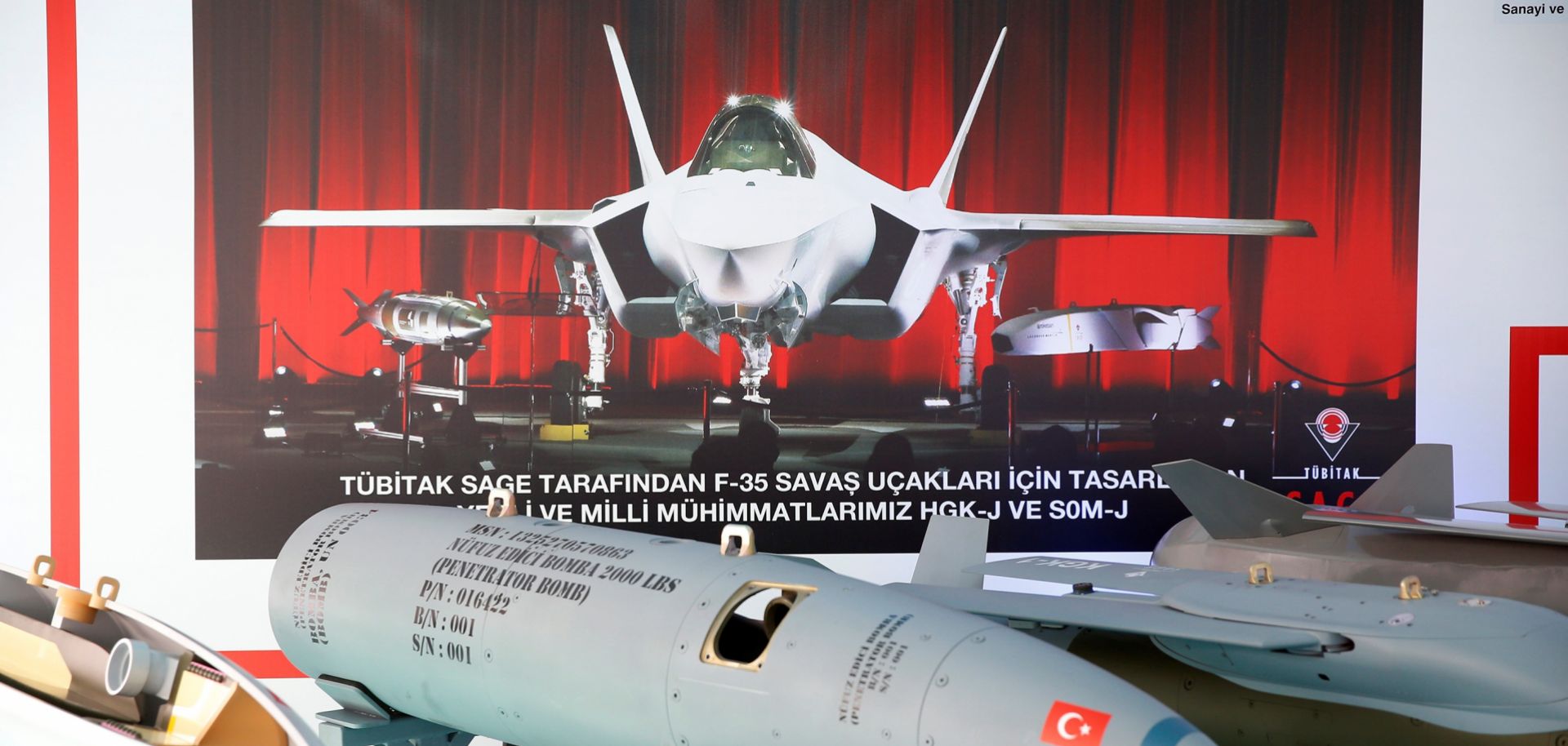
Turkish weapons designed for the U.S.-built F-35 fighter jet on display in Ankara in 2018. The Turkish role in the U.S. nuclear sharing program is particularly fragile because of its plans to acquire S-400 air defense systems from Russia.
As the rivalry between the United States and Russia shows no sign of abating, a number of different elements of the strategic arms stability framework have come under significant stress . Several key treaties, including the Anti-Ballistic Missile Treaty and the Intermediate-Range Nuclear Forces (INF) Treaty, have even broken down. At the same time, Washington and Moscow are doing their best to maintain or improve their nuclear posture in order to maintain a credible deterrent. This renewed focus on nuclear arms capabilities is also affecting one of the less overt elements of the U.S. nuclear force. While initially a secret agreement, it is now common knowledge that the United States stores tactical nuclear weapons in several European countries under what is known as "nuclear sharing." Currently, Germany, Italy, the Netherlands, Belgium and Turkey host U.S. tactical nuclear weapons on their soil.
